 TutorialKart.com
Oracle Eloqua Marketing Automation is primarily designed for B2B marketing, where buying decisions often involve several people, longer evaluation periods, lead qualification, and coordination between marketing and sales. It can also support B2C-style campaign requirements such as audience segmentation, personalised email, forms, landing pages, and behaviour-based follow-up.
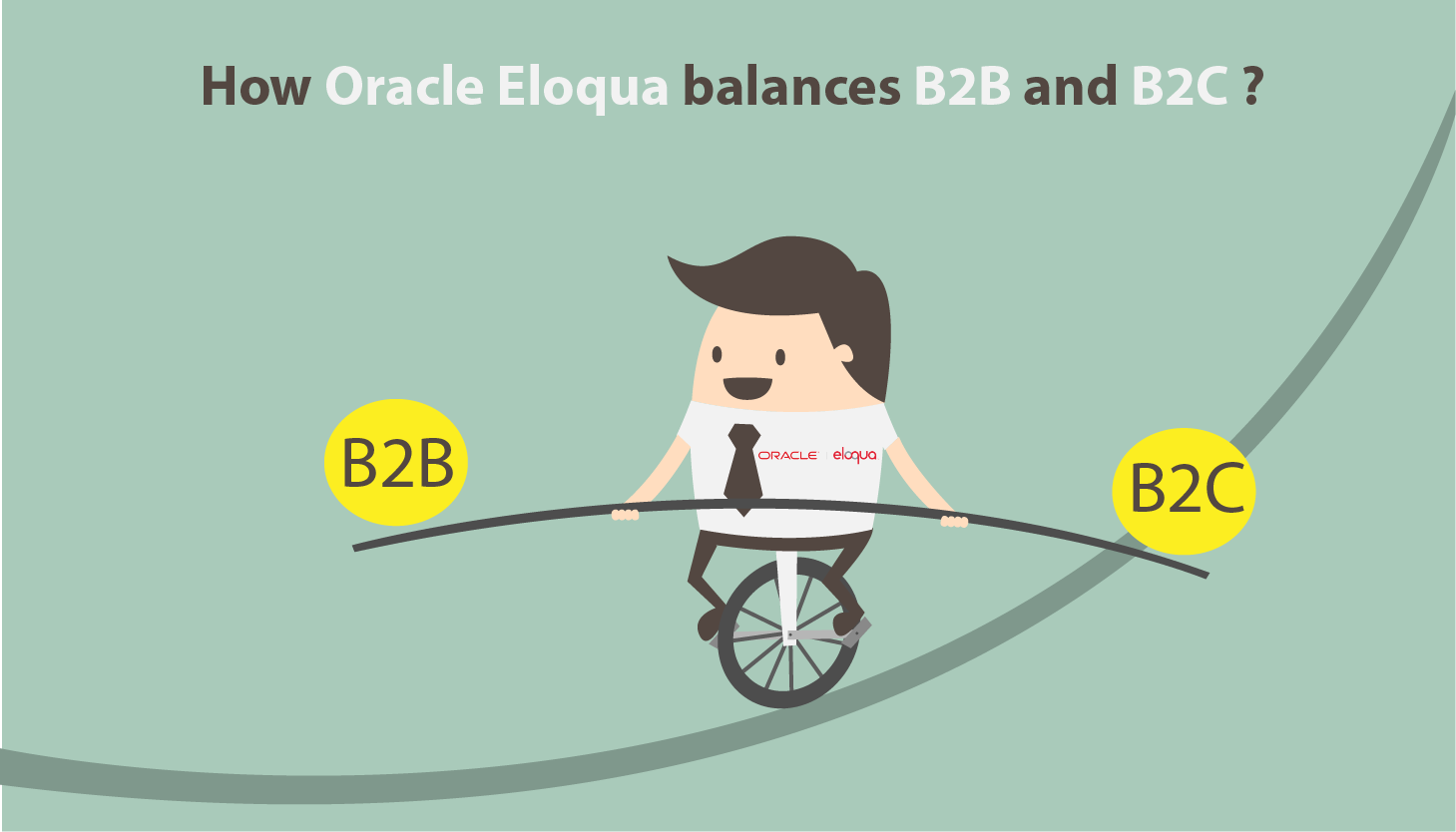
The balance does not come from treating B2B and B2C buyers identically. It comes from using shared marketing capabilities—customer data, segmentation, campaign orchestration, personalisation, and measurement—with different campaign structures for each business model.
What is Oracle Eloqua Marketing Automation?
Oracle Eloqua is a marketing automation platform used to create, run, and measure campaigns. Marketing teams can collect information through forms and digital interactions, organise contacts into segments, build campaign workflows, score leads, send communications, and pass qualified records to connected sales systems.
 A contact record may contain details such as a name, email address, company, job title, phone number, form submissions, campaign responses, and other permitted engagement data. The exact fields and activities available depend on how the organisation configures Eloqua and connects it to websites, applications, and customer relationship management systems.
Organisations must define an appropriate legal basis for collecting and using personal data, provide required notices, manage consent and communication preferences, and apply retention and access controls. A marketing automation platform supports these processes but does not determine an organisation’s compliance obligations.
Is Oracle Eloqua a B2B or B2C platform?
Eloqua is positioned primarily for B2B marketing automation. Its lead scoring, account-oriented data, campaign workflows, and CRM connections suit organisations that need to identify, nurture, and route prospective business buyers.
However, labels such as B2B and B2C do not completely describe every organisation. A company may sell to businesses and individual consumers, or it may run a B2B sales process alongside newsletters, events, subscriptions, education, or customer-retention campaigns. Eloqua can support these mixed requirements when its contact model, segmentation, permissions, and campaign rules are designed for them.
For large-scale, consumer-focused lifecycle messaging, an organisation may also evaluate a platform built specifically around high-volume B2C engagement. The appropriate choice depends on audience size, channel requirements, transaction frequency, data architecture, integrations, and governance rather than the B2B or B2C label alone.
B2B and B2C campaign requirements in Oracle Eloqua
| Campaign consideration | B2B use of Eloqua | B2C-style use of Eloqua |
|---|---|---|
| Primary record context | Contacts are often evaluated with their company, account, role, and buying group in mind. | Contacts are usually evaluated as individual customers, subscribers, or members. |
| Buying journey | The journey may include research, qualification, consultation, approval, and sales follow-up. | The journey is often shorter, although subscriptions and considered purchases can require longer nurturing. |
| Segmentation | Segments may use company attributes, industry, role, product interest, engagement, and sales stage. | Segments may use preferences, lifecycle stage, engagement, location, and purchase-related attributes when available and permitted. |
| Lead management | Lead scoring and routing can help determine when marketing should pass a contact to sales. | Lead routing may be less central; campaign response, conversion, retention, and re-engagement may receive more attention. |
| Personalisation | Content can reflect industry, job role, account interest, or stage in the buying process. | Content can reflect stated preferences, lifecycle stage, or relevant customer behaviour. |
| Measurement | Teams may measure qualified leads, opportunities influenced, pipeline contribution, and sales progression. | Teams may measure conversions, repeat engagement, retention, and campaign response. |
These are common patterns rather than fixed rules. A sound Eloqua implementation begins with the organisation’s actual customer journey and data model.
How Eloqua supports B2B lead nurturing
In B2B marketing, one person rarely represents the entire purchase decision. A campaign may need to educate several stakeholders, identify meaningful engagement, and coordinate the transition from marketing to sales. Eloqua supports this process through several connected capabilities.
- Forms and landing pages: Capture information supplied by prospects and associate responses with campaign activity.
- Contact and account data: Store contact attributes and use connected systems to provide relevant company or sales context.
- Segmentation: Build audiences using profile data, engagement, campaign membership, and other configured criteria.
- Campaign workflows: Place contacts into multi-step paths containing messages, waits, decisions, updates, and routing actions.
- Lead scoring: Combine profile fit and engagement signals according to an organisation’s qualification model.
- CRM integration: Exchange relevant marketing and sales information so that qualified leads can be reviewed and followed up.
- Campaign reporting: Analyse delivery, response, conversion, and other configured campaign outcomes.
A lead score should not be treated as a universal measure of buying intent. Scoring criteria need to reflect the organisation’s sales process, exclude misleading activity, and be reviewed against actual outcomes.
How Eloqua supports B2C-style engagement
Some Eloqua capabilities used for B2B campaigns also apply to individual-consumer communication. A team can segment contacts, tailor content, respond to form submissions or digital activity, and move people through different campaign paths.
- Welcome campaigns: Provide relevant information after a person registers or subscribes.
- Preference-based campaigns: Use declared interests and communication choices to select appropriate content.
- Event communication: Manage invitations, reminders, attendance follow-up, and related resources.
- Re-engagement campaigns: Apply defined inactivity criteria before asking whether a contact wants to continue receiving communications.
- Customer education: Deliver onboarding material or product guidance according to lifecycle stage.
B2C programmes can involve very large audiences, rapid transaction cycles, real-time decisions, and several consumer messaging channels. Teams should verify that Eloqua’s scale, available channels, integrations, and data-processing model meet those requirements before selecting it for a consumer-led programme.
Using Eloqua segmentation for both B2B and B2C audiences
Segmentation is the main mechanism for keeping different audiences and campaign purposes separate. Instead of placing every contact into one broad campaign, marketers can build segments around relevant, maintainable criteria.
B2B Eloqua segmentation criteria
- Industry, company size, territory, or named account
- Job role, department, or decision-making responsibility
- Product interest or solution area
- Form submissions, event attendance, and content engagement
- Lead score, sales status, or opportunity context supplied by connected systems
B2C-style Eloqua segmentation criteria
- Subscription or customer lifecycle stage
- Declared interests and communication preferences
- Recent campaign engagement
- Location or language where relevant to the communication
- Product or service relationship supplied by an integrated system
Segments should include explicit exclusions for contacts who have opted out, lack the necessary permission, no longer meet eligibility rules, or should be suppressed for operational reasons. Marketers should also check how often segment criteria are evaluated so that campaign membership changes as expected.
Designing Eloqua campaigns for mixed B2B and B2C journeys
An organisation serving both businesses and consumers needs more than separate email messages. The underlying contact model and campaign governance must prevent audiences, permissions, and business rules from being mixed incorrectly.
- Map each customer journey: Document who enters the journey, what they are trying to accomplish, and where human sales involvement begins.
- Define the data model: Identify which information belongs to the individual, account, subscription, transaction, or campaign response.
- Separate audience rules: Create understandable B2B and B2C-style segment criteria, including eligibility and suppression conditions.
- Set permission rules: Determine which consent, preference, and regional requirements apply before a contact enters a campaign.
- Choose meaningful triggers: Use activities that indicate a relevant next step rather than treating every click as purchase intent.
- Design different handoffs: B2B leads may move to sales, while consumer contacts may move to onboarding, service, or another lifecycle campaign.
- Measure each journey separately: Use metrics that match the journey instead of comparing every campaign by email opens or clicks alone.
Oracle Eloqua benefits and practical limitations
Benefits of Oracle Eloqua marketing automation
- Centralised construction of multi-step marketing campaigns
- Reusable segmentation, forms, landing pages, and campaign assets
- Lead scoring and sales handoff processes for B2B teams
- Personalisation based on available profile and engagement data
- Connections with CRM and other business systems
- Campaign response and performance reporting
Limitations to assess before adopting Eloqua
- Implementation quality depends on clean data, clear ownership, and maintainable campaign standards.
- Complex segmentation and workflow designs require testing and ongoing governance.
- Integrations can introduce field-mapping, synchronisation, duplicate-record, and latency issues.
- A B2C programme may require scale, channels, or real-time capabilities that need separate evaluation.
- Licensing, implementation, integration, training, and operating costs should be assessed through a current requirements-based quote rather than an outdated package list.
Oracle Eloqua compared with Marketo and Salesforce Marketing Cloud
Eloqua, Adobe Marketo Engage, and Salesforce marketing products overlap in areas such as automation, segmentation, personalisation, lead management, and reporting. A useful comparison should examine the required workflow rather than choose a platform from a feature checklist alone.
| Evaluation area | Questions to ask |
|---|---|
| Marketing model | Is the programme primarily B2B lead management, high-volume B2C engagement, or a mixture? |
| Existing technology | Which CRM, data warehouse, analytics, advertising, event, and content systems must be connected? |
| Data structure | Does the organisation need contact, account, buying-group, subscription, transaction, or household context? |
| Campaign operations | How complex are the journeys, scoring models, approval processes, and reusable templates? |
| Channels and scale | Which channels, audience volumes, sending patterns, and response times are required? |
| Governance | How will permissions, access, naming standards, testing, and retention be managed? |
| Total operating cost | What are the current licensing, implementation, integration, training, and support costs? |
Marketo is commonly evaluated for B2B automation and lead management. Salesforce offers products for B2B automation and broader customer engagement, with product choice influenced by the organisation’s Salesforce architecture. Eloqua is often evaluated where detailed B2B campaign orchestration, lead management, and connections to enterprise systems are central requirements. Current product documentation and a workflow-based proof of concept are more reliable than broad claims that one platform is always better.
Oracle Eloqua implementation QA checklist
- Confirm that B2B contacts, accounts, and B2C-style customer records are represented correctly.
- Verify field mappings, update rules, synchronisation timing, and system-of-record ownership.
- Test campaign entry, decision, wait, exit, and re-entry conditions with controlled records.
- Check that consent, unsubscribe, preference, and suppression rules work for every relevant audience.
- Validate lead-scoring thresholds against agreed profile and engagement criteria.
- Test CRM handoffs, assignment rules, campaign membership, and returned sales-status updates.
- Check duplicate handling and confirm that one person cannot receive unintended repeated messages.
- Review email, form, and landing-page behaviour across supported devices and browsers.
- Confirm that campaign reports distinguish B2B qualification outcomes from B2C-style lifecycle outcomes.
- Document asset ownership, naming conventions, approval status, and campaign shutdown procedures.
Oracle Eloqua B2B and B2C FAQs
Is Eloqua mainly used for B2B or B2C marketing?
Eloqua is primarily a B2B marketing automation platform. It can also run individual-consumer or customer-lifecycle campaigns, but organisations with high-volume, consumer-first requirements should evaluate whether its channels, scale, data model, and integrations fit the intended programme.
What are the main benefits of using Oracle Eloqua?
Its main capabilities include audience segmentation, campaign workflow design, forms and landing pages, lead scoring, personalisation, CRM integration, and campaign measurement. The practical benefit depends on data quality, implementation design, user skills, and governance.
Can Oracle Eloqua manage both business accounts and individual consumers?
It can store and segment individual contacts while using connected account or CRM data for B2B context. A mixed B2B and B2C implementation requires carefully defined data relationships, audience rules, permissions, and campaign exclusions.
How does Eloqua compare with Marketo?
Both can support B2B marketing automation, lead management, segmentation, and campaign workflows. The better fit depends on required integrations, campaign complexity, data architecture, team experience, governance, support, and current total cost. Testing representative workflows provides a more dependable comparison than counting features.
Is Oracle Eloqua pricing publicly fixed?
Pricing and packaging can change and may depend on contacts, message volume, selected capabilities, services, and contract terms. Organisations should request a current quote covering licensing and the expected implementation, integration, training, and support costs.
Choosing Eloqua for a B2B, B2C, or mixed marketing programme
Oracle Eloqua is most clearly aligned with B2B marketing automation, but its segmentation and campaign capabilities can also serve selected B2C-style journeys. A mixed programme works when the organisation separates audience definitions, data relationships, consent rules, campaign logic, handoffs, and performance measures.
Before implementation, document several real campaigns and test them from data capture through reporting. That exercise reveals whether Eloqua matches the required scale and workflows and whether another consumer-engagement or marketing automation product should also be considered.