 TutorialKart.com
In SAP Treasury and Risk Management, an exchange master record identifies a securities exchange and stores details such as its name, country, factory calendar, and currency. This tutorial explains how to define an exchange in SAP FSCM through the SAP Reference IMG.
How to Define an Exchange in SAP FSCM
Use the Define Exchange configuration activity to create the exchange keys required for securities-related processes in SAP Treasury and Risk Management.
- Transaction code: SPRO
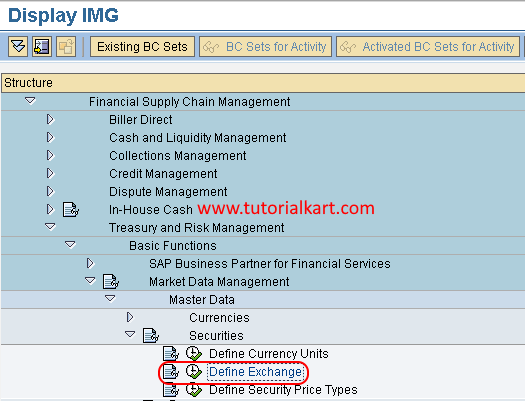
- SAP IMG path: Financial Supply Chain Management > Treasury and Risk Management > Basic Functions > Market Data Management > Master Data > Securities > Define Exchange
Information Required for an SAP Exchange Master Record
Before starting the configuration, identify the exchange key, official exchange name, short name, country, applicable factory calendar, and currency. The factory calendar should represent the business days observed by the exchange.
Configuration Steps to Define an Exchange in SAP
Step 1: Enter transaction code SPRO in the SAP command field.

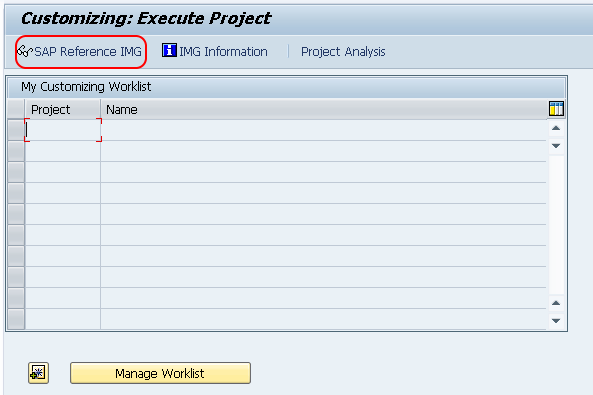
Step 2: On the Customizing screen, choose SAP Reference IMG.
Step 3: In the Display IMG screen, follow this navigation path:
- Financial Supply Chain Management
- Treasury and Risk Management
- Basic Functions
- Market Data Management
- Master Data
- Securities
- Define Exchange
Select the IMG activity Define Exchange.
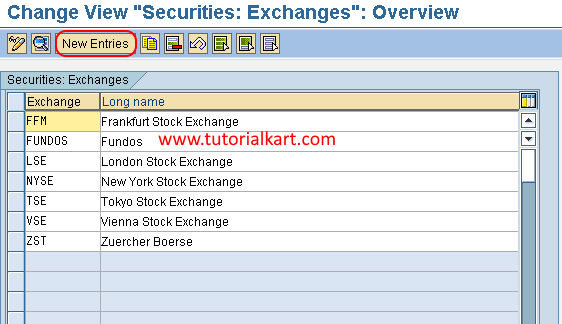
Step 4: On the Securities: Exchanges Overview screen, choose New Entries to create an exchange.
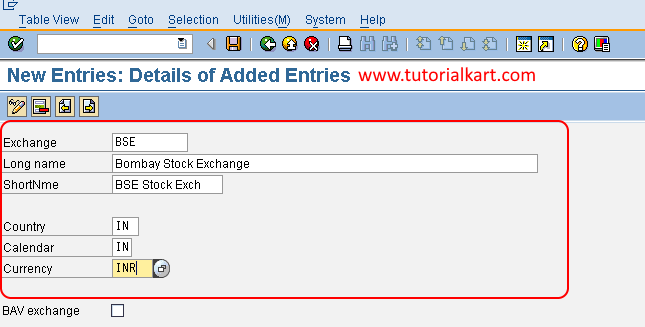
Step 5: On the New Entries screen for securities exchanges, enter the exchange details.
SAP Exchange Configuration Fields
- Exchange: Enter the unique key used to identify the exchange in SAP.
- Long name: Enter the full descriptive name of the exchange.
- ShortNme: Enter the abbreviated name used for the exchange.
- Country: Select the country key associated with the exchange.
- Calendar: Enter the factory calendar that represents the exchange’s valid business and non-business days.
- Currency: Enter the currency assigned to the exchange.
Step 6: Review the entered values and choose the Save icon. When prompted, assign the change to an appropriate Customizing transport request according to your system’s transport procedure.
How the Exchange Fields Affect SAP Securities Processing
The exchange key provides a consistent reference for securities master data and related market-data settings. The country and currency identify the exchange’s regional and monetary context, while the factory calendar determines which dates are treated as valid exchange business days.
Use a meaningful but stable exchange key because configuration keys may be referenced by other records. Avoid creating duplicate entries for the same exchange unless separate records are required by the organization’s configuration design.
Checks After Saving the SAP Exchange
- Confirm that the exchange key is unique and follows the project’s naming convention.
- Verify that the long name and short name identify the intended securities exchange.
- Check that the selected country and currency are correct.
- Confirm that the factory calendar represents the exchange’s working days and holidays.
- Reopen the Define Exchange activity and verify that the saved entry appears in the overview.
- Confirm that the Customizing change was recorded in the correct transport request, when transports are used.
SAP Define Exchange Questions
Which transaction code is used to define an exchange in SAP?
Use transaction code SPRO, open the SAP Reference IMG, and navigate to the Define Exchange activity under Treasury and Risk Management.
Why is a factory calendar assigned to an SAP exchange?
The factory calendar identifies the working days and holidays applicable to the exchange. This supports date-dependent processing that must consider whether the exchange is open on a particular date.
What should be entered in the Exchange field?
Enter a unique configuration key that identifies the exchange in SAP. The key should follow the naming standards used in the implementation project.
Can an existing exchange entry be changed later?
An authorized user can maintain an existing entry in the same configuration activity. Before changing a key field or a value used by other records, review the possible effect on dependent securities and market-data configuration.
Result of the SAP FSCM Exchange Configuration
After the entry is saved, the exchange is available as configured master data in SAP Treasury and Risk Management. Verify the record in the exchange overview before using it in dependent securities or market-data settings.