 TutorialKart.com
How to Create User Status Profile in SAP PS Using OK02
In SAP Project System, a user status profile controls the custom statuses that users can assign to objects such as project definitions, WBS elements, and networks. This tutorial explains how to create a user status profile in SAP PS step by step using transaction code OK02, maintain user statuses, and assign the allowed object types.
User statuses are different from SAP system statuses. System statuses are set automatically by SAP processes, while user statuses are configured by the business to represent internal approval, review, blocking, or release stages. A status profile groups these user statuses and defines how they can be used on SAP PS objects.
OK02 Navigation for SAP PS User Status Profile
| SAP R/3 Role Menu | Create user status profile |
| Transaction Code | OK02 |
| SAP Menu Path | SPRO > Project System > Structures > Operative structures > Work breakdown structures > WBS user status > Create status profile. |
You can also reach the same configuration activity from the SAP IMG path. Transaction code OK02 is the direct and commonly used route when maintaining status profiles for SAP PS.
Sample SAP PS Status Profile Configuration Values
The following sample values are used in this tutorial. You can replace them with your own naming convention based on project, company code, or implementation standards.
| Status Profile | Text | Language |
| SP00001 | Project def. status profile | EN |
| SP00002 | WBS element status profile | EN |
| SP00003 | Network status profile | EN |
Before creating the profile, decide the object type for which the profile will be used. For example, a WBS element status profile should normally be assigned only to WBS-related object types, while a network profile should be assigned to network-related object types.
Step 1: Open SAP Transaction OK02 for Status Profile
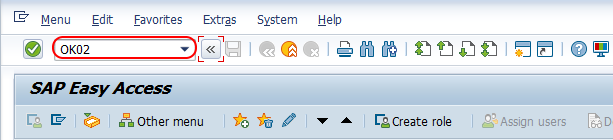
Enter transaction code OK02 in the SAP command field and press Enter. The system opens the status profile maintenance screen where you can create, display, or change status profiles.
Step 2: Create a New Status Profile in SAP PS
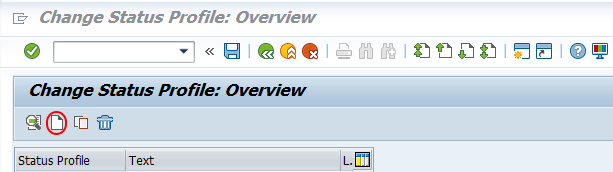
From the Change Status Profile: Overview screen, choose the Create option to define a new user status profile in SAP Project System.
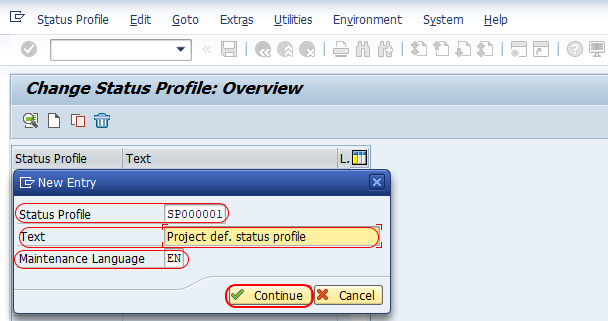
A new entry pop-up appears. Maintain the basic profile details carefully because the profile key identifies the status profile across configuration and master data assignment.
- Status Profile: Enter the key that identifies the user status profile in the SAP system. In this example, the status profile key is SP00001. SAP allows an alphanumeric status profile key up to seven characters.
- Text: Enter a meaningful description, such as Project def. status profile, so that users can understand the purpose of the profile.
- Maintenance Language: Enter EN for English or the language used in your SAP configuration.
Choose the Save icon to save the basic status profile details. If your SAP system prompts for a customizing request, select the appropriate transport request based on your project procedure.
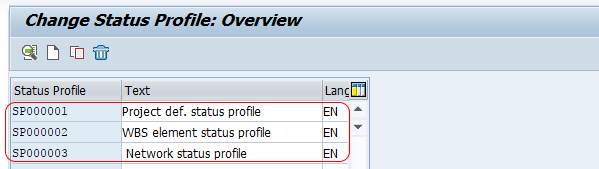
Similarly, create other status profiles such as SP00002 and SP00003 by following the same configuration steps. After the profiles are created, the configured profile keys appear on the status profile overview screen.
Step 3: Maintain User Statuses Inside the SAP PS Status Profile
Double-click the status profile key to maintain the individual user statuses. This is where you define the status sequence, status text, initial status, and permitted status number range.
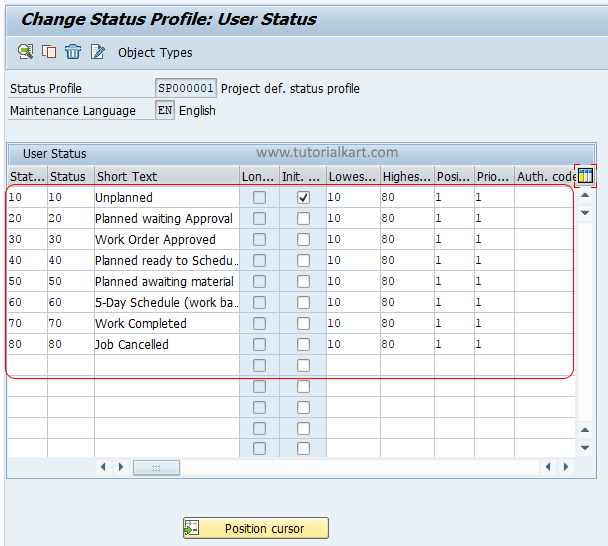
Maintain the required fields for each user status in the profile. The exact statuses depend on your project process, but the fields below are commonly used while creating a SAP PS user status profile.
| Field in Status Profile | Purpose in SAP PS User Status Control |
|---|---|
| Status number | Defines the sequence of the user status within the profile. |
| Status | Specifies the user status code that appears on the SAP PS object. |
| Short text | Provides the description that users see while selecting the status. |
| Initial status | Marks the status that should be set by default when the object is created. |
| Lowest status number | Controls the lowest status number that can be reached from the current status. |
| Highest status number | Controls the highest status number that can be reached from the current status. |
| Position | Controls the display position of the user status. |
| Priority | Helps determine which status is displayed when multiple user statuses are active. |
Use the lowest and highest status number fields carefully. They help restrict whether a user can move backward or forward in the status sequence. For example, a completed or approved status can be restricted so that users cannot freely return it to an earlier review status unless the business process allows it.
Step 4: Assign Object Types for the SAP PS User Status Profile
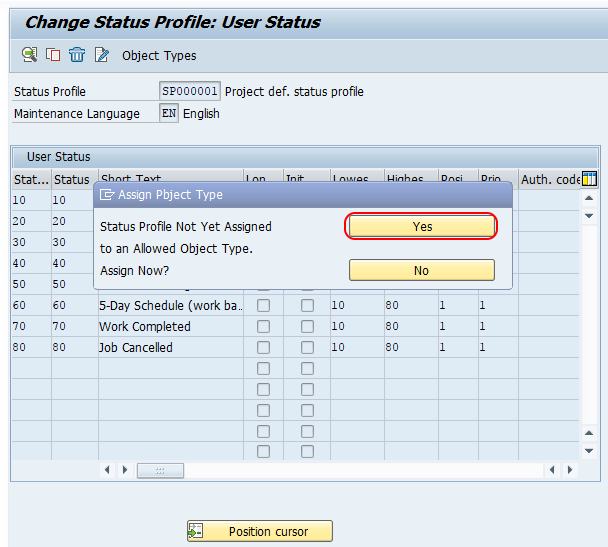
After maintaining the user statuses, choose the Save icon. The system prompts a message to Assign Object Type. Choose Yes to assign the profile to the relevant SAP object types.
On the Change Status Profile: Allowed Object Types screen, select the checkboxes for the allowed object types. This step is important because a status profile can be used only for the object types that are allowed here.
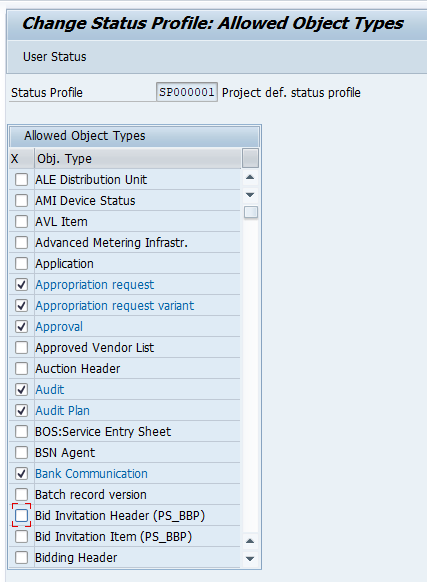
Choose the relevant object type based on whether the profile is meant for a project definition, WBS element, network, or another supported SAP object. Save the configuration after selecting the allowed object type.
Where the Created Status Profile Is Used in SAP PS
Creating the status profile in OK02 defines the profile, but users can work with it only after it is assigned in the relevant SAP PS configuration or master data process. For example, WBS status profiles are typically assigned so that the required user statuses are available on WBS elements. Project definition and network status profiles should be assigned according to the object type and business process for which they were created.
A completed profile should be tested with a sample project object before it is moved to production. Check whether the initial status is applied correctly, whether users can move to the expected next status, and whether any blocked business transaction is working as designed.
Common Mistakes While Creating SAP PS User Status Profiles
- Creating the profile but not assigning object types: If allowed object types are not selected, the profile may not be available where you expect to use it.
- Using unclear status text: Short texts such as A1 or B2 are difficult for end users. Use meaningful labels such as Reviewed, Approved, Blocked, or Released.
- Incorrect initial status: If the wrong initial status is selected, newly created project objects may start from the wrong stage.
- Ignoring lowest and highest status numbers: Without proper number limits, users may be able to move to statuses that should be restricted.
- Using one profile for unrelated objects: Separate profiles are easier to maintain when project definitions, WBS elements, and networks follow different approval or execution processes.
SAP PS User Status Profile QA Checklist
- Confirm that the status profile key is unique and follows the SAP project naming convention.
- Verify that the maintenance language and description are correct.
- Check that each user status has a clear status code and short text.
- Confirm that only one suitable initial status is marked for the profile.
- Review the lowest and highest status number settings for each status transition.
- Ensure that the allowed object type matches the intended SAP PS object, such as WBS element, project definition, or network.
- Test the profile on a sample SAP PS object before transporting the configuration to production.
FAQs on SAP PS User Status Profile
What is a status profile in SAP PS?
A status profile in SAP PS is a configuration object that contains user statuses for project-related objects. It allows a business to define custom statuses in addition to SAP system statuses.
What is the transaction code for creating a SAP PS status profile?
The transaction code for creating and maintaining a SAP PS status profile is OK02. You can also access it through the SAP IMG menu path for Project System status profile configuration.
Why do we assign object types to a user status profile in SAP?
Object type assignment controls where the user status profile can be used. For example, a profile intended for WBS elements should be assigned to the correct WBS-related object type so that the statuses are available in the right SAP PS object.
Can one SAP status profile contain more than one user status?
Yes. A status profile usually contains multiple user statuses. These statuses can represent different business stages, such as draft, reviewed, approved, blocked, or released.
Is user status the same as system status in SAP PS?
No. System statuses are controlled by SAP transactions and business processes, while user statuses are configured by the organization to support its own internal controls and approval stages.
Successfully, we have defined a new user status profile in SAP PS using transaction code OK02.