 TutorialKart.com
SAS Windowing Environment
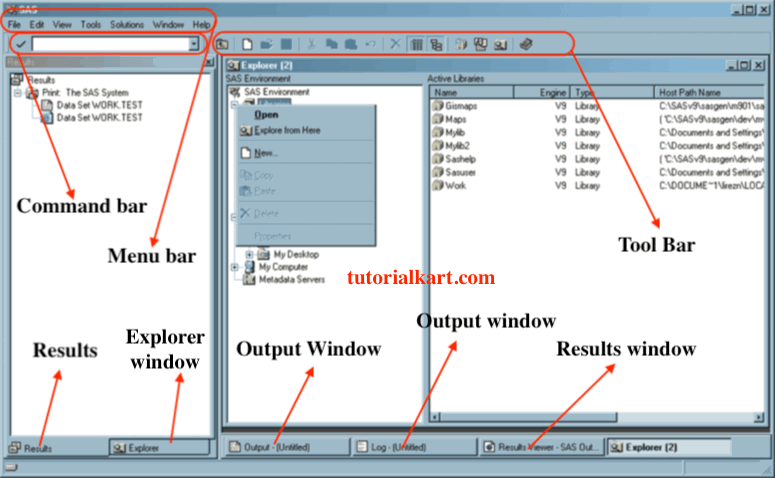
The SAS Windowing Environment, also called the SAS Display Manager or interactive windowing environment, provides a desktop interface for writing SAS programs, submitting them, reviewing messages, viewing results, and accessing SAS libraries. Its principal windows are the Editor, Log, Output, Explorer, and Results windows.
This interface is associated with traditional desktop SAS sessions. SAS Studio and SAS Enterprise Guide organize programs, logs, data, and results differently, so their screens do not match every window described here. The windows and available commands can also vary by operating system, SAS release, and site configuration.
How the SAS Windowing Environment Processes a Program
A typical SAS programming session follows a simple workflow:
- Write or open SAS statements in the Editor window.
- Submit the selected statements or the complete program.
- Read the Log window to identify notes, warnings, and errors.
- Review generated output through the Output window, Results window, or Results Viewer, depending on the active output destination.
- Use the Explorer window to inspect libraries, data sets, catalogs, and other session resources.
Checking the Log before interpreting the results is an essential part of this workflow. A procedure may produce output even when the log contains warnings or messages that affect the reliability of that output.
Editor, Log, Output, Explorer, and Results Windows
Editor Window for Creating and Submitting SAS Programs
The Editor window is used to create, open, modify, save, and submit SAS programs. On supported installations, the Enhanced Editor provides syntax coloring and lets you collapse or expand program sections. Other installations may use the Program Editor instead.
You can submit an entire program or highlight specific statements and submit only that selection. Saving the program before execution helps preserve the source code, but submitting a program does not automatically save it.
Log Window for SAS Notes, Warnings, and Errors
The Log window records information generated while SAS processes submitted statements. It can contain the submitted code, processing notes, warnings, errors, execution time, and details such as the number of observations and variables read or written.
- NOTE: Reports normal processing information, although some notes can reveal data-conversion or merge issues that require attention.
- WARNING: Indicates a condition that may affect the program or its results.
- ERROR: Identifies a problem that prevented SAS from processing a statement or step as intended.
When a program does not run correctly, inspect the first relevant error in the Log window before addressing later messages. One syntax error can cause several additional errors farther down the log.
Output Window for Listing Results
The Output window displays traditional listing output produced by procedures and other SAS statements. Whether results appear here depends on the output destinations enabled for the session. HTML output may instead open in a Results Viewer or another results interface.
Explorer Window for SAS Libraries and Data Sets
The Explorer window provides access to SAS libraries and the objects available in the current session. Expand Libraries, open a library such as WORK, and select a data set to inspect it. The WORK library is temporary and is normally cleared when the SAS session ends.
The Explorer window is therefore the primary window used to access SAS data sets through the graphical interface. A library must be assigned in the current session before its data sets can be accessed there.
Results Window for Navigating Generated Output
The Results window acts as a table of contents for generated output. Its tree structure groups results by procedure and output item. Selecting an item opens the corresponding table, graph, or listing in the appropriate viewer.
Practice the SAS Windowing Workflow
The following program creates a temporary data set and displays it. Enter the statements in the Editor window and submit them.
data work.sales_example;
    input product $ units price;
    revenue = units * price;
    datalines;
Notebook 4 55
Pen 12 3
Folder 7 8
;
run;

proc print data=work.sales_example;
    title "Sales Example";
run;
After submission, use the windows together:
- Open the Log window and confirm that the DATA step and PROC PRINT completed without warnings or errors.
- Open Explorer, expand Libraries and Work, and locate SALES_EXAMPLE.
- Open the generated PROC PRINT item from the Results window or view it in the active output viewer.
- Remember that SALES_EXAMPLE is temporary because it was created in the WORK library.
SAS Command Bar and Window Commands
The command bar accepts SAS windowing commands. Many of these actions are also available through menus, toolbar buttons, or keyboard shortcuts. A command generally acts on the active window, so select the intended window before issuing it.
Common window-management commands include opening the Editor, Log, Output, and Explorer windows. Command availability and behavior can differ between SAS environments and releases.
SAS Toolbar Buttons and Their Functions
The toolbar provides shortcuts for frequently used commands. The buttons displayed depend on the active window and the toolbar configuration.


New – Opens a new program or document window, depending on the active SAS interface.

Open – Opens an existing SAS program or another supported file from an accessible local or server location.

Save – Saves the contents of the active program, log, or output window. The available file type depends on the active window.

Print – Sends printable content from the active program, log, or output window to the selected printer.

Print Preview – Displays the printable layout before the content is sent to a printer.

Cut – Removes selected text and places it on the clipboard. The standard keyboard shortcut is Ctrl+X.

Copy – Copies selected text to the clipboard without removing it. The standard keyboard shortcut is Ctrl+C.

Paste – Inserts clipboard content at the current cursor position. The standard keyboard shortcut is Ctrl+V.

Undo – Reverses the most recent editable action when that action supports undo. The standard keyboard shortcut is Ctrl+Z.

New Library – Opens the interface for assigning a SAS library. A library reference connects a short libref to a data-storage location.

Clear All – Clears the contents of the active window. It does not delete a saved program file unless that file is separately overwritten or removed.

Break – Interrupts processing and presents available actions, such as cancelling submitted statements. Terminating the SAS system closes the session, so save required work before choosing that option.

Help – Opens available SAS documentation, reference material, and sample programs.
SAS Menu Bar Options
The SAS menu bar appears at the top of the window. Its options change according to the active window, but a traditional SAS session commonly includes File, Edit, View, Tools, Run, Solutions, Window, and Help.
File Menu for SAS Programs and Data Transfer
- Create a new program window.
- Open an existing SAS program or supported file.
- Save the contents of the active window.
- Print or preview printable content.
- Access supported data import and export functions.
Edit Menu for Program Text
- Use undo, redo, cut, copy, and paste.
- Select or clear text in the active window.
- Find and replace program text.
- Collapse or expand sections when those features are supported by the editor.
View Menu for Reopening SAS Windows
- Open or return to windows such as the Enhanced Editor, Program Editor, Log, Explorer, Output, and Results windows.
- Show or hide interface elements that are available in the current SAS installation.
Tools Menu for SAS Session Settings
- Assign or create access to a SAS library.
- Change editor preferences, fonts, and other interface settings.
- Configure output-related preferences available in the installed SAS release.
Run Menu for Submitting SAS Code
- Submit the current program or selected statements.
- Recall previously submitted code when that command is available.
- Use execution-related commands appropriate to the active program window.
Window Menu for Switching Between Open SAS Windows
- View the windows currently open in the SAS session.
- Bring a selected window to the foreground.
- Arrange open windows using the options provided by the operating environment.
Help Menu for SAS Documentation
- Open SAS help and product documentation.
- Search for information about procedures, statements, functions, formats, and interface commands.
- View product and installation information when available.
Common SAS Windowing Problems
A SAS Window Is Closed or Hidden
Use the View menu to reopen standard windows or the Window menu to select a window that is already open but hidden behind another window.
A Submitted Program Produces No Visible Output
First inspect the Log window for errors. If the program completed successfully, check the Results window and any open Results Viewer. Also confirm that the program includes a procedure or statement that produces output and that an appropriate output destination is open.
A SAS Data Set Does Not Appear in Explorer
Confirm that the expected library is assigned, expand the correct library, and refresh the Explorer view if necessary. Also check the Log to verify the exact library and member name written by the program.
The SAS Log Contains Several Errors
Start with the earliest error related to the submitted code. Correct it, resubmit the affected step, and read the new log. Later errors may disappear after the first problem is fixed.
SAS Windowing Environment FAQs
Which SAS window is used to create a new program?
The Editor window is used to create, edit, save, and submit a SAS program. Depending on the installation, it may be called the Enhanced Editor or Program Editor.
Which SAS window displays errors from an executed program?
The Log window displays processing notes, warnings, and errors generated when SAS executes submitted statements.
Which SAS window provides access to data sets?
The Explorer window provides graphical access to assigned libraries and their SAS data sets. Expand Libraries and select the required library to locate a data set.
What is the difference between the SAS Output and Results windows?
The Output window displays traditional listing output. The Results window organizes generated output as a navigation tree and opens selected items in the appropriate output window or viewer.
SAS Windowing Environment Editorial QA Checklist
- Confirm that the Editor is identified as the window for creating and submitting SAS programs.
- Confirm that the Log is identified as the source of SAS notes, warnings, and errors.
- Keep the distinction between the Output window, Results window, and Results Viewer clear.
- State that Explorer shows libraries and data sets available to the current SAS session.
- Verify that instructions apply to the traditional SAS Windowing Environment and are not presented as SAS Studio steps.
- Check that toolbar and menu descriptions allow for differences between SAS releases and operating environments.