 TutorialKart.com
Welcome to this Jira tutorial for beginners. You will learn what Jira is used for, how its main work-management concepts fit together, and how to create a project, organize a backlog, plan work on a roadmap, and manage issues.
Jira is commonly used by software, testing, product, project-management, operations, and service teams. The exact menus and available features can vary by Jira product, plan, project type, and administrator configuration, so some screens may look different from the screenshots in this tutorial.
What is Jira software?
Jira is an Atlassian work-management platform used to plan, track, and report work. In Jira, a unit of work is represented by an issue. An issue may represent a task, bug, story, request, feature, improvement, or another work item defined by the team.
Jira Software is designed primarily for software and agile teams, while other Jira products support broader business and service-management workflows. This tutorial focuses on the project, board, backlog, roadmap, and issue-tracking concepts commonly used in Jira Software.
What is Jira used for?
- Tracking tasks, bugs, user stories, features, and project requests.
- Planning work with Scrum or Kanban boards.
- Prioritizing upcoming work in a backlog.
- Assigning work to team members and monitoring status.
- Managing releases, epics, dependencies, and delivery dates.
- Searching and filtering issues for specific teams or conditions.
- Creating dashboards and reports for progress, workload, and flow.
- Documenting decisions through descriptions, comments, attachments, and links.
Jira concepts beginners should understand
Projects
A Jira project is a container for related work. It stores issues and provides access to features such as boards, backlogs, roadmaps, versions, reports, and project settings. Depending on the Jira setup, a project may be team-managed or company-managed.
Issues and issue types
Every trackable work item in Jira is an issue. Common issue types include Epic, Story, Task, Bug, and Subtask. Administrators can also create custom issue types. The available types and hierarchy depend on the project configuration.
Workflows and statuses
A workflow defines how an issue moves through its lifecycle. A simple workflow may use To Do, In Progress, and Done. More detailed workflows may include review, testing, blocked, approved, or deployment statuses. Moving an issue from one status to another is called a transition.
Boards
Jira provides Scrum and Kanban boards. A board displays issues as cards in columns that usually correspond to workflow statuses. Team members can use the board to see current work, move issues through the process, identify blocked items, and understand the state of the project.
Backlogs
A backlog contains work that has not yet been started or scheduled. Teams use it to create, refine, rank, estimate, and group issues before selecting them for a sprint or moving them into active work.
Epics and roadmaps
An epic represents a larger body of work that can be divided into smaller issues. A roadmap presents planned work across time, often organized by epics, dates, releases, and dependencies. Roadmaps help teams communicate priorities without replacing the detailed issue-level planning performed in the backlog and board.
Core Jira features for project tracking
Scrum and Kanban boards
Scrum boards support sprint-based planning, while Kanban boards support continuous flow. Both provide a visual view of work at issue level. Board columns, filters, swimlanes, card fields, and work-in-progress rules can be configured according to project permissions and board type.
Jira project templates
Jira offers templates for common workflows, including Scrum, Kanban, bug tracking, and business processes. A template provides an initial set of issue types, workflows, views, and reports. Teams can then adjust the project to match their actual process.
Detailed issue records
An issue can contain a summary, description, status, priority, assignee, reporter, labels, dates, attachments, comments, links, subtasks, estimates, and other custom fields. The fields visible on an issue depend on the project and screen configuration.
Notifications and mentions
Jira can notify users about issue activity such as assignments, comments, status changes, and mentions. Entering @ followed by a team member’s name in a comment can notify that person when permissions and notification settings allow it. Users can also watch issues to follow later changes.
Filters and advanced Jira search
Jira provides basic search and advanced search. Basic search uses selectable fields, while advanced search uses Jira Query Language, commonly called JQL. Saved filters can power issue lists, subscriptions, dashboards, and board configurations.
project = APP AND status != Done ORDER BY priority DESC, created ASCThis example finds issues in the project with key APP that are not in the Done status, then sorts them by priority and creation date. Field names, status names, and supported values depend on the Jira site configuration.
Jira reports and dashboards
Jira reports vary by project type and enabled features. Agile projects may include burndown, burnup, sprint, velocity, cumulative flow, control chart, epic, release, and version reports. Other reports can summarize created versus resolved issues, average age, resolution time, workload, time tracking, and issue distribution.
Dashboards use configurable gadgets to display information from projects and saved filters. They are useful for showing open work, recent activity, workload, charts, sprint progress, and other team-specific indicators.
How to create your first Jira project
The signup and onboarding flow may change over time. The following steps explain the general process and retain the original screenshots as examples of an earlier Jira interface.
Step 1: Open the Jira signup page
Open a browser and visit https://www.atlassian.com/software/jira/try.
Select the Jira product and plan that match your requirements. Product names, free-plan limits, trial availability, and onboarding options can change, so review the current information displayed on the signup page.
Step 2: Create an Atlassian account
Enter the requested account details and complete the signup process. You may be asked to verify your email address before continuing.
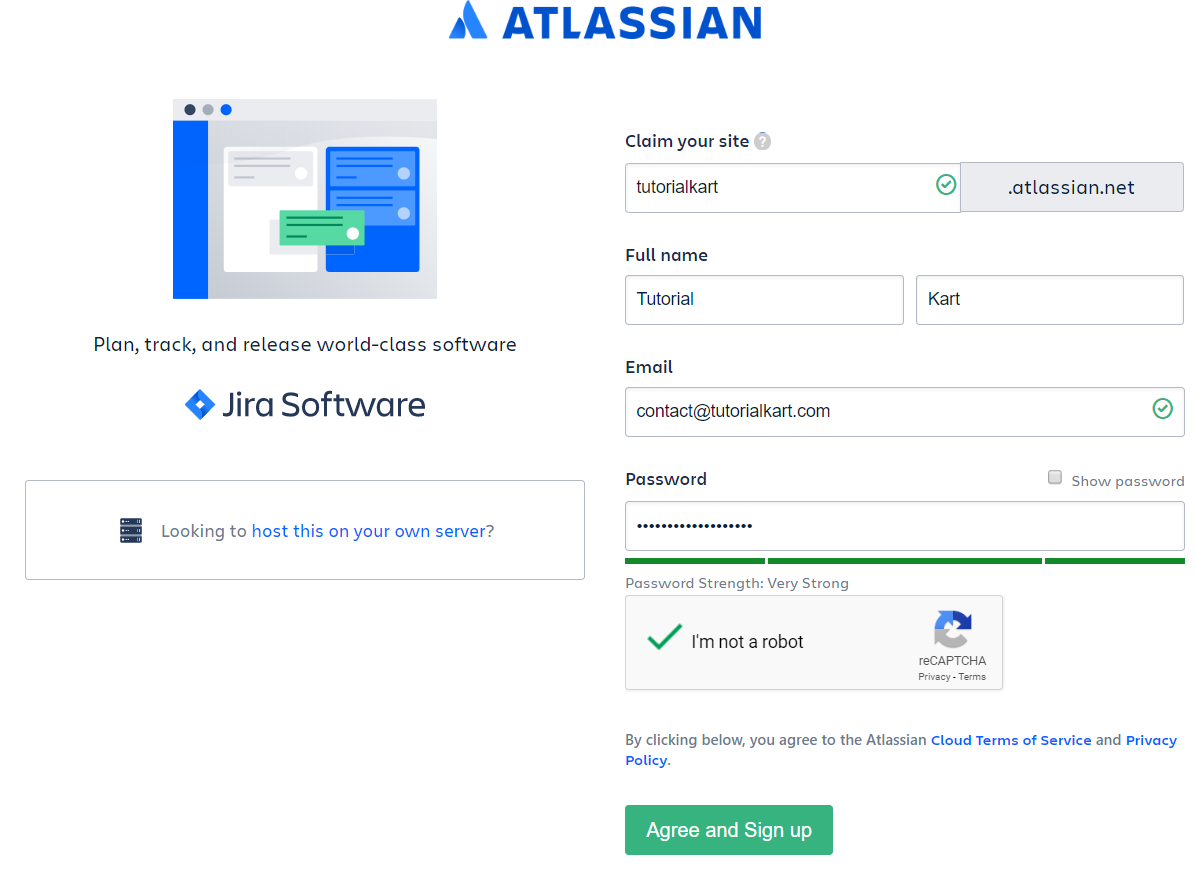
Step 3: Verify your email and invite team members
Open the confirmation email sent to the address used during signup and complete verification. Jira may then offer an option to invite team members. You can invite users immediately or add them later from the site or project administration area.
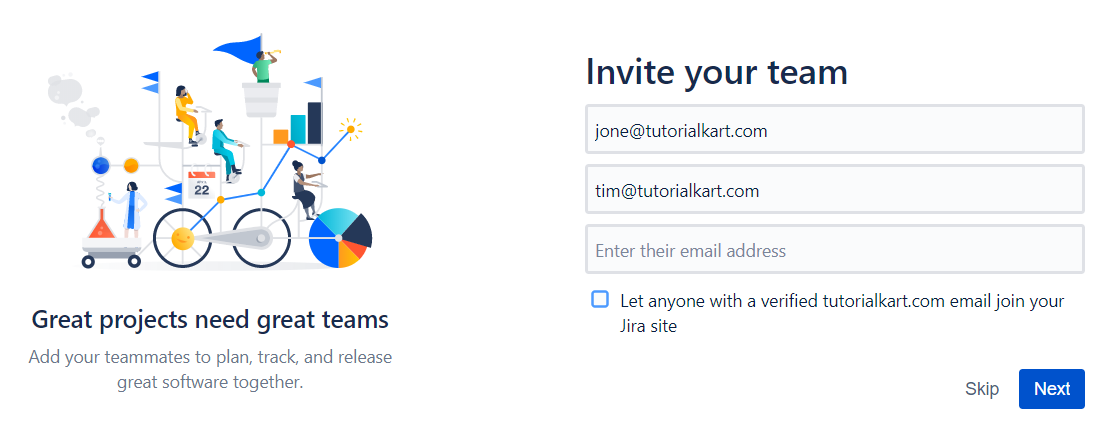
If domain-based access is offered, review it carefully before allowing anyone with an email address from a particular domain to join the Jira site.
Step 4: Provide basic team and project details
Jira may ask questions about your team, work type, and preferred workflow. These answers help recommend a starting configuration. You can skip optional onboarding questions when the interface provides that choice.
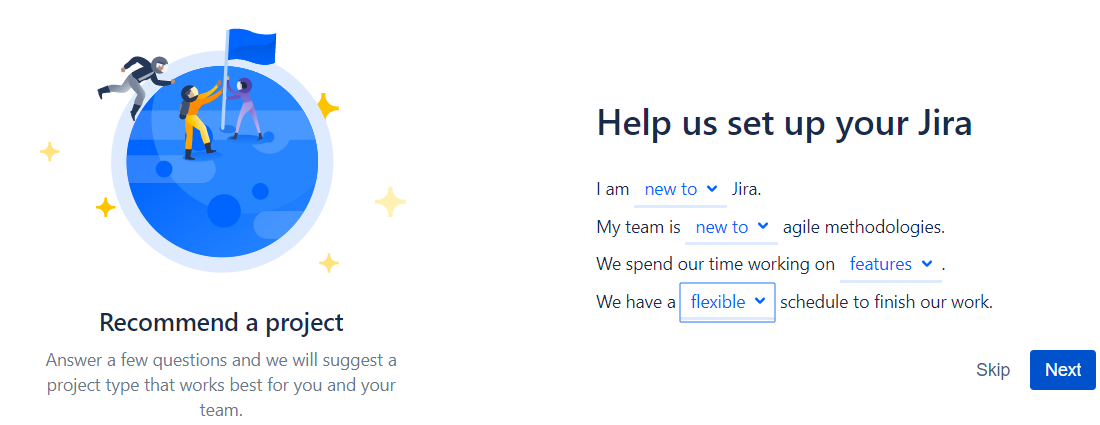
Step 5: Select a Jira project template
Choose a template based on how the team plans to work. Select Scrum for sprint-based planning, Kanban for continuous flow, or another available template for a specialized workflow. Review the included issue types and features before creating the project.
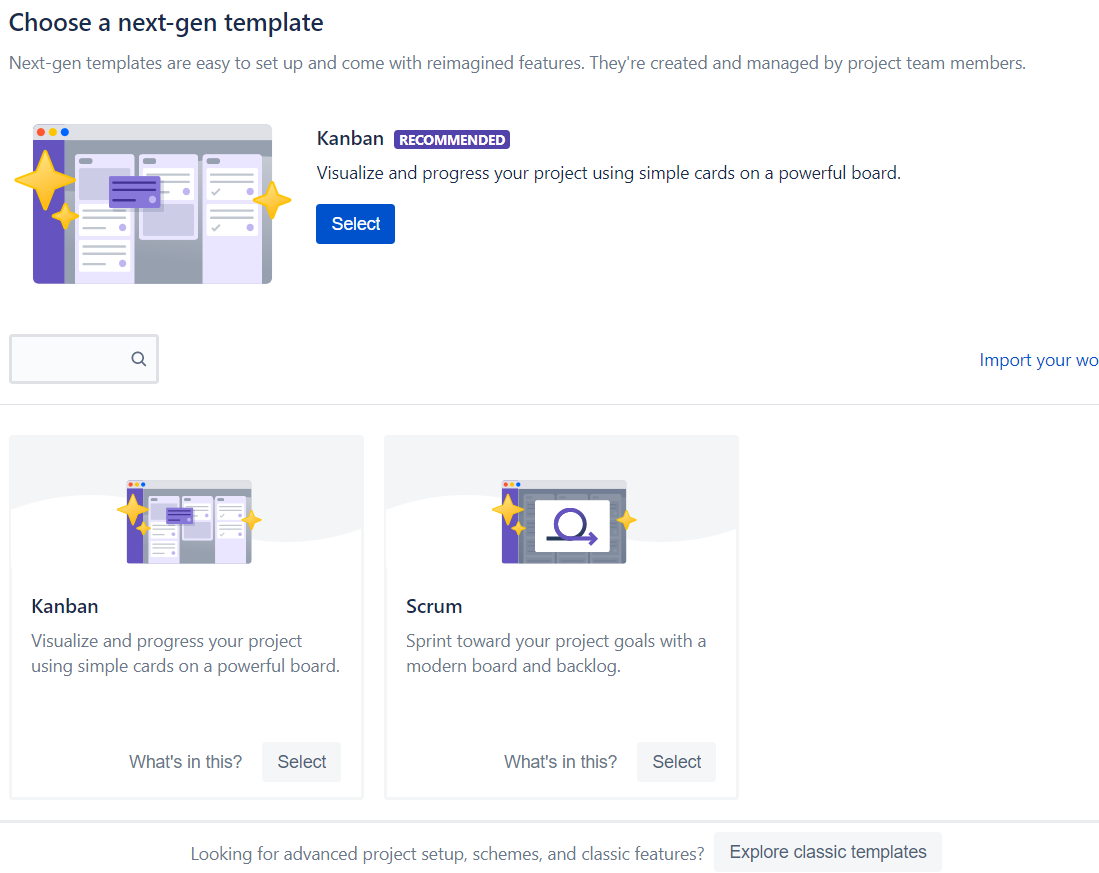
Step 6: Name and create the Jira project
Enter a clear project name and review the generated project key. The key becomes part of each issue identifier, such as APP-101. Create the project after confirming its name, key, access, and project type.
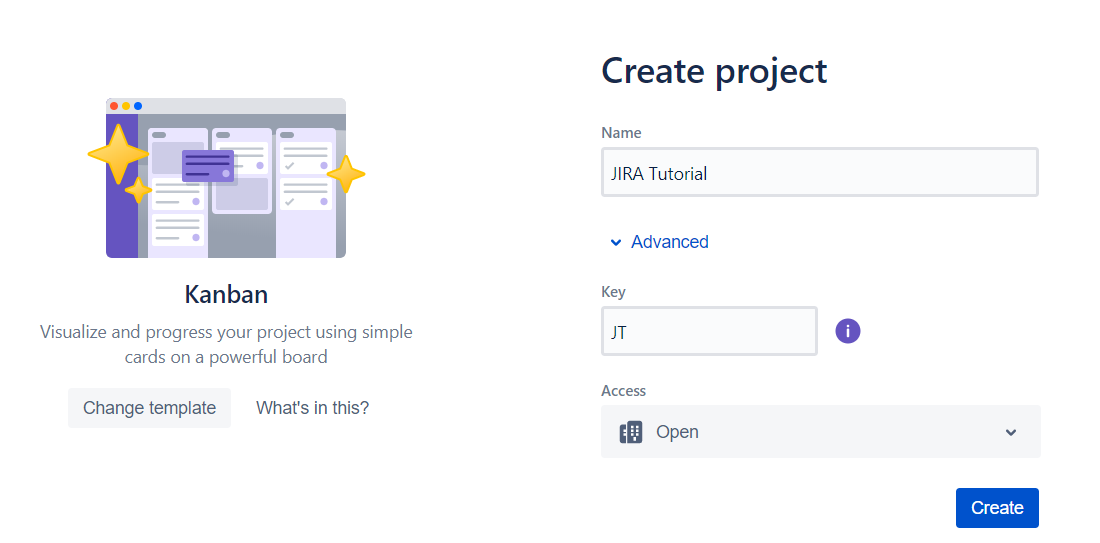
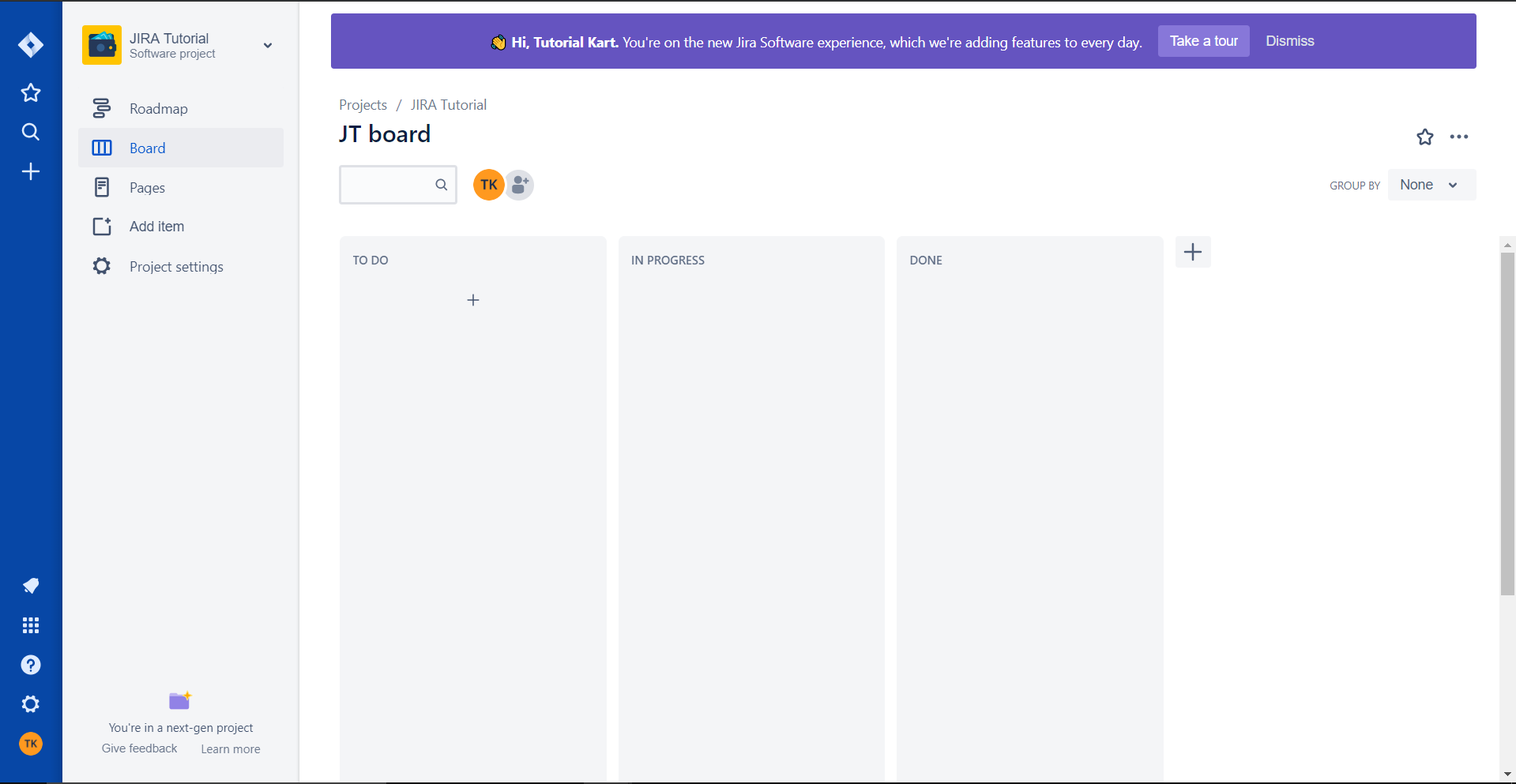
After the project is created, Jira opens the project view. The initial navigation may include a board, backlog, roadmap, issues, releases, reports, and project settings, depending on the selected template and product.
How to organize work with a Jira roadmap
A Jira roadmap communicates planned work across a timeline. It can show epics, dates, releases, progress, and dependencies when those features are available. Use the roadmap for high-level planning and use issues, the backlog, and the board for detailed execution.
Following is a screenshot of a Jira roadmap when a project has just been created.
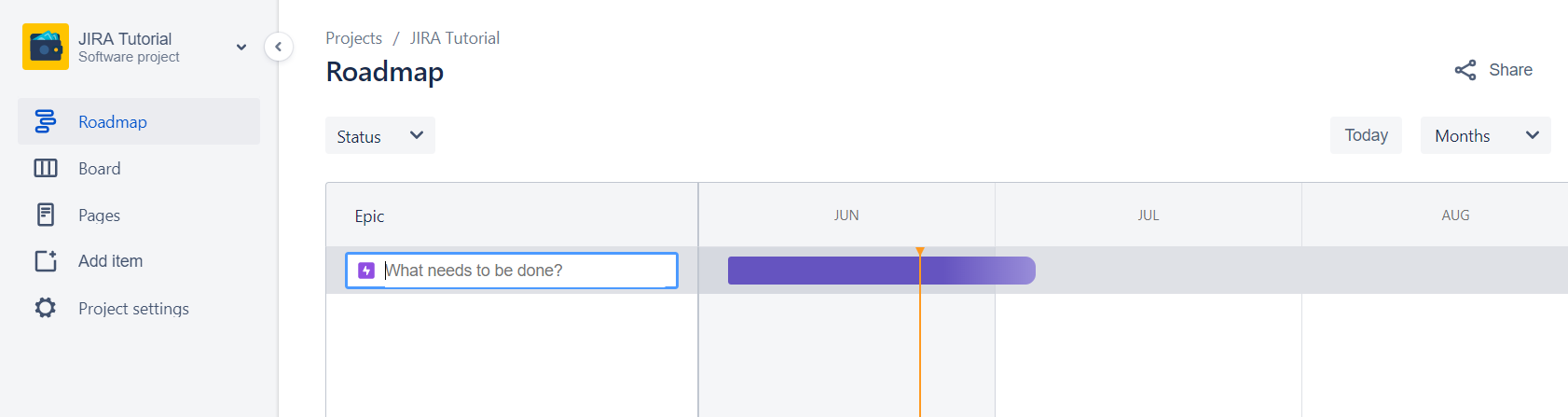
To create an epic from the roadmap, use the available create control, enter a concise epic name, and save it. In the interface shown below, the field uses the placeholder What needs to be done?.
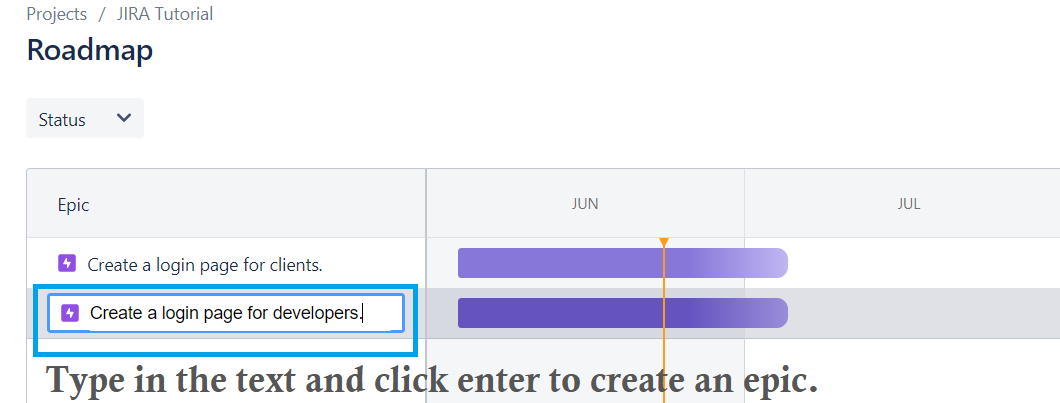
After creating the epic, open it to review and complete its details.
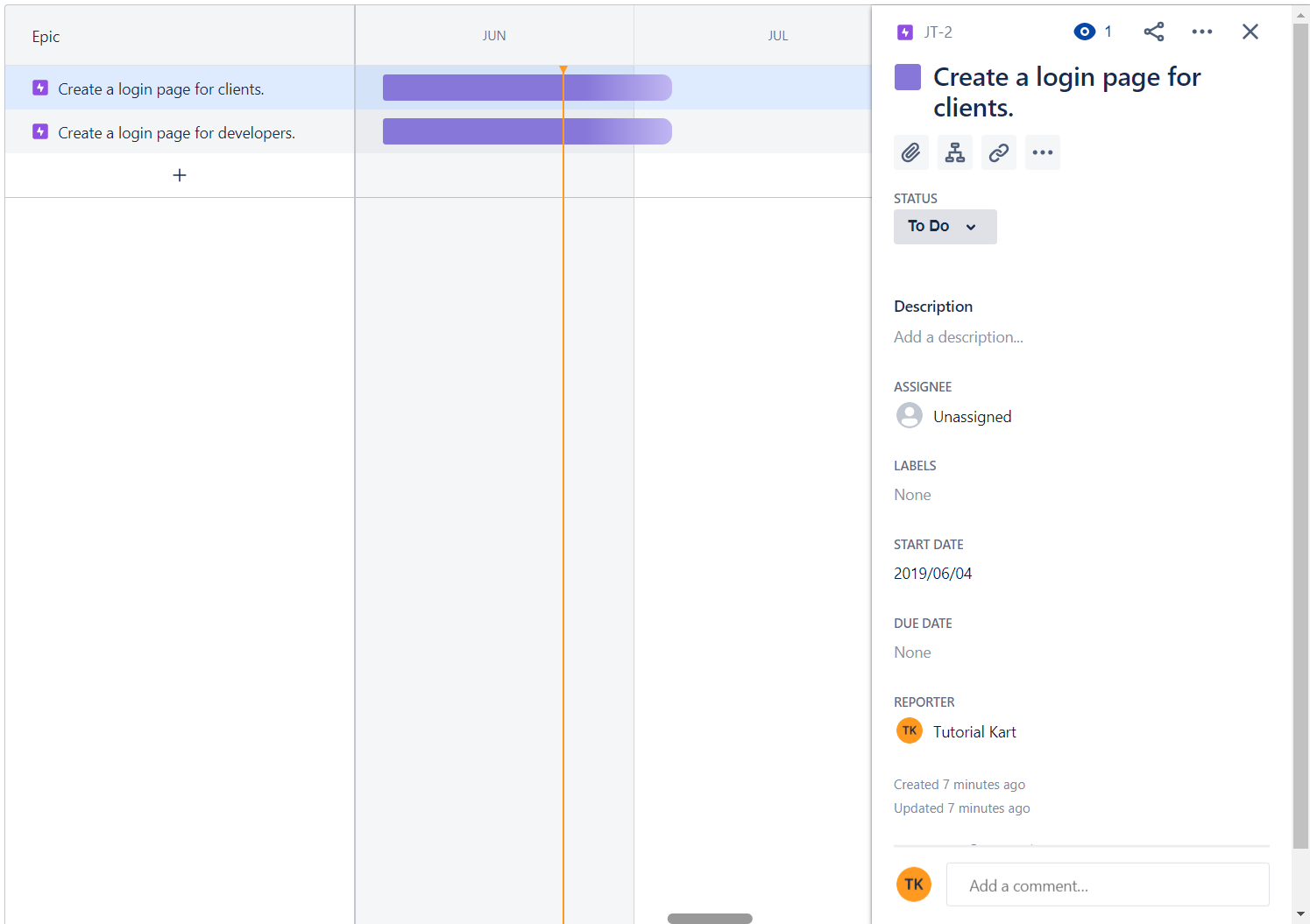
Common epic-management tasks include:
- Write a description that defines the objective and scope.
- Assign an owner when the workflow requires one.
- Add labels or components for organization.
- Set start and due dates when date fields are available.
- Confirm the reporter and relevant stakeholders.
- Create or link the stories, tasks, and bugs that belong to the epic.
- Add comments, attachments, and links as the work progresses.
- Review dependencies and progress on the roadmap.
How to manage the Jira backlog
The Jira backlog contains upcoming work that can be refined before execution. Scrum projects commonly use the backlog to prepare and plan sprints. Kanban projects may also provide a backlog when that feature is enabled.
Typical backlog activities include:
- Create stories, tasks, bugs, and other issue types.
- Rewrite summaries and descriptions so the work is understandable.
- Rank issues by dragging them into priority order.
- Estimate work using story points, time estimates, or another team method.
- Split work that is too large into smaller issues.
- Group related issues under epics.
- Add acceptance criteria, dependencies, labels, and components.
- Move selected work into a sprint or active board workflow.
Ranking is not the same as setting the Priority field. Ranking controls the relative order of issues in a backlog or board, while Priority is a separate field such as Highest, High, Medium, Low, or Lowest.
How to create and update a Jira issue
Jira represents tasks, bugs, stories, requests, features, and other work as issues. An issue should contain enough information for the assignee and reviewers to understand the expected outcome.
Create an issue from the Jira board
In the interface shown here, click the + button under the TO DO column.
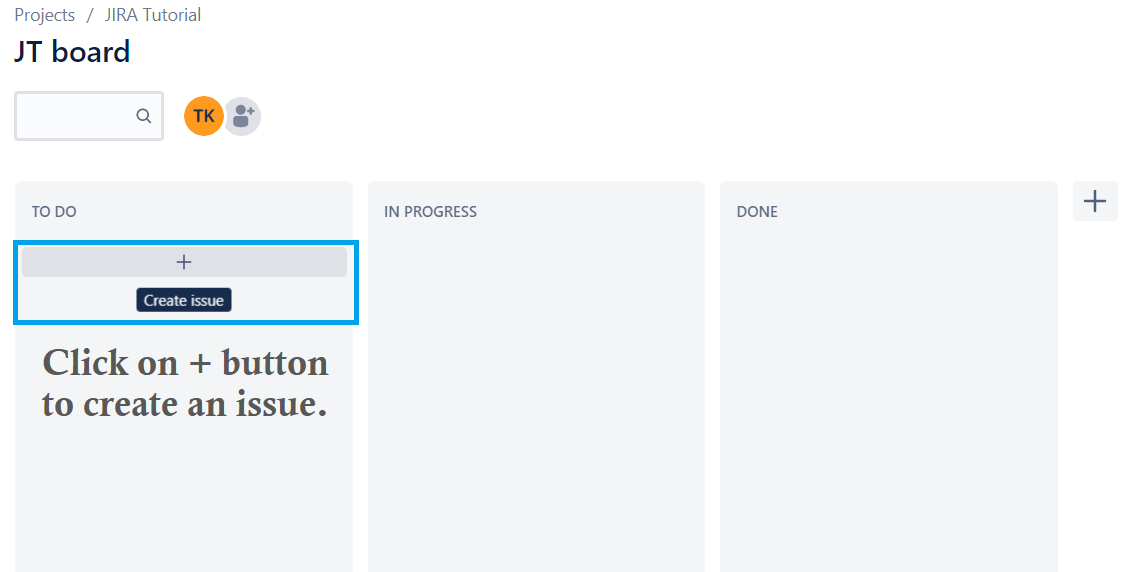
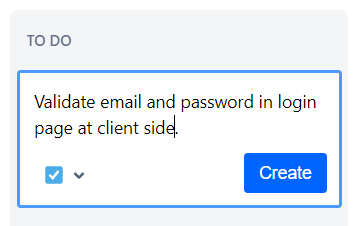
Enter a short summary that clearly describes the work and click Create. Jira sites may also provide a global Create button that opens a more detailed issue form.
The new issue appears on the board if it matches the board filter and the status is mapped to a visible board column.
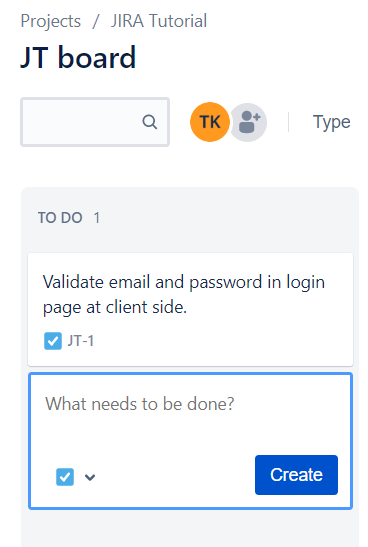
Complete the Jira issue details
- Write a description with context, requirements, and the expected result.
- Add acceptance criteria for stories or verifiable tasks.
- Attach screenshots, logs, documents, or other supporting files.
- Create subtasks or child work when the issue needs to be divided.
- Link related, blocked, duplicate, or dependent issues.
- Assign the issue to the person responsible for the next action.
- Set priority, labels, components, estimates, and dates where appropriate.
- Confirm the reporter and watchers.
- Use comments for decisions, questions, and progress that other users need to see.
- Move the issue through the workflow as its status changes.
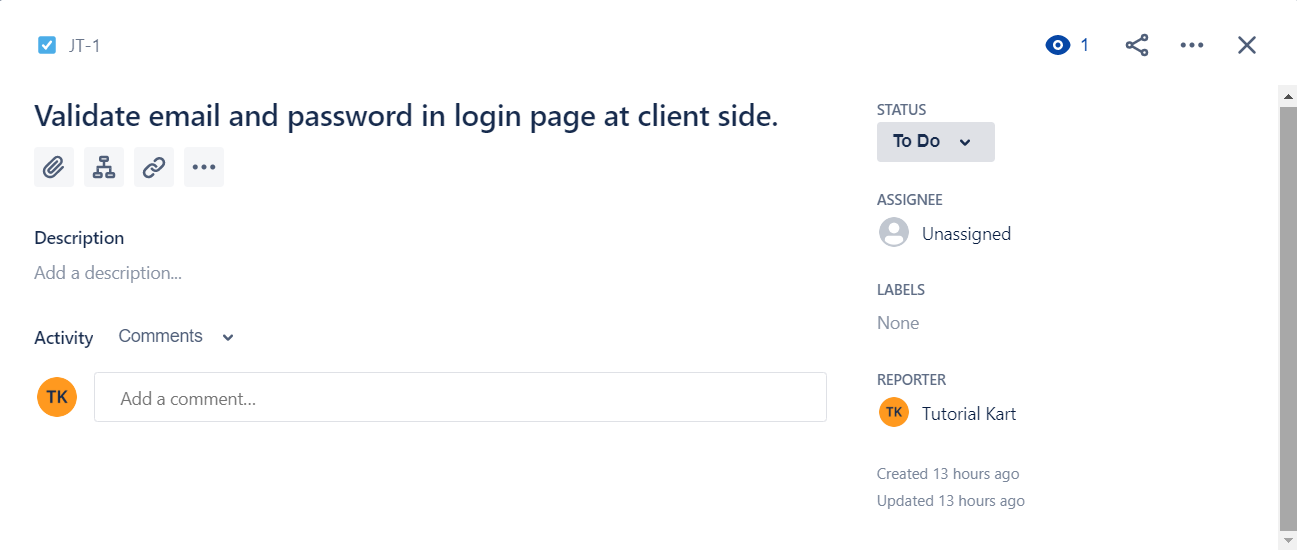
Jira tutorial workflow for testers
Testers often use Jira to report defects, track verification, and communicate with developers and product owners. A useful bug report should make the problem reproducible and separate observed behavior from expected behavior.
- Summary: State the visible problem and affected area.
- Environment: Record application version, browser, device, operating system, build, or test environment.
- Preconditions: List required account state, data, permissions, or setup.
- Steps to reproduce: Provide numbered, repeatable actions.
- Expected result: Describe what should happen.
- Actual result: Describe what happened instead.
- Evidence: Attach screenshots, video, logs, console output, or test data where permitted.
- Severity and priority: Follow the team’s definitions rather than using the terms interchangeably.
- Verification: Record the tested build and result after a fix is delivered.
Jira project-management practices that keep boards useful
- Use short, specific issue summaries instead of vague titles such as “Fix problem.”
- Define what Done means for the team and map the workflow accordingly.
- Keep issue statuses limited to stages that support real decisions.
- Update assignees and statuses so the board reflects current ownership.
- Use labels and components consistently; avoid creating near-duplicate values.
- Keep large outcomes in epics and executable work in smaller issues.
- Review stale, blocked, and unassigned issues regularly.
- Save shared filters only after confirming that their permissions are appropriate.
- Use reports as evidence for discussion, not as a substitute for understanding the work.
How long does it take to learn Jira?
Basic Jira use is usually learned by working through a small project: create issues, edit fields, assign work, move cards, search, and review the backlog. Advanced administration takes longer because it includes workflow design, schemes, permissions, automations, custom fields, integrations, and governance. The fastest approach is to practise in a test project that resembles the workflow you will actually use.
Jira tutorial FAQs
Is Jira easy to learn for beginners?
Jira is relatively straightforward for basic tasks such as creating issues, assigning work, moving cards, and using a backlog. It becomes more complex when a user needs to configure workflows, permissions, custom fields, automations, and cross-project reporting.
What is the difference between a Jira issue and a task?
An issue is Jira’s general term for a work item. A Task is one possible issue type. Stories, bugs, epics, subtasks, and custom types are also issues.
What is the difference between a Jira board and a backlog?
A board shows work moving through active workflow columns. A backlog holds upcoming work that the team can refine, rank, estimate, and schedule before it becomes active.
Can testers use Jira for bug tracking?
Yes. Testers can create bug issues, document reproduction steps, attach evidence, assign defects, link related work, track status, and record verification results. The exact fields and workflow are configured by the organization.
What should I learn after creating my first Jira project?
Next, practise issue types, workflows, board columns, backlog ranking, epics, filters, JQL, dashboards, reports, releases, permissions, and automation. Focus first on the features used by your team rather than trying to learn every Jira setting at once.
Jira tutorial editorial QA checklist
- Confirm that Jira product names and interface labels match the current screen being described.
- Verify that screenshots are identified as examples of the interface version in which they were captured.
- Check that “issue,” “task,” “story,” “bug,” “epic,” and “subtask” are not treated as identical issue types.
- Confirm that Scrum, Kanban, backlog, sprint, board, and roadmap explanations are not mixed together.
- Test every JQL example in a suitable Jira project or clearly mark configuration-dependent fields.
- Review signup, plan, trial, template, and project-type statements against the current Atlassian page before publication.
- Ensure bug-report guidance includes reproducible steps, expected result, actual result, environment, and evidence.
- Check that no project permissions, notification behavior, or available reports are presented as universal across all Jira sites.