 TutorialKart.com
How to Define Condition Types for Output Determination in SAP QM
This tutorial explains how to define a condition type, also referred to as an output type in the configuration screens, for quality certificate output determination in SAP Quality Management. The procedure covers copying an existing output type, maintaining its processing routines, assigning partner functions, and saving the configuration.
An output type identifies the type of message SAP should generate, such as a quality certificate printout or another certificate-related output. It works together with the output determination procedure, condition records, partner functions, transmission medium, and processing program.
| Transaction code | SPRO |
| SAP IMG path | Quality Management > Quality Certificates > Output Determination > Define Condition Types for Output Determination |
| Configuration object | Condition type or output type for quality certificate output |
| Main dependent settings | Processing routines, partner functions, output procedure, and condition records |
Before Configuring an SAP QM Output Type
- Confirm which business document or quality certificate should produce the output.
- Identify a standard or existing output type with behavior similar to the required custom output.
- Determine the required transmission medium, such as print or electronic processing.
- Identify the processing program, form routine, form, and partner function required by your SAP system.
- Use the customer namespace for custom output types according to your project naming standards.
The exact field values depend on the SAP release, installed components, certificate scenario, and project design. Review an existing working output type before creating a new one.
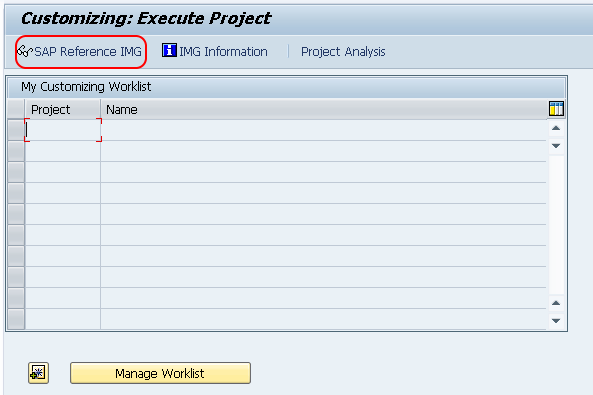
Step 1: Open SAP Reference IMG with Transaction SPRO
Execute transaction code SPRO in the SAP command field.

On the Customizing screen, choose SAP Reference IMG.
Step 2: Navigate to SAP QM Output Determination
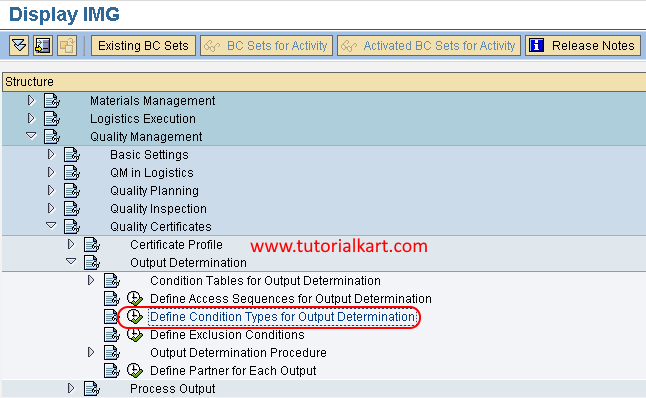
In the Display IMG screen, follow this configuration path:
Quality Management > Quality Certificates > Output Determination > Define Condition Types for Output Determination
Open the IMG activity Define Condition Types for Output Determination.
Step 3: Review Existing SAP QM Output Types
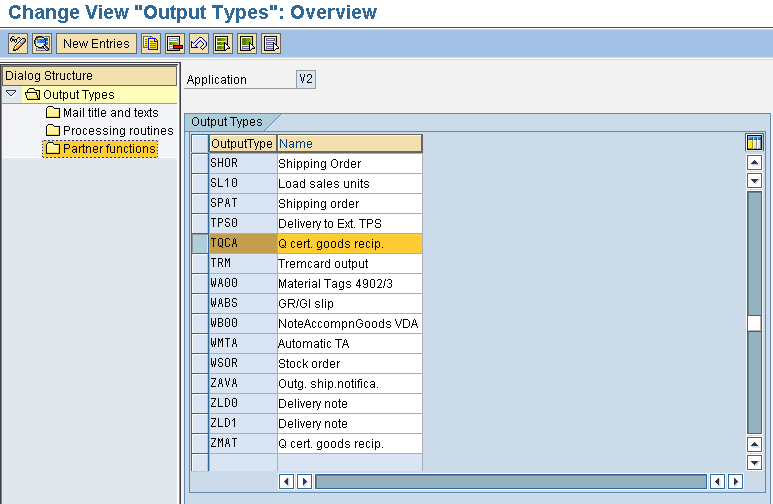
The output types overview displays the condition types already defined for the application. Review the existing entries and select an output type whose processing behavior is close to the new requirement. Use the change function when configuration changes are permitted in the current client.
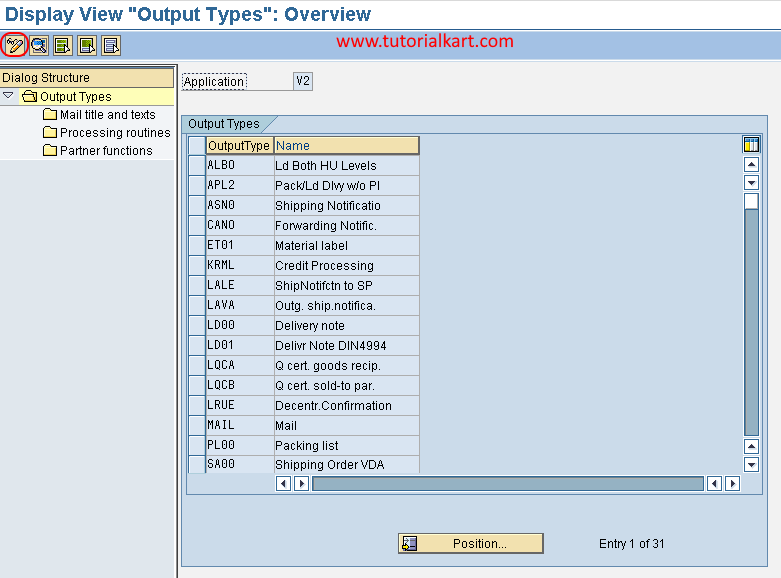
You can create an output type with New Entries, but copying a similar existing entry is usually safer because it retains related control settings that can then be reviewed and adjusted.
Step 4: Copy an Existing Output Type
Select the existing output type that you want to use as the reference and choose Copy As.
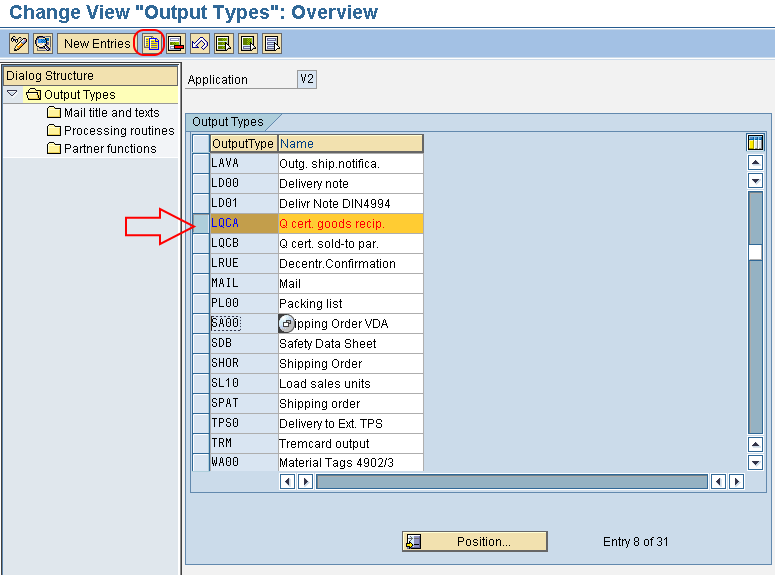
Enter the new output type key, description, and the required control details. Press Enter to validate the entry and continue.
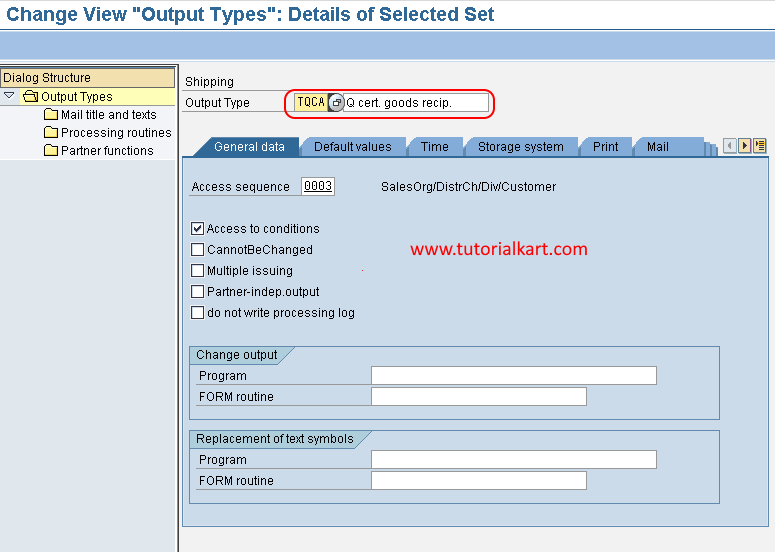
Choose Copy All to copy the dependent entries from the reference output type to the new output type.
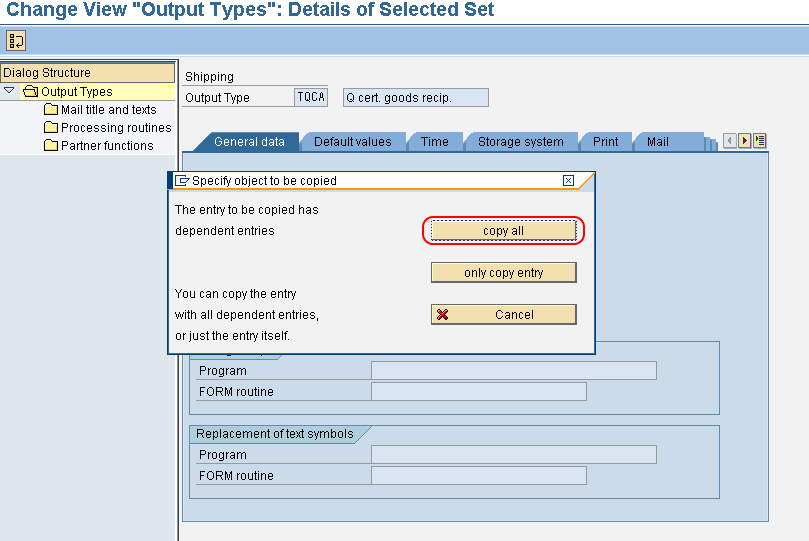
After copying, review every inherited setting. A copied output type may contain processing details, access settings, timing controls, or partner assignments that are not suitable for the new quality certificate scenario.
Step 5: Maintain Processing Routines for the Output Type
Return to the output type overview, select the new output type, and choose Processing Routines.
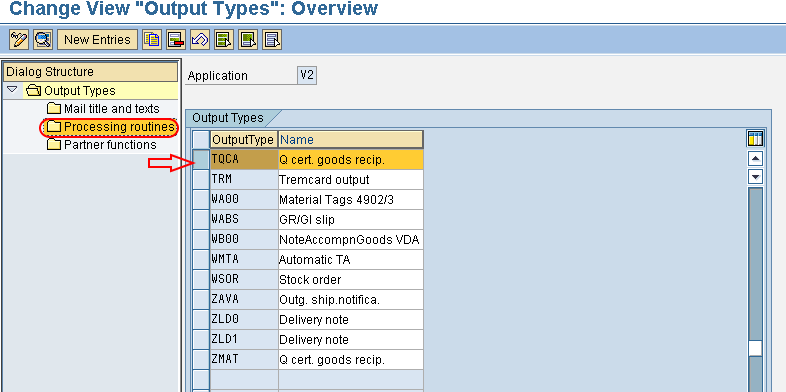
Choose New Entries to maintain an additional processing routine, or review the entries copied from the reference output type.
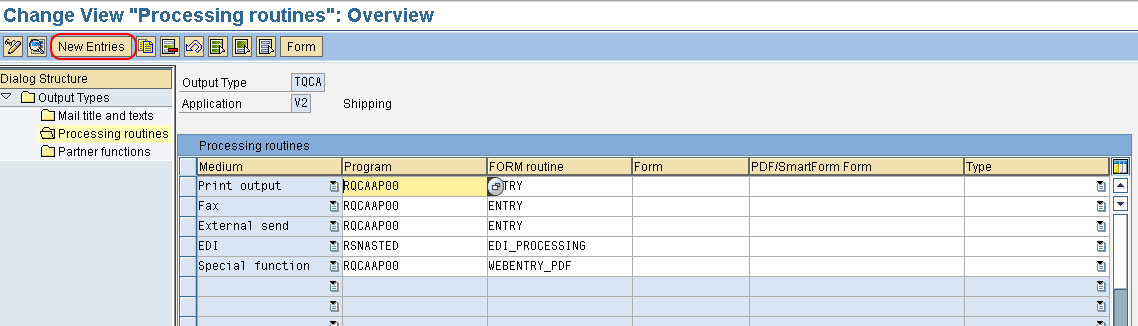
Enter the processing details required by the implementation and save the entry.
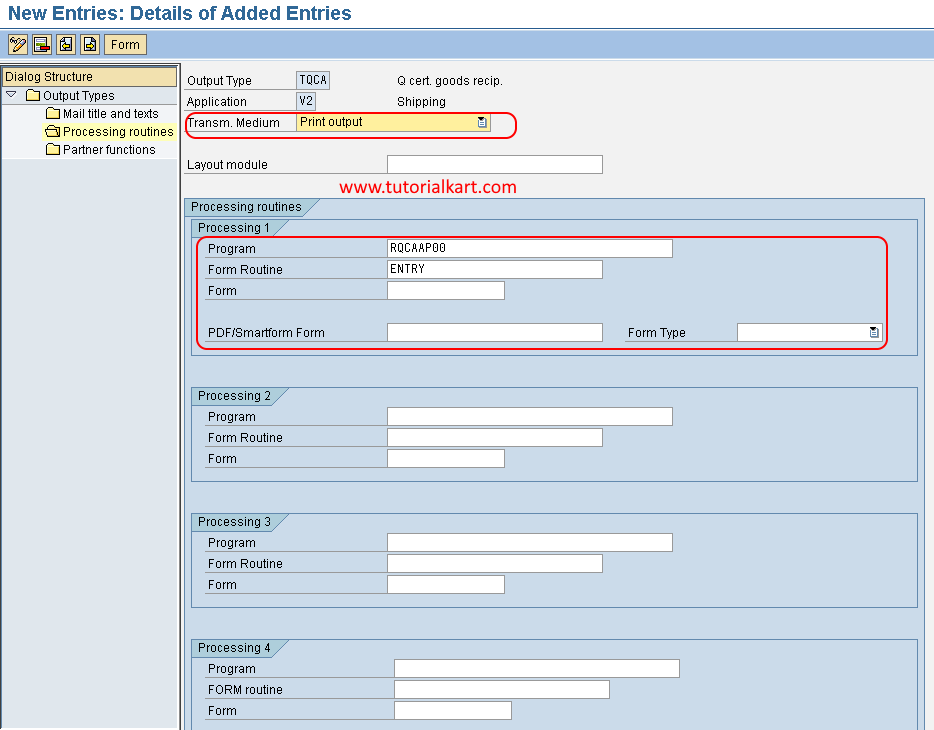
A processing routine generally connects the output type and transmission medium to the program and routine that generate the output. Depending on the configuration, it may also reference a form or form technology. Copy these values only from a verified working output type and confirm them with the project design.
Step 6: Assign Partner Functions to the Output Type
Go back to the output type overview, select the new output type, and choose Partner Functions.
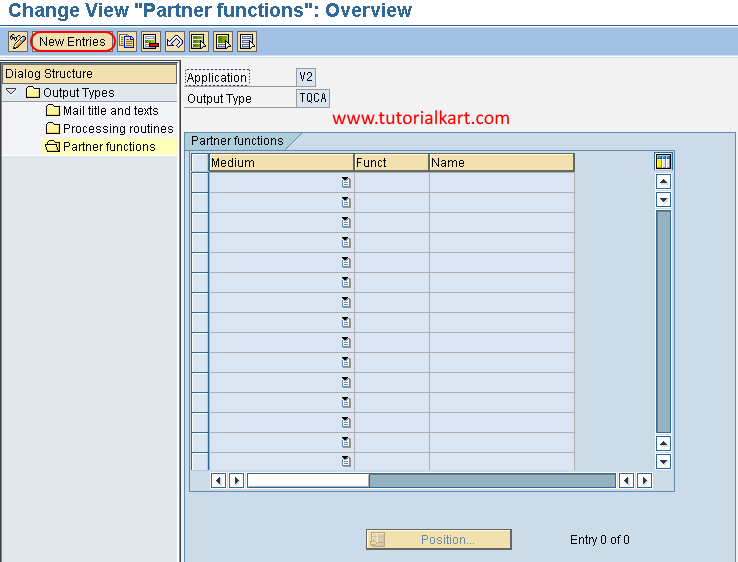
In the partner function overview, choose New Entries when an additional partner assignment is required.
Enter the partner function details required for the output recipient.
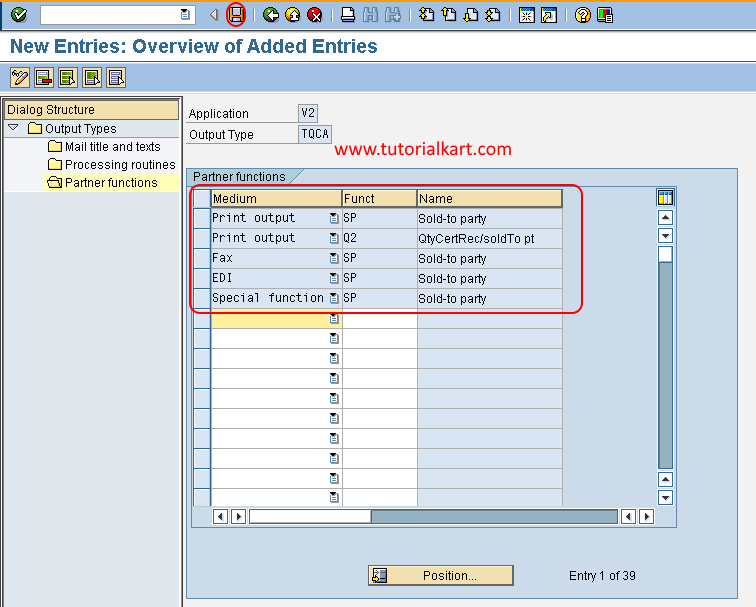
Save the partner function assignment and then save the output type configuration. Assigning a partner function controls which business partner can be selected as the recipient when the output is determined.
How the SAP QM Output Type Fits into Output Determination
Defining the output type is only one part of SAP output determination. The output type normally must also be included in an output determination procedure, and that procedure must be assigned to the relevant application or business process.
- Output type: Defines the message to be generated and its processing controls.
- Output determination procedure: Defines which output types SAP evaluates and in what sequence.
- Access sequence: Defines how SAP searches for matching condition records when condition technique is used.
- Condition record: Stores the business rules under which the output should be proposed or generated.
- Partner function: Identifies the possible recipient role for the output.
- Processing routine: Connects the output medium to the program, routine, and form used to create the output.
If the output type is defined correctly but no output appears in the business document, verify the procedure assignment and condition record before changing the processing program.
Maintaining Condition Records for an SAP Output Type
A condition record contains the key combinations and values that tell SAP when an output type is applicable. The transaction used to maintain the record depends on the application and output framework. Use the condition maintenance option provided for the relevant quality certificate process rather than assuming that an SAP SD or MM transaction applies to SAP QM.
When maintaining a condition record, verify the output type, key fields, validity dates, partner, transmission medium, dispatch time, language, and any communication settings required by the recipient.
Testing the SAP QM Output Determination Configuration
- Create or select a business transaction that should generate the quality certificate output.
- Confirm that the required master data and recipient partner are available.
- Check whether the configured output type is proposed in the output or message screen.
- Review the determination analysis, where available, to see which access and condition record were evaluated.
- Process the output and confirm that the expected program, routine, form, medium, and recipient are used.
- Check the processing log for errors if the output remains unprocessed or ends with an error status.
SAP Output Type Troubleshooting Checks
| Issue | Configuration checks |
|---|---|
| Output type is not proposed | Check the output procedure, procedure assignment, access sequence, condition record, validity period, and key values. |
| No recipient is determined | Check the assigned partner functions and the partner data in the business document. |
| Output is determined but not processed | Check the dispatch time, processing status, communication data, and processing routine. |
| Wrong form or layout is generated | Review the program, routine, form assignment, language, and copied processing settings. |
| Custom output type behaves like the copied type | Review all inherited control data and dependent entries instead of changing only the output type name. |
Frequently Asked Questions About SAP QM Output Types
What is the role of an output type in SAP output determination?
An output type defines the message that SAP should create and contains controls for processing, timing, transmission medium, recipient roles, and the program or form used to generate the output.
Is an output type the same as a condition type in SAP QM?
In this IMG activity, SAP uses condition technique terminology while the configuration overview commonly refers to output types. The configured object represents the message type evaluated during output determination.
How do I maintain a condition record for an SAP QM output type?
Use the condition maintenance function provided for the relevant quality certificate application. Enter the output type and the required key combination, then maintain validity dates, medium, dispatch time, partner, language, and communication data as required.
Why is the SAP output type not being determined?
Common causes include a missing procedure assignment, an output type not included in the procedure, no valid condition record, mismatched condition keys, missing partner data, or an expired validity period.
Should I create a new SAP output type or copy an existing one?
Copying a similar working output type can reduce configuration omissions, but every copied setting must be reviewed. Use New Entries when no suitable reference exists or when the implementation requires an independently designed configuration.
SAP QM Output Determination Editorial QA Checklist
- Confirm that the IMG path matches the SAP QM quality certificate configuration used in the target system.
- Verify that the tutorial distinguishes the output type from the output procedure and condition record.
- Ensure that no project-specific program, routine, form, medium, or partner value is presented as universally applicable.
- Check that copied output type settings are reviewed before transport.
- Confirm that testing covers determination, recipient selection, processing status, and generated form output.