 TutorialKart.com
MySQL – Increase Column Size
Did you create a column with a specific size and would you like increase it now? In this MySQL Tutorial, we shall learn how to modify the size of a column in MySQL Table.
To change column size use ALTER TABLE query as shown below:
ALTER TABLE table_name MODIFY column_name datatypeFor a variable-length text column, include the new length in the data type. The following syntax increases a VARCHAR column to the required number of characters.
ALTER TABLE table_name
MODIFY COLUMN column_name VARCHAR(new_length);
COLUMN is optional in MySQL, so both MODIFY name VARCHAR(30) and MODIFY COLUMN name VARCHAR(30) are valid forms.
Example to change column size in MySQL Table
Let us consider students table with the following schema.
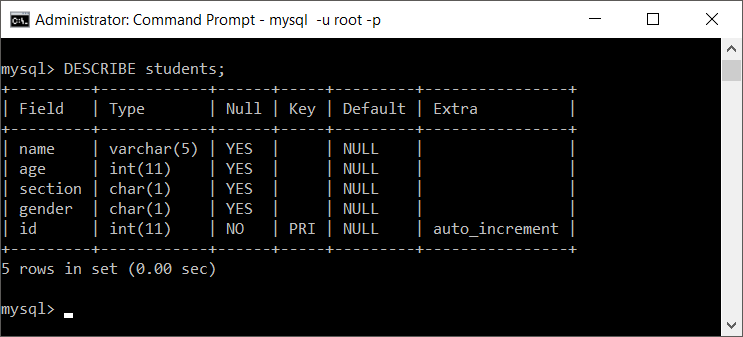
The name column is of datatype varchar and size 5.
To increase the size of the column, we shall run the following SQL Query.
ALTER TABLE students MODIFY name VARCHAR(30);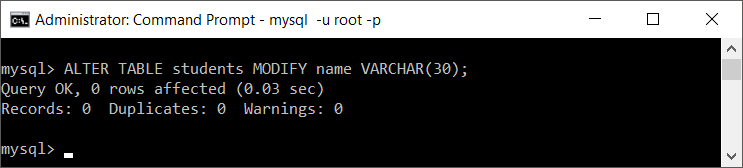
Now, let us see the modified schema if the column size has updated.
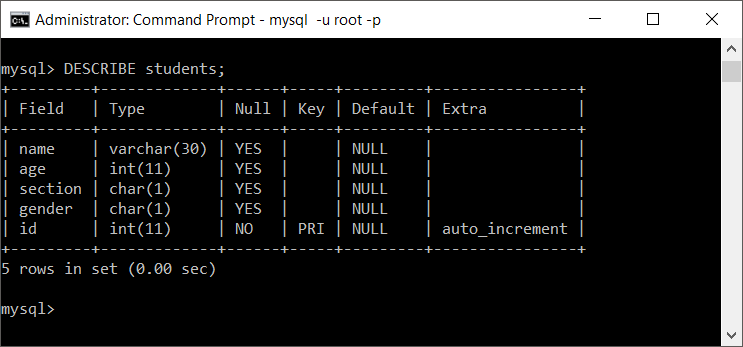
The column size has been successfully updated to the new value.
Verify the new MySQL column length
Use DESCRIBE to confirm the data type and length after running the ALTER TABLE statement.
DESCRIBE students;You can also inspect the complete table definition. This is useful when the column has constraints, a default value, a character set, or a collation that must be checked.
SHOW CREATE TABLE students;Preserve column attributes when using MODIFY COLUMN
MySQL expects the complete new column definition in a MODIFY clause. If the existing column is NOT NULL, has a DEFAULT value, or uses another attribute, include that attribute in the statement. Omitting it can change the column definition.
For example, suppose name is defined as VARCHAR(5) NOT NULL. Increase its length while retaining the constraint as follows.
ALTER TABLE students
MODIFY COLUMN name VARCHAR(30) NOT NULL;
A column with a default value should also repeat that value in the new definition.
ALTER TABLE students
MODIFY COLUMN status VARCHAR(20) NOT NULL DEFAULT 'active';
Increase column size without changing its name
Use MODIFY COLUMN when only the data type, length, or attributes need to change. MySQL also supports CHANGE COLUMN, but that form requires both the current and new column names, even when the name remains the same.
ALTER TABLE students
CHANGE COLUMN name name VARCHAR(30);
For a simple increase in column length, MODIFY COLUMN is clearer because it does not require the column name twice.
Increase the size of CHAR, VARCHAR, and numeric columns
The exact definition depends on the column data type. The length in VARCHAR(100) represents a maximum number of characters, while storage also depends on the character set and the actual values. A CHAR column stores fixed-length values, so increasing it may use more space for each row.
ALTER TABLE employees
MODIFY COLUMN employee_code CHAR(12) NOT NULL;
For numeric columns, display width is not a way to increase the numeric range. To store larger integer values, change to a data type with a larger range, such as INT to BIGINT, after confirming that application code and related foreign-key columns are compatible.
ALTER TABLE orders
MODIFY COLUMN order_number BIGINT NOT NULL;
Checks before altering a column on a populated table
- Run
SHOW CREATE TABLE table_name;and copy the current column definition before changing it. - Check indexes, foreign keys, generated columns, and application validation rules that reference the column.
- Test the statement on a backup or staging copy when the table contains important data.
- Schedule the change carefully for a large or frequently written table because an
ALTER TABLEoperation can require time and may affect concurrent queries. - Do not reduce the length until you have checked whether existing values exceed the proposed limit.
To find the longest existing value before reducing a text column, use CHAR_LENGTH(). It returns the number of characters rather than the number of bytes.
SELECT MAX(CHAR_LENGTH(name)) AS longest_name
FROM students;
MySQL column-size errors and practical fixes
Data too long for column
This error means a value exceeds the column’s permitted length. Increase the column length to a suitable value, or validate the incoming data before insertion. Do not select a length without considering real data and application requirements.
Specified key was too long
An indexed text column can be subject to index-size limits that depend on the storage engine, character set, and MySQL configuration. Increasing an indexed VARCHAR may therefore require reviewing the index definition. Avoid shortening an index prefix without checking how the index is used.
Column attributes changed unexpectedly
This usually happens when a MODIFY COLUMN statement omits attributes from the original definition. Compare the result of SHOW CREATE TABLE before and after the alteration, then repeat all required attributes in the new definition.
Frequently asked questions about increasing MySQL column size
How do I increase a VARCHAR column size in MySQL?
Use ALTER TABLE ... MODIFY COLUMN and specify the new length, for example ALTER TABLE students MODIFY COLUMN name VARCHAR(30);. Repeat existing constraints and defaults that must remain part of the definition.
Will increasing a VARCHAR size delete existing data?
Increasing the declared length does not normally require truncating values because the new limit is larger. Even so, back up important data and review the complete alteration when changing a production table.
What is the difference between MODIFY and CHANGE in MySQL?
MODIFY changes a column definition without requiring a new name. CHANGE can rename the column and requires both the old and new names. Both forms require a complete column definition.
How can I check a column’s current size in MySQL?
Run DESCRIBE table_name; for a quick view or SHOW CREATE TABLE table_name; for the complete definition. The latter is better for checking nullability, defaults, indexes, character sets, and collations.
MySQL column-size change checklist
- Confirm the target table and column names.
- Record the full existing column definition.
- Choose a new length based on actual data requirements.
- Preserve
NOT NULL,DEFAULT, character-set, and collation attributes where applicable. - Review dependent indexes and foreign keys.
- Run the alteration in a safe maintenance window for a large table.
- Verify the result with
DESCRIBEandSHOW CREATE TABLE.