 TutorialKart.com
What is an Azure Web App Service?
Azure Web App is a web hosting feature inside Azure App Service. It lets you run websites, web applications, and REST APIs on Microsoft Azure without managing the underlying servers, operating system patching, or web server setup.
Azure App Service is a Platform as a Service (PaaS) offering. You provide the application code or container image, choose an App Service plan, configure deployment and runtime settings, and Azure manages much of the hosting platform for you.
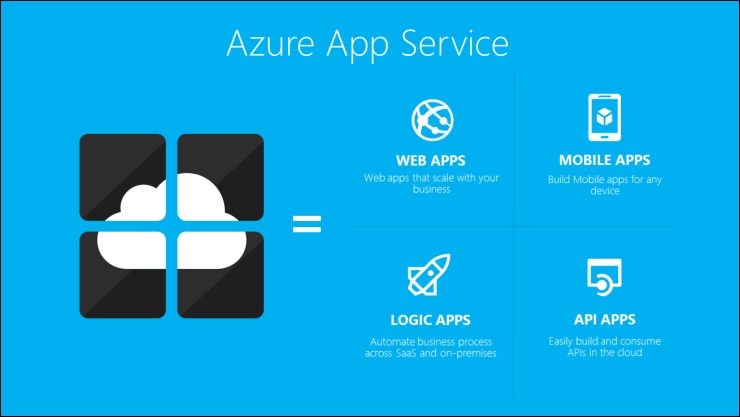
Azure Web App and Azure App Service difference
The terms are closely related, but they do not mean exactly the same thing. Azure App Service is the Azure platform service. Web App is one type of app that runs on Azure App Service.
| Term | Meaning |
|---|---|
| Azure App Service | The managed PaaS platform used to host web apps, APIs, and related app workloads. |
| Azure Web App | A website or web application hosted on Azure App Service. |
| App Service plan | The compute resources, region, operating system, and pricing tier used by one or more apps. |
For example, when you create a Web App in the Azure portal, you also choose or create an App Service plan. The plan controls the scale, cost, and compute capacity available to the Web App.
Azure Web App Service as a PaaS hosting option
Azure Web App Service is commonly used when a team wants to deploy a web application without maintaining virtual machines. Instead of installing IIS, Nginx, Apache, runtime dependencies, and security updates manually, you use the managed platform and focus on application code and configuration.
Azure Web Apps can host applications built with frameworks and languages such as .NET, Java, Node.js, PHP, Python, and Ruby. They can also run container-based web apps when the application is packaged as a Docker container.
Main Azure App Service features for web applications
The key features and capabilities available as part of the Azure App Service framework are described here:
- Multiple languages and framework support: Azure App Service supports commonly used web development stacks such as .NET, Java, Node.js, PHP, Python, and Ruby.
- Managed platform hosting: Azure handles the infrastructure layer, operating system updates, platform availability, and web hosting environment for the App Service runtime.
- Deployment options: Applications can be deployed from Visual Studio, Azure DevOps, GitHub Actions, local Git, ZIP packages, FTP, or container registries.
- Deployment slots: Standard and higher App Service tiers support deployment slots, so you can test a staging version and then swap it with production.
- Scaling: You can scale up to a larger pricing tier or scale out to run multiple app instances, depending on the App Service plan.
- Custom domains and TLS: Azure Web Apps can use custom domain names and HTTPS with TLS certificates.
- Authentication and authorization: App Service can integrate with identity providers such as Microsoft Entra ID and other supported providers.
- Monitoring and diagnostics: App Service integrates with logging, metrics, alerts, Application Insights, and diagnostic tools.
- Networking controls: Depending on the plan and configuration, an app can use features such as private endpoints, virtual network integration, access restrictions, and hybrid connections.
- Visual Studio integration: Visual Studio and Azure tooling provide templates, publishing workflows, debugging support, and direct deployment to Azure subscriptions.
Azure App Service plan and pricing tier basics
An App Service plan defines the compute resources used by the apps assigned to it. The plan includes the region, operating system, number of instances, instance size, and pricing tier.
Multiple apps can share the same App Service plan. This is useful when the apps have similar scaling and performance needs. If one app requires separate scaling, isolation, or resource allocation, it is usually better to place it in a separate App Service plan.
Azure Web App deployment workflow
A typical Azure Web App deployment follows this flow:
- Create or select an Azure resource group.
- Create an App Service plan with the required region, operating system, and pricing tier.
- Create a Web App and choose the runtime stack or container option.
- Deploy the application from your source control, build pipeline, Visual Studio, ZIP package, or container registry.
- Configure application settings, connection strings, custom domain, TLS, and monitoring.
- Use deployment slots if you need staging-to-production release control.
Azure Web App integrations and connectors
Azure Web Apps can connect to other Azure services and external systems through APIs, SDKs, managed identities, connection strings, and integration services. Common integrations include Azure SQL Database, Azure Storage, Azure Key Vault, Azure Monitor, Microsoft Entra ID, and Azure DevOps.
Applications can also integrate with SaaS and business systems such as Office 365, Salesforce, Facebook, Twitter and Dynamics 365. The right integration method depends on the application design, authentication model, and data flow.
Azure Web App security responsibilities
Azure App Service uses a shared responsibility model. Microsoft manages the Azure platform infrastructure, while the application owner is responsible for secure application code, identity configuration, access control, secrets management, and data protection choices.
- Platform security: Azure manages the App Service platform, host environment, and infrastructure-level controls.
- Application security: You manage app code, dependencies, authentication, authorization, configuration, secrets, and secure data access.
- Network security: You can restrict inbound access, use private connectivity where required, and control outbound access patterns.
- Secret management: Use application settings carefully and consider Azure Key Vault for sensitive configuration values.
Purpose of Azure Web Application Firewall with Web Apps
Azure Web Application Firewall, usually called Azure WAF, helps protect web applications from common web attacks such as SQL injection and cross-site scripting. WAF is not the same as Azure App Service; it is commonly used with services such as Azure Application Gateway, Azure Front Door, or Azure CDN in front of a web application.
For an internet-facing Azure Web App, WAF can be part of the front-door security design, while App Service access restrictions, authentication, TLS, and application-level validation handle other layers of security.
When to use Azure Web App Service
Azure Web App Service is a suitable choice when you need managed hosting for a web application or API and do not want to administer virtual machines. It fits many business websites, internal web portals, REST APIs, small to medium web applications, and production apps that need deployment slots, scaling, monitoring, and managed platform features.
It may not be the best fit when you need full control of the operating system, custom low-level networking, specialized server software, or a workload that is better suited to Kubernetes, Azure Functions, or virtual machines.
Azure Web App Service compared with virtual machines and serverless
| Azure option | Best suited for | Management level |
|---|---|---|
| Azure Web App Service | Managed web apps and APIs | Platform managed by Azure; app managed by you |
| Azure Virtual Machines | Workloads needing full OS and server control | You manage the OS, runtime, and server configuration |
| Azure Functions | Event-driven serverless functions and small units of compute | Azure manages the platform; you manage function code and triggers |
| Azure Kubernetes Service | Containerized applications requiring orchestration control | Shared management between Azure and your Kubernetes configuration |
Reference links for Azure Web App Service
- Microsoft Learn: Azure App Service overview
- Microsoft Azure: Web Apps
- Microsoft Azure: App Service
- Microsoft Azure: What is PaaS?
- Microsoft Azure: Web Application Firewall
FAQs on Azure Web App Service
What is the difference between Azure Web App and Azure App Service?
Azure App Service is the managed platform. Azure Web App is a web application hosted on that platform. When you create a Web App, it runs inside an App Service plan.
Is Azure Web App a PaaS or SaaS?
Azure Web App is a PaaS offering because Azure manages the hosting platform while you manage your application code, configuration, data connections, and security settings.
What is the main benefit of using Azure App Service?
The main benefit is managed web hosting. You can deploy web apps and APIs without maintaining web servers, while still getting features such as scaling, deployment slots, monitoring, custom domains, and TLS support.
What is the purpose of Azure WAF for a Web App?
Azure WAF helps protect web applications from common web attacks. It is usually placed in front of the app through services such as Azure Front Door or Application Gateway.
Can Azure Web App host APIs as well as websites?
Yes. Azure Web App can host websites, web applications, and REST APIs built with supported frameworks or container images.
Editorial QA checklist for this Azure Web App Service page
- The article clearly explains that Azure Web App is part of Azure App Service.
- The PaaS explanation separates Azure-managed platform responsibilities from application-owner responsibilities.
- The page answers search-intent questions about WAF, App Service plans, Web App versus App Service, and PaaS versus SaaS.
- The existing image and existing TutorialKart links are preserved without changing their URLs.
- Official Microsoft Azure and Microsoft Learn reference links are included for further reading.
- The FAQ section is Azure Web App-specific and contains no more than five questions.
Azure Web App Service summary : In this Microsoft Azure tutorial, we learned that Azure Web App is a managed PaaS hosting option inside Azure App Service. It is used to run websites, web applications, and APIs with features such as deployment slots, scaling, monitoring, custom domains, TLS, and integration with other Azure services. In our upcoming Azure training, we will learn how to create an empty Web App and how to create a Web App from a marketplace template.