 TutorialKart.com
In this SAP MM tutorial, you will learn how to maintain number ranges for material type in SAP using transaction code MMNR. Material number ranges control how SAP assigns material master numbers when users create materials with transaction codes such as MM01.
In SAP MM, number ranges are usually maintained through number range groups. A material type is assigned to a number range group, and the group contains the interval from which material numbers are created. The same number range group can be used by more than one material type when the business wants them to share the same material numbering logic.
Define number ranges for material type in SAP MM using MMNR
The material number ranges can be configured by using one of the following navigation methods.
| SAP Menu Path | SPRO > IMG > Logistics – General > Material Master > Basic settings > Material types > Define number ranges for material type. |
| Transaction code | MMNR |
What to decide before maintaining material number ranges
Before creating or changing intervals in MMNR, decide how material numbers should be assigned for each material type. This avoids overlapping ranges and inconsistent material master data.
- Internal number assignment: SAP automatically proposes the next available material number from the assigned interval.
- External number assignment: The user enters the material number manually, and SAP validates that the number belongs to an allowed external interval.
- Separate or shared intervals: Material types can have separate ranges, or multiple material types can be assigned to the same number range group.
- Existing materials: Changing number ranges does not renumber existing material master records.
- Number format: Plan the interval length carefully, especially when your system uses longer material numbers.
Configuration steps to maintain material number range groups
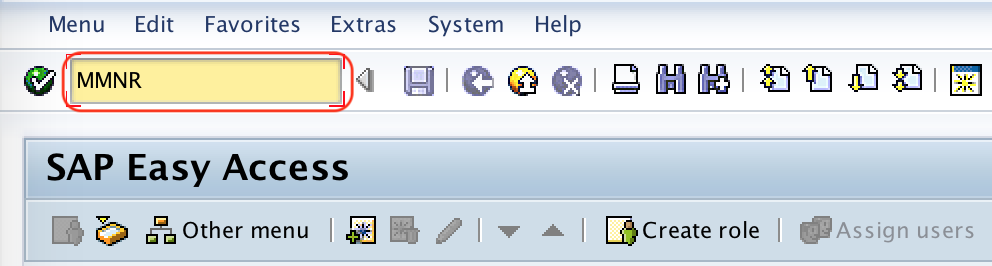
Step 1 : – Execute t-code “MMNR” in command field from SAP easy access screen.
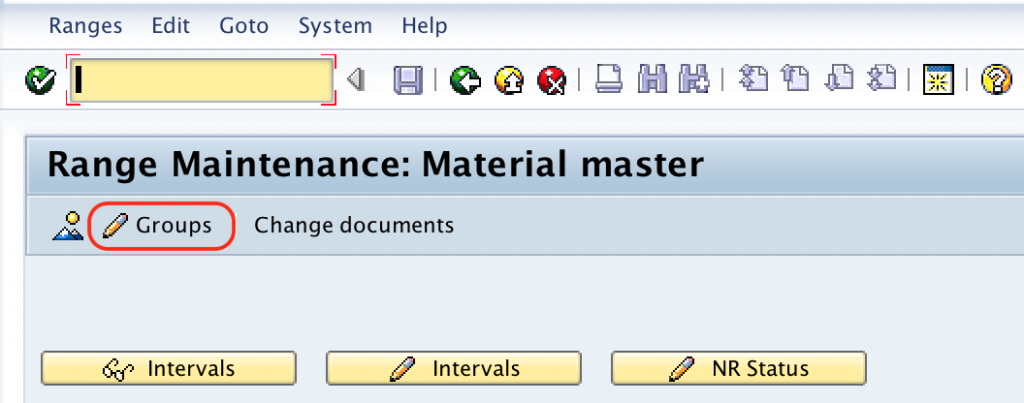
Step 2 : – On range maintenance: material master overview screen, choose maintain groups (or press function key F6) options as shown below image.
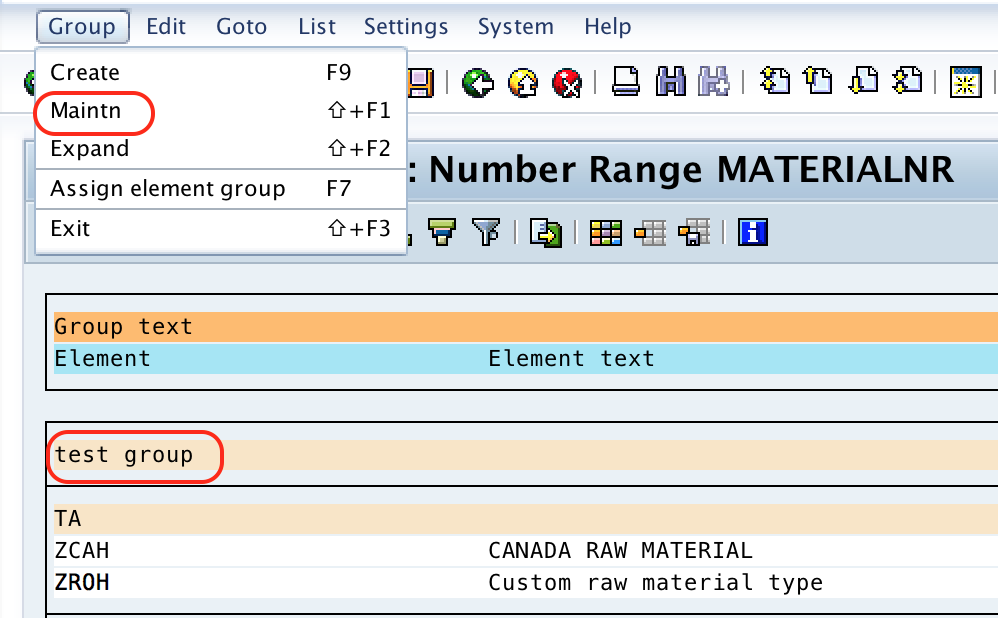
Step 3 : – On group maintenance: Number range MaterialNR screen, choose the material type group and go to menu bar > group > click on maintain option to define number ranges for material type in SAP.
Step 4 : – On maintain intervals : material master screen, click on insert line (F6) to add number ranges for material type.
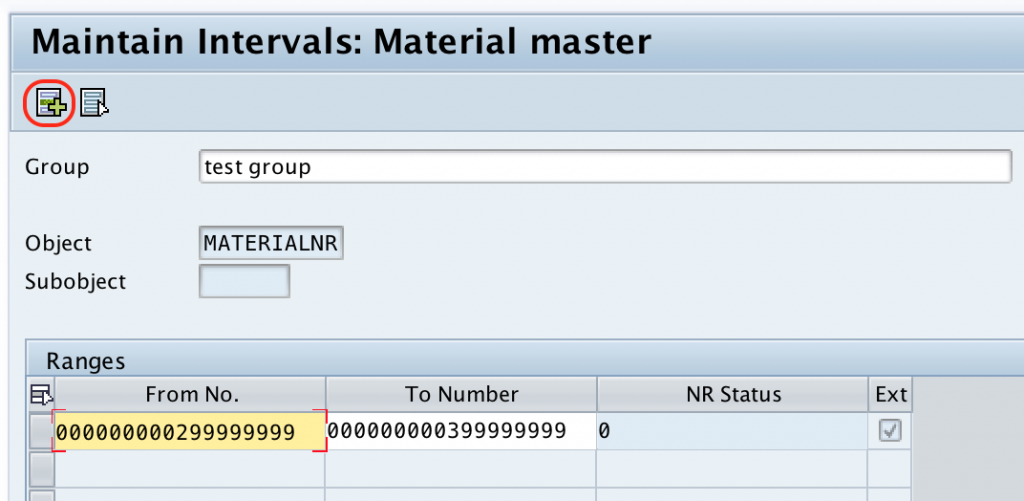
Step 5 : – Now maintain the following details.
- From No : – Update starting number of material type number range interval.
- To Number : – Update last number of material type number range interval.
- Ext : – Choose Ext option if this number range interval is for external number assignments.
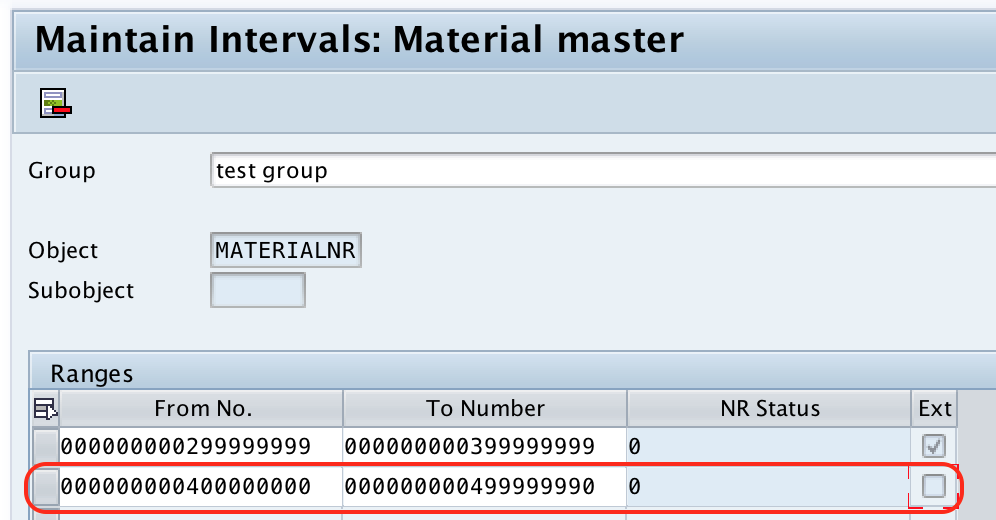
Step 6 : – Save the interval details. If SAP displays a warning message, review it carefully. If the interval is correct and does not conflict with your design, continue and save the configuration.
Step 7 : – If required, assign the relevant material type to the correct number range group. Select the material type, choose the appropriate group, and assign it so that the material type uses the required internal or external interval.
Successfully we have maintained number range interval for material type in SAP MM.
Internal and external number range behavior for material types
The Ext indicator is important because it changes how the material number is created during material master creation.
| Number range type | How material number is assigned | Typical use |
|---|---|---|
| Internal number range | SAP assigns the next number automatically from the interval. | Used when the business wants controlled, sequential material numbers. |
| External number range | User enters the material number manually, and SAP checks whether it falls within the allowed external interval. | Used when material numbers come from a legacy system, engineering code, vendor catalog, or business-defined format. |
For internal intervals, do not select the Ext checkbox. For external intervals, select the Ext checkbox. Avoid using the same interval values for both internal and external assignment unless your SAP system design explicitly permits it and the intervals do not overlap.
Example material number range design for SAP MM material types
The exact interval depends on your company’s master data policy. The following example shows how different material types can be planned before maintaining them in MMNR.
| Material type | Example interval | Assignment | Purpose |
|---|---|---|---|
| ROH – Raw Material | 100000 to 199999 | Internal | Raw materials created by purchasing or planning teams. |
| HALB – Semi-finished Product | 200000 to 299999 | Internal | Intermediate products used in production. |
| FERT – Finished Product | 300000 to 399999 | Internal | Finished goods created for sale or stock. |
| ERSA – Spare Parts | SP000001 to SP999999 | External | Spare parts where business users enter a structured code. |
This is only an example. In a real SAP project, the number range design should be approved by the master data, procurement, production, finance, and technical teams before configuration is transported to other clients.
Common issues while defining material type number ranges in MMNR
During MMNR configuration or material creation, the following issues are common.
- Material type is not assigned to the expected group: Check the group assignment in MMNR and assign the material type to the correct number range group.
- External number is rejected: Confirm that the number entered by the user falls within an interval marked with the Ext indicator.
- SAP does not propose a material number: Check whether the assigned interval is internal and whether numbers are still available.
- Number range interval overlaps: Adjust the From No and To Number values so that intervals remain unique and do not conflict.
- Wrong material number format: Review whether the business needs numeric, alphanumeric, internal, or external numbering before creating new intervals.
QA checklist for SAP MM material number range configuration
- Confirm that every required material type is assigned to the correct number range group.
- Verify that internal intervals do not have the Ext checkbox selected.
- Verify that external intervals have the Ext checkbox selected.
- Check that number range intervals do not overlap with existing material number ranges.
- Create one test material for each relevant material type in a quality or sandbox client.
- Confirm that authorization and transport requirements are followed before moving the configuration to production.
FAQs on SAP MM material type number ranges
Which transaction code is used to define number ranges for material type in SAP MM?
The transaction code is MMNR. It is used to maintain material master number range intervals and assign material types to number range groups.
Can one number range be assigned to multiple material types?
Yes. Multiple material types can be assigned to the same number range group when they should use the same material numbering interval.
What is the difference between internal and external material number ranges?
In an internal number range, SAP automatically assigns the material number. In an external number range, the user manually enters the material number, and SAP checks that it is within the allowed interval.
Can material number ranges be changed after materials are created?
Number range settings can be changed, but existing material numbers are not automatically renumbered. Changes should be tested carefully because they affect new material master records created after the change.
Why is SAP not generating a material number automatically?
Check whether the material type is assigned to an internal number range group, whether the interval still has available numbers, and whether the interval has not been incorrectly marked as external.