 TutorialKart.com
How to Define Item Category Groups in SAP SD
In this SAP SD tutorial, you will learn how to define item category groups in SAP using Transaction Code OVAW. An item category group is part of the material master setup used by item category determination, so it directly affects which sales document item category is proposed when a material is entered in a sales order, quotation, contract, or other SD document.
This configuration is usually maintained when the standard SAP item category groups do not fully match a project requirement. Before creating a new key, confirm whether an existing standard item category group can be used, because unnecessary custom groups can make item category determination harder to maintain later.
What Is an Item Category Group in SAP SD?
An item category group in SAP SD is a material master control value that helps SAP determine the correct item category for a sales document item. It does not control the sales item by itself. Instead, it works together with other item category determination factors such as the sales document type, item usage, and higher-level item category.
For example, when a material is entered in a sales order, SAP reads the material master item category group and then checks item category determination settings. Based on the matching rule, the system proposes an item category such as a standard item, free-of-charge item, text item, service item, or another configured item category.
| Term | Meaning in SAP SD |
|---|---|
| Item Category Group | A grouping value maintained for a material and used as an input in item category determination. |
| Item Category | The actual sales document item control, such as billing relevance, pricing relevance, schedule line relevance, delivery relevance, and completion behavior. |
| Item Category Determination | The configuration rule that tells SAP which item category to propose for a sales document item. |
Use of Item Category Group in SAP Sales Documents
The main use of an item category group is to support automatic item category determination in SAP SD. It helps the system treat different types of materials differently during sales processing.
- Standard material processing: A normal stock material can be assigned to an item category group that leads to standard sales item processing.
- Service or non-stock processing: Service materials may need a different item category so that delivery, billing, and schedule line behavior are handled correctly.
- Free goods or special scenarios: Materials used in special sales processes can be grouped separately if item category determination needs a different result.
- Project-specific control: Custom item category groups allow consultants to create a controlled link between material master data and SD document behavior.
Important: An item category group is not the same as an item category. The group is usually maintained in the material master, while the item category is determined in the sales document and controls how that item behaves in the SD process.
Item Category Group vs Item Category in SAP SD
Many learners confuse item category group with item category. The difference is simple: the item category group is one of the inputs used by SAP, while the item category is the final control value assigned to the sales document line item.
| Comparison Point | Item Category Group | Item Category |
|---|---|---|
| Where it is maintained | Defined through OVAW and assigned in material master data. | Defined in SD item category configuration, commonly maintained through item category customizing. |
| Purpose | Groups materials for item category determination. | Controls the behavior of the sales document item. |
| Example use | Separate standard materials, services, text items, or project-specific materials. | Control pricing, billing relevance, delivery relevance, schedule lines, and completion rules. |
| When SAP uses it | When the material is entered and item category determination is executed. | After determination, during processing of the sales document item. |
Where Item Category Group Is Assigned in Material Master
After defining an item category group, it must be assigned to the relevant material master record. In many SAP SD setups, this value is maintained in the sales-related views of the material master, commonly under the Sales: Sales Org. 2 view. The exact screen labels can vary slightly by SAP release, industry solution, and system configuration.
When testing a new item category group, check both configuration and master data. If the group is defined in OVAW but not assigned to the material, SAP cannot use it for that material during sales order item category determination.
Purpose of Defining Item Category Groups in SAP SD
- Group materials for SD processing: Materials with similar sales behavior can be grouped under a common item category group.
- Support automatic item category determination: The group helps SAP propose the correct sales document item category when a material is entered.
- Handle custom business requirements: A custom group can be created when standard SAP groups do not support a required sales process.
- Keep sales document entry consistent: Correct master data reduces manual correction of item categories during sales order creation.
Important Notes:
- SAP provides standard predefined item category groups that are sufficient for many standard sales scenarios.
- Custom item category groups should normally start with Y, Z, or 9, such as
ZSEM, to keep the key in the customer namespace. - Do not create a new item category group only for a description change. Create one only when it supports a different determination or business process requirement.
Transaction Code and IMG Path for Item Category Groups in SAP
To define an item category group, use the transaction code or IMG path shown below.
| Component | Details |
|---|---|
| Role Menu | Define Item Category Groups |
| Transaction Code | OVAW |
| SAP IMG Path | SPRO > SAP Reference IMG > Sales and Distribution > Sales > Sales Documents > Sales Document Item > Define Item Category Groups |
Related SD configuration is usually maintained separately. For example, defining item categories and maintaining item category determination are different activities from defining item category groups.
Step-by-Step Process to Define Item Category Groups in SAP SD
Step 1: Access Transaction Code OVAW for Item Category Groups
- Log in to your SAP system.
- In the Command Field, enter the transaction code OVAW and press Enter. Image Description:
- This image shows the SAP command field where the transaction code
OVAWis entered to access the configuration for item category groups.

- This image shows the SAP command field where the transaction code
You can also reach the same configuration through the SAP IMG path if your system access is based on menu navigation instead of direct transaction codes.
Step 2: Open New Entries in the Material Item Category Groups View
- On the Change View: Materials Item Category Groups in Material Master Overview screen:
- Click on the New Entries button to create a new item category group.The image highlights the “New Entries” button, which allows you to create a new item category group based on the business requirements.

If you only need to review existing item category groups, do not create a new entry. First check the current list and compare the available standard keys with the required business process.
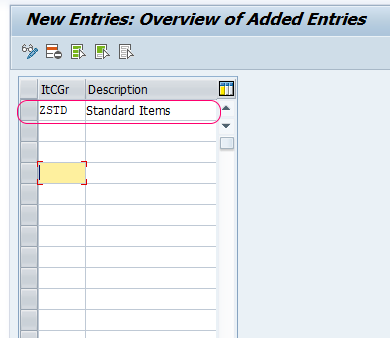
Step 3: Enter the Item Category Group Key and Description
- On the New Entries: Item Category Groups screen, update the following fields:
- ItCGr (Item Category Group): Enter a 4-character alphanumeric key to represent the item category group (e.g.,
ZSTD). Ensure the key starts withY,Z, or9. - Description: Provide a clear description for the item category group (e.g.,
Standard Materials).Example Values: - Item Category Group:
ZSTDDescription:Custom Standard MaterialsImage Description: - This image displays the fields where new item category group details are entered, including the key and description.
- ItCGr (Item Category Group): Enter a 4-character alphanumeric key to represent the item category group (e.g.,
Use a description that makes the business purpose clear. A description such as Custom Standard Materials is easier to understand than a short internal abbreviation that only one project team recognizes.
| Field | Example | Entry Guideline |
|---|---|---|
| ItCGr | ZSTD | Use a customer namespace key and keep it short and meaningful. |
| Description | Custom Standard Materials | Describe the SD process or material grouping clearly. |
Step 4: Save the SAP SD Item Category Group Configuration
- After entering all the required details, click on the Save button.
- Enter the appropriate Customizing Request to save the configuration. What to Expect:
- The new item category group will now be visible in the overview screen and can be used for item category determination in sales documents.
After saving, the configuration is only one part of the setup. The new item category group must also be assigned to the required material master records and included in item category determination if a different item category should be proposed.
How Item Category Group Works with Item Category Determination
In SAP SD, item category determination normally evaluates a combination of values. The item category group is one of those values. The system checks the determination rule and proposes the item category configured for that combination.
A simplified determination flow is shown below:
- The user enters a material in a sales document.
- SAP reads the item category group from the material master.
- SAP considers the sales document type and other determination fields.
- The configured rule proposes the sales document item category.
- The item category then controls downstream behavior such as pricing, billing, delivery relevance, schedule lines, and completion rules.
If the wrong item category is proposed in a sales order, check the material master item category group first, then check the item category determination configuration.
Benefits of Maintaining Item Category Groups Correctly
- Simplifies material-based SD control: Similar materials can be handled through common item category determination logic.
- Improves sales order consistency: The correct item category can be proposed automatically instead of relying on manual user changes.
- Supports custom SD processes: Customer-specific item category groups can support special scenarios when standard SAP keys are not enough.
- Reduces configuration confusion: Clear grouping makes it easier to understand why a certain item category is determined for a material.
Common Mistakes While Defining Item Category Groups in SAP
- Creating custom groups without checking standard groups: This can lead to duplicate configuration and unnecessary master data maintenance.
- Using unclear descriptions: A technical key may be short, but the description should still explain the business use.
- Forgetting material master assignment: A group defined in configuration will not affect a material until it is assigned to that material.
- Not updating item category determination: If the new group should result in a different item category, the corresponding determination rule must also be maintained.
- Testing only one document type: Test the relevant quotation, order, contract, or return document type depending on the actual business process.
Testing a New Item Category Group in a Sales Order
After configuration, test the new item category group with a material and sales document type that match the intended process.
- Assign the new item category group to the relevant material master record.
- Maintain or verify the item category determination entry for the required sales document type.
- Create a test sales order using the relevant customer, sales area, order type, and material.
- Check whether the expected item category is proposed at line item level.
- Verify the downstream behavior, including pricing, schedule lines, delivery relevance, and billing relevance, based on the item category.
If the expected item category is not determined, review the material master, sales document type, item usage, higher-level item category, and the item category determination entry.
FAQ on Item Category Groups in SAP SD
How do you define an item category group in SAP?
You can define an item category group in SAP using transaction code OVAW or through the IMG path Sales and Distribution > Sales > Sales Documents > Sales Document Item > Define Item Category Groups. Create a new key, enter a meaningful description, and save it in a customizing request.
What is the use of item category group in SAP SD?
The item category group is used as an input for item category determination. It helps SAP decide which item category should be proposed when a material is entered in a sales document.
What is the difference between item category and item category group?
The item category group is a material grouping value used during determination. The item category is the final sales document item control that determines behavior such as pricing, delivery relevance, billing relevance, and schedule line processing.
What is the transaction code for item category group in SAP?
The transaction code for defining item category groups is OVAW. For related SD configuration, item categories and item category determination are maintained through separate customizing activities.
Why is my item category group not determining the expected item category?
Check whether the item category group is assigned to the material master and whether item category determination is maintained for the correct combination of sales document type, item category group, item usage, and higher-level item category. Also confirm that you are testing with the correct sales area and document type.
Editorial QA Checklist for This SAP Item Category Group Configuration
- Confirm that the transaction code is shown as OVAW for defining item category groups.
- Confirm that the tutorial distinguishes clearly between item category group and item category.
- Check that the custom key example uses a customer namespace such as
Z,Y, or9. - Verify that the reader is told to assign the item category group to material master data after creating it.
- Verify that testing includes item category determination, sales document type, material master assignment, and the expected item category result.
Conclusion: Defining Item Category Groups in SAP SD
Defining item category groups in SAP SD is a small but important part of sales document configuration. The item category group links material master data with item category determination, helping SAP propose the correct item category during sales document processing.
Use standard SAP item category groups where they fit the requirement. Create a custom group only when there is a clear business reason, maintain it through OVAW, assign it to the relevant materials, and test the expected item category in the required sales document process.