 TutorialKart.com
What is Visual Workflow in Salesforce Flow Builder?
Visual Workflow in Salesforce is the earlier name for the visual automation capability now delivered through Salesforce Flow and Flow Builder. It lets admins build guided screens and automated business logic with a drag-and-drop builder instead of writing code for every requirement.
Using Visual Workflow, you can create, update, edit, and delete records , send email alerts, route records for approval, post to Chatter, call actions, call Apex where needed, and collect user input through screens. In modern Salesforce setup, new automation should be built in Flow Builder rather than Process Builder.
Important update: Salesforce no longer supports Workflow Rules and Process Builder after December 31, 2025. Existing orgs may still contain older processes, but new automation and migration work should use Salesforce Flow. This tutorial explains the current Flow Builder approach first and then keeps the original Process Builder example as a legacy reference.
Visual Workflow, Salesforce Flow, and Flow Builder compared
| Term | Meaning in Salesforce | When you see it |
|---|---|---|
| Visual Workflow | Older name for Salesforce’s visual flow automation tool. | Older documentation, training material, and legacy tutorials. |
| Salesforce Flow | The automation platform that runs flows for screens, records, schedules, platform events, and background logic. | Current Salesforce automation design and admin work. |
| Flow Builder | The visual canvas used to create, test, activate, and manage flows. | Setup > Flows in Lightning Experience. |
| Process Builder | Older point-and-click automation builder for record changes. | Legacy orgs and migration projects. |
What is a flow in Salesforce?
A flow in Salesforce is an automation that can execute logic, interact with Salesforce records, call Apex classes, call external actions, and collect data from users. A flow can run with screens when a user is involved, or it can run in the background when a record changes, a schedule is reached, or another automation starts it.
Visual Workflow can execute business processes, interact with the database, invoke Apex classes, and create a series of screens to take user input in order to collect and update data in Salesforce. Flows can also be built with no user interface so that they run from automated processes.
Salesforce Visual Workflow capabilities admins use most often
Visual Workflow is useful when the process has clear inputs, decisions, and record updates. Instead of thinking only in terms of a single field update, design the flow around the business outcome: what starts the process, which records qualify, what action should happen, and what should be logged or shown to the user.
- Create records: create leads, cases, tasks, contacts, opportunities, or custom object records.
- Update records: update the triggering record or related records such as opportunities under an account.
- Collect user input: use a Screen Flow to guide users through forms, choices, and validation messages.
- Apply decisions: route the flow through different paths based on field values, user choices, dates, or formulas.
- Call other automation: use subflows, actions, invocable Apex, approvals, and integrations when the requirement needs them.
Common Salesforce flow types in Visual Workflow design
| Flow type | Best fit | Example |
|---|---|---|
| Screen Flow | User-guided work with forms and choices. | A support agent creates a case and related task from one guided screen. |
| Record-Triggered Flow | Automation that starts when a record is created, updated, or deleted. | When an Account is marked out of business, open Opportunities are closed lost. |
| Scheduled-Triggered Flow | Automation that runs at a planned time. | Each night, update stale leads that meet defined criteria. |
| Autolaunched Flow | Reusable background logic with no screen. | A subflow standardizes account cleanup logic used by multiple flows. |
| Platform Event-Triggered Flow | Automation that starts from an event message. | Create a case when an external system publishes a service event. |
Automating an account out-of-business process using Salesforce Flow
Let us use the same business case from the original tutorial: a Salesforce user wants to auto-close all open opportunities with the Closed Lost stage when the Out of Business checkbox on an Account is checked.
There are several ways to solve this requirement. In a current Salesforce org, the recommended approach is a record-triggered flow. Older orgs may have used Process Builder, and a developer may still use an Apex trigger when the logic is too complex for declarative automation.
- Use a record-triggered flow for the standard admin solution in Flow Builder.
- Use Apex only when the logic needs advanced code, complex transaction handling, or patterns that are hard to maintain in Flow.
- Use Process Builder only as a legacy reference when reviewing an old org; do not create new automation with it.
Record-triggered flow design for closing related opportunities
Before opening Flow Builder, define the automation in three parts: trigger, criteria, and action. This keeps the flow easier to build and easier to review.
| Design item | Value for this Salesforce flow |
|---|---|
| Trigger object | Account |
| Trigger timing | When an Account record is updated |
| Entry criteria | Out of Business checkbox equals True |
| Run condition | Only when the Account is updated to meet the condition |
| Records to update | Open Opportunity records related to the Account |
| Field update | Set Opportunity Stage to Closed Lost, and set any required close or loss fields used by your org |
Build the Account record-triggered flow in Flow Builder
- Go to Setup > Flows and click New Flow.
- Select Record-Triggered Flow.
- Select Account as the object.
- Set the trigger to run when a record is updated.
- Add the entry condition: Out of Business = True. Use your org’s actual API name for this checkbox field.
- Choose to run the flow only when the record is updated to meet the condition, so it does not repeatedly update opportunities when unrelated Account fields change.
- Optimize the flow for Actions and Related Records, because the flow updates Opportunity records related to the Account.
- Add an Update Records element for Opportunity records where AccountId equals the triggering Account Id and the Opportunity is still open.
- Set StageName to the valid Closed Lost stage value used in your sales process. If your org requires Close Date, Loss Reason, or other fields, set those values too.
- Debug the flow with a test Account and related open Opportunities. Confirm that closed Opportunities are not incorrectly changed.
- Save the flow with a clear name, such as Close Open Opportunities When Account Out of Business, and activate it after testing.
Salesforce Flow testing notes for this opportunity update
Test this Visual Workflow scenario with at least three Accounts: one with open Opportunities, one with no Opportunities, and one with a mix of open and already closed Opportunities. Also test the case where the checkbox is already true and another Account field is edited. That test confirms whether your entry condition prevents repeated updates.
If your org uses multiple sales processes, the Closed Lost stage value must be valid for the Opportunity record type being updated. Validation rules, required fields, approval locks, and user permissions can also stop the update, so test with realistic records before activating the flow in production.
Legacy Process Builder version of the Visual Workflow example
The older tutorial below shows how this requirement was configured with Process Builder. Keep these steps only for understanding or reviewing legacy automation. For new Salesforce automation, use the Flow Builder steps above.
Auto-close all opportunities as Closed Lost using Process Builder
First login to Salesforce and navigate to Setup | Create | Workflow and Approvals | Process Builder in older Salesforce setup menus. In Lightning Experience, legacy Process Builder entries may appear under Process Automation depending on your org and permissions.
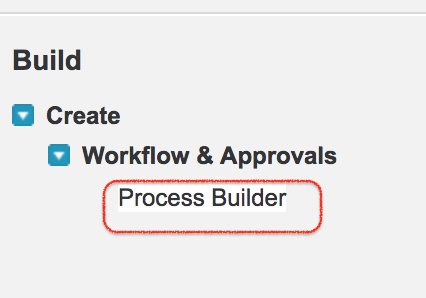
- Click on Process Builder and create a new process.
- Enter the process name, API name, and the criteria as shown below.
Step 1: Create the Account process in Process Builder
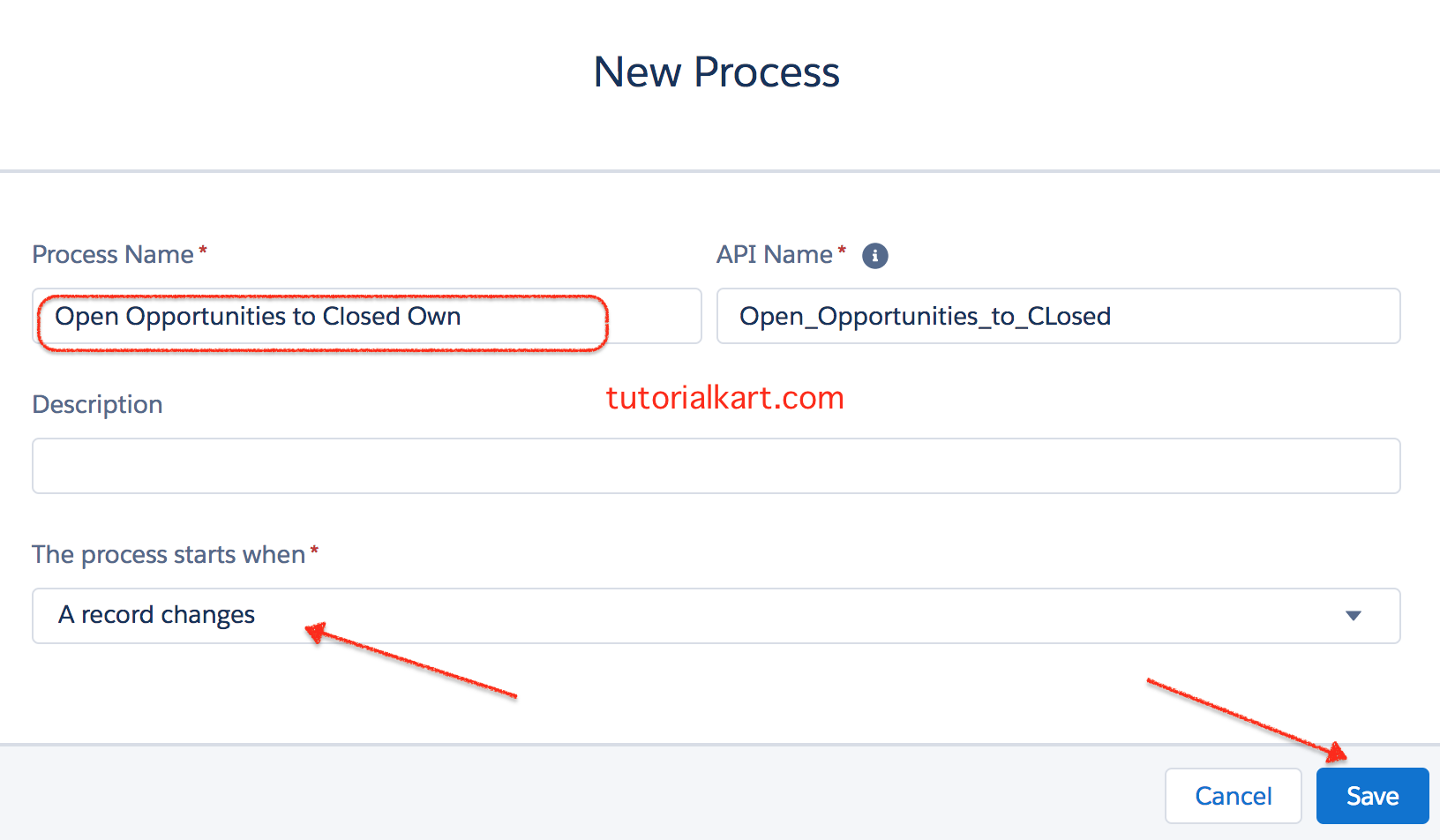
- Click on the Save button after entering the process details.
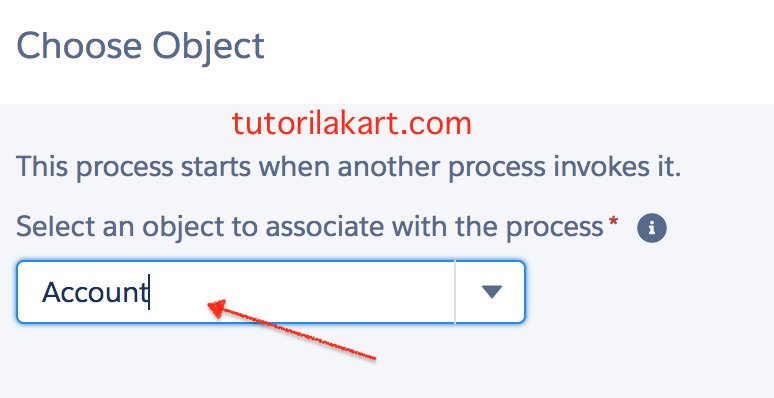
Step 2: Select the Account object for the process
In this step, select the Account object. When the Out of Business checkbox on Account is checked, the update action is used to change related Opportunity records.
- Click on the Next button.
Step 3: Add criteria and update related Opportunities
- Select a record related to the Account. As shown above, the related Opportunities object is selected.
- Click on the Choose button.
- Enter the action name, select the record type, choose the records to update, filter the related records by the required conditions, and set the new field values for the Opportunity records as shown in the screenshot.
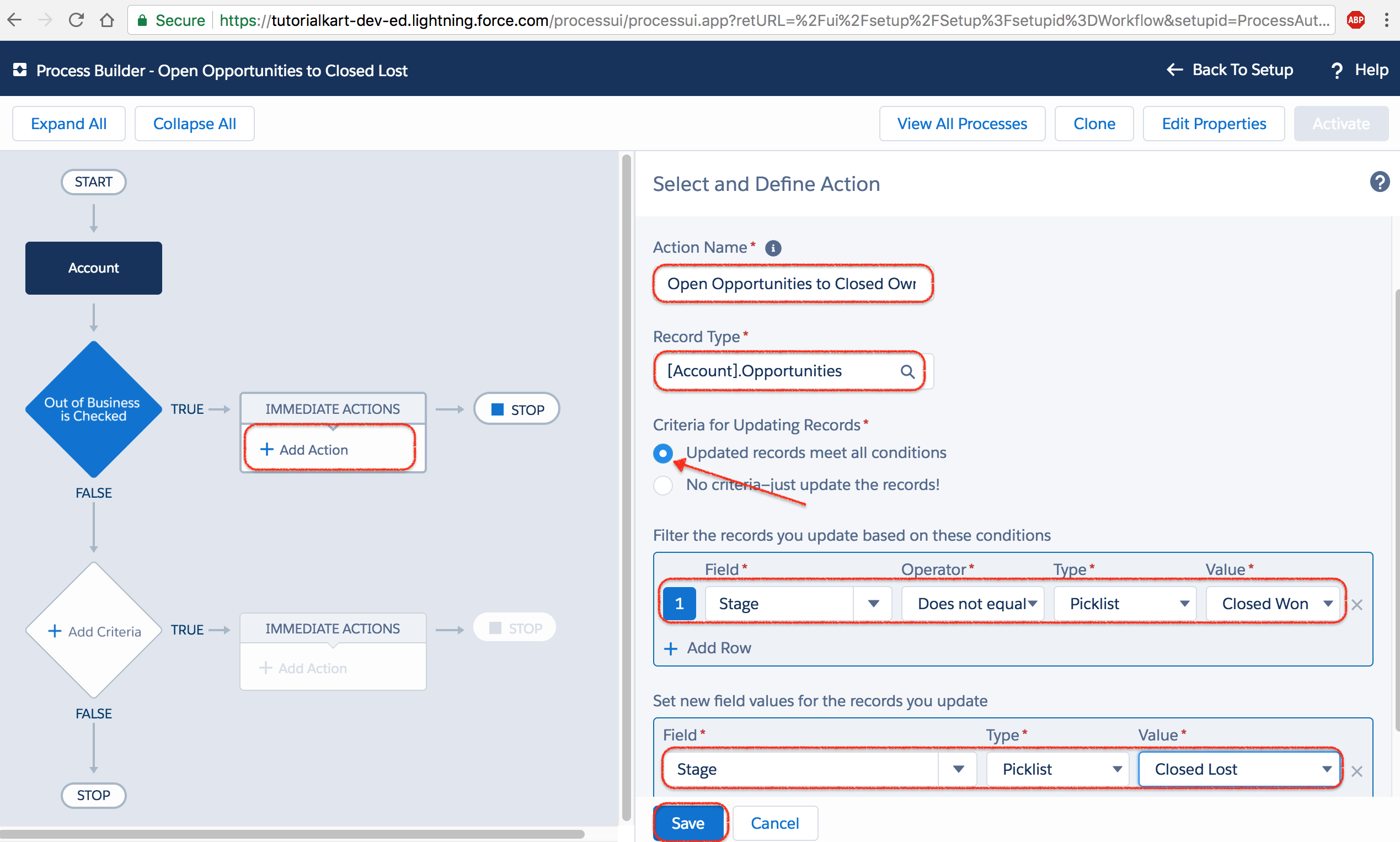
- Finally, click on Save.
- Activate the process only after testing it in a sandbox or a safe test environment.
When to use Salesforce Flow instead of Apex for Visual Workflow automation
Use Salesforce Flow when the automation is mainly record creation, record update, simple branching, screen input, or reusable business logic that admins can maintain. Use Apex when the requirement needs complex algorithms, advanced error handling, large-scale processing patterns, or logic that is easier to test and maintain in code.
A good rule is to build the simplest maintainable solution. If a record-triggered flow can clearly handle the requirement and pass bulk testing, it is usually easier for admins to support. If the flow becomes difficult to read because of too many decisions, loops, and exception paths, discuss an Apex design.
Process Builder to Salesforce Flow migration notes
When you review a legacy Visual Workflow or Process Builder setup, document what each process does before migrating it. Check the trigger object, entry criteria, related records updated, scheduled actions, email alerts, approval actions, and any Apex or invocable actions used by the process.
- Do not migrate only the screenshots. Rebuild the actual business logic in Flow Builder and compare results.
- Disable or deactivate the old process only after the new flow has been tested and activated.
- Check for duplicate automation. The same Account update should not be handled by Process Builder, Workflow Rules, Apex, and Flow at the same time unless the design is intentional.
- Use sandbox testing for bulk updates, because a single Account change can update many related Opportunity records.
Visual Workflow editorial QA checklist for this Salesforce tutorial
- The article clearly explains that Visual Workflow is now handled through Salesforce Flow and Flow Builder.
- The Account out-of-business example recommends a record-triggered flow for new automation.
- The Opportunity update filters only related open Opportunities and uses a valid Closed Lost stage.
- The legacy Process Builder screenshots are kept as historical reference, not presented as the preferred new-build method.
- The tutorial reminds readers to test validation rules, required fields, record types, and bulk updates before activation.
Official Salesforce references for Visual Workflow and Flow Builder
- Salesforce Visual Workflow Implementation Guide
- Salesforce Flow Builder Tour
- Update Salesforce Records from a Flow
- Move Processes and Workflows to Flow Builder with the Migrate to Flow Tool
Visual Workflow in Salesforce FAQs
Is Visual Workflow still used in Salesforce?
The name Visual Workflow is mostly legacy terminology. The current Salesforce tool is Salesforce Flow, and the visual builder used to create flows is Flow Builder.
Should I use Process Builder or Flow Builder for new Salesforce automation?
Use Flow Builder for new Salesforce automation. Process Builder is a legacy tool and is no longer the preferred or supported path for new automation work.
Which flow type should close Opportunities when an Account is marked out of business?
Use a record-triggered flow on the Account object. Configure it to run when the Account is updated to meet the Out of Business condition, and then update related open Opportunity records.
Can Visual Workflow call Apex in Salesforce?
Yes. Salesforce Flow can call invocable Apex actions when declarative elements are not enough. Use Apex carefully and keep the flow design understandable for future admins.
What should I test before activating a Salesforce record-triggered flow?
Test the entry criteria, related-record filters, required fields, validation rules, record types, user permissions, and bulk-update behavior before activating the flow in production.