 TutorialKart.com
Page Types and Page Elements in Salesforce
In this Salesforce Tutorial, we are going to learn about different page types and common page elements in Salesforce.com. Salesforce pages can be understood in two useful ways: the page a user is viewing, such as an object home page or record detail page, and the configurable Lightning page type, such as a Home Page, Record Page, or App Page.
For administrators, this topic is closely related to page layouts, Lightning Record Pages, Dynamic Forms, actions, related lists, and record types. Understanding these parts helps you decide where fields appear, which buttons users can click, and how related records are displayed.
Different Page Types in Salesforce Object Navigation
In Salesforce object navigation, there are three basic page types that users commonly work with:
- Home Page.
- Detail Page.
- Edit Page.
Home Page :- Whenever we click on an object tab, Salesforce usually opens the object home page. For example, when we click the Accounts tab, the Accounts home page shows list views, recently viewed records, and object-level actions such as New, Import, or Printable View, depending on user permissions and setup.
Detail Page :- Whenever we click on a record, Salesforce opens the record detail page. A detail page shows the record information, highlights, related lists, activity, and other components configured for that object. In Lightning Experience, the detail page is usually controlled by a Lightning Record Page and the assigned page layout.
Edit Page :- The edit page is displayed when the user creates a new record or edits an existing record. It contains the fields that require user input. The visible fields, required fields, and field order can depend on the assigned page layout, record type, field-level security, and Dynamic Forms configuration.
Lightning Page Types in Salesforce Setup
In Lightning Experience, Salesforce also uses Lightning page types. These pages are configured in Lightning App Builder and decide how information is arranged for users in an app or record workspace.
| Lightning Page Type | Where It Is Used | Typical Purpose |
|---|---|---|
| Home Page | App home or org home experience | Shows dashboards, tasks, assistant items, recent records, and other summary components. |
| Record Page | Individual record pages such as Account, Contact, Case, or Opportunity records | Shows record details, highlights, activity, related lists, path, actions, and custom components. |
| App Page | A custom page inside a Lightning app | Shows a custom workspace, report view, dashboard-style page, or business process page. |
The older home, detail, and edit page explanation is still useful for understanding user navigation. The Lightning page type explanation is useful when you are configuring pages in Setup.
Different Page Elements in Salesforce Record Pages
Different page elements in Salesforce are as follows.
- Tab.
- Feed.
- Sidebar.
- Section.
- Links.
- Related List.
- Highlights Panel.
- Actions and Buttons.
- Record Detail Component.
- Path.
What is a Tab in Salesforce?
A tab gives users access to an object, app page, web page, or custom feature. Object tabs such as Accounts, Contacts, Leads, Opportunities, and Cases help users open object home pages and work with records.
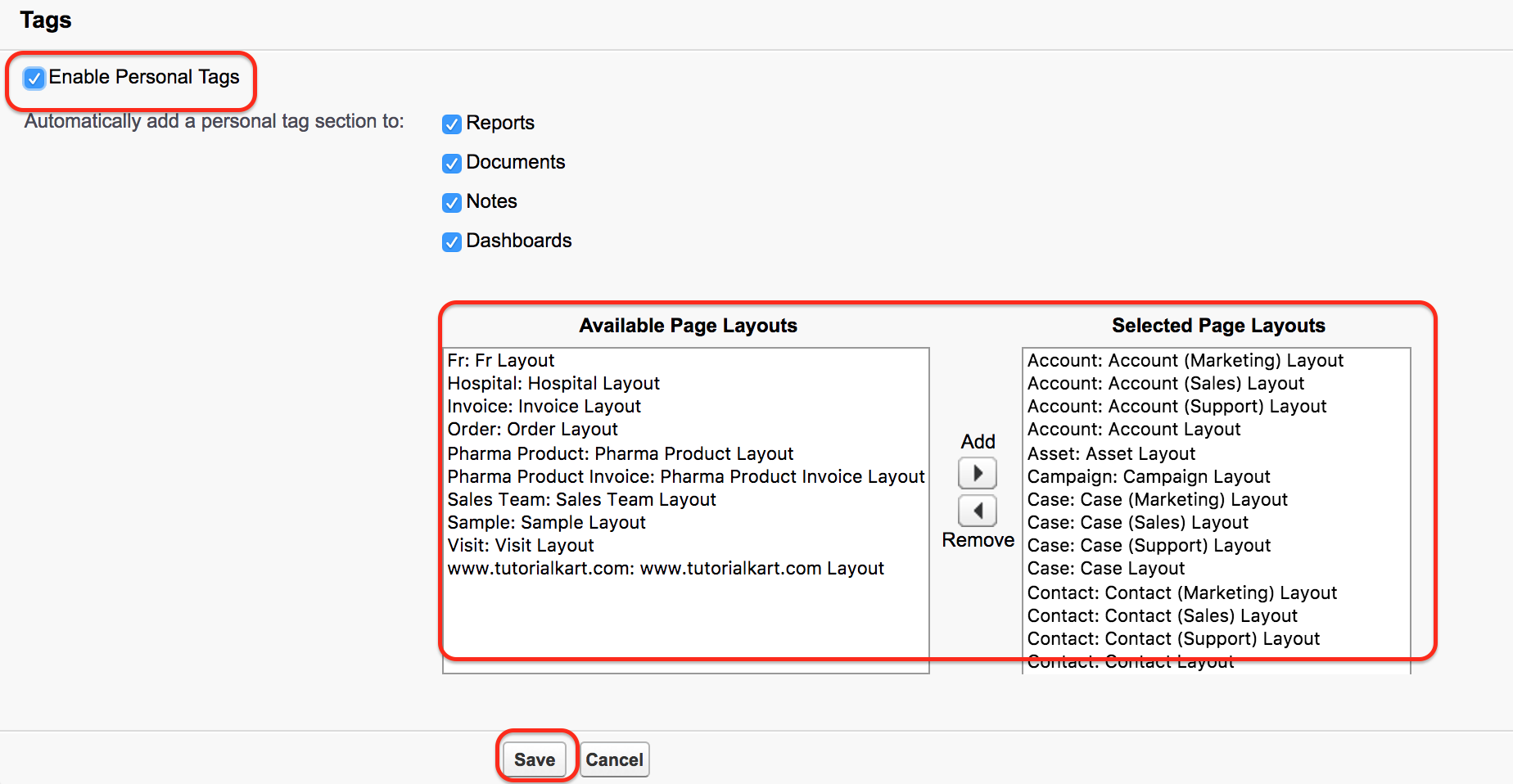
What is a Feed in Salesforce?
A feed shows collaboration updates and record activity. In many Salesforce orgs, the feed is used for Chatter posts, comments, tracked field changes, and user discussions related to a record. Feed visibility depends on Chatter settings, feed tracking, permissions, and page configuration.
What is a Sidebar in Salesforce?
A sidebar is an area that shows supporting navigation or quick access items. In Salesforce Classic, the sidebar commonly showed options such as Create New, Recent Items, and Recycle Bin. In Lightning Experience, similar quick access may be handled through the App Launcher, navigation bar, utility bar, and page components.
What is a Section in a Salesforce Page Layout?
A section is a part of a page layout where fields are grouped together. For example, an Account page layout may have sections such as Account Information, Address Information, System Information, and Custom Details. Sections make record pages easier to read and edit.
What is a Link in Salesforce Page Elements?
Links provide quick access to related information or external resources. In Salesforce setup, administrators may use custom links, buttons, quick actions, or Lightning components depending on the requirement. A link should be used when users need to open another page or resource from a record.
What are Related Lists in Salesforce?
Related lists show records that are connected to the current record through a relationship. For example, an Account record can show related Contacts, Opportunities, Cases, and Activities. Related lists help users understand the relationship between one object and other objects.
What is the Highlights Panel in a Salesforce Record Page?
The highlights panel appears near the top of many Lightning record pages. It shows key record information and important actions. The fields shown in the highlights panel are usually controlled by the compact layout assigned to the object or record type.
What are Actions and Buttons on Salesforce Pages?
Actions and buttons allow users to do work from a page. Common examples include New, Edit, Delete, Clone, Change Owner, Send Email, Log a Call, and custom quick actions. Actions may appear in the highlights panel, activity composer, related lists, or page layout action areas.
What is the Record Detail Component in Salesforce?
The Record Detail component shows fields from the assigned page layout on a Lightning record page. If Dynamic Forms are used, fields and sections can be placed more flexibly on the Lightning page instead of being shown only through one Record Detail component.
What is Path on a Salesforce Record Page?
Path shows the current stage or status of a record and guides users through a process. It is commonly used on objects such as Opportunities, Leads, and Cases. Path can show key fields and guidance for each stage when configured by an administrator.
Page Types, Page Layouts, and Record Types in Salesforce
Page types, page layouts, and record types are related, but they are not the same.
| Salesforce Setup Item | What It Controls | Example |
|---|---|---|
| Page Type | The kind of page the user opens or the kind of Lightning page being configured. | Object home page, record detail page, edit page, Lightning Home Page, Lightning Record Page. |
| Page Layout | Field arrangement, sections, related lists, buttons, and some record page behavior. | Sales Layout for Opportunity records and Support Layout for Case records. |
| Record Type | Business process, picklist values, and page layout assignment for different user scenarios. | New Business Opportunity and Renewal Opportunity record types. |
| Dynamic Forms | Field and section placement directly on Lightning pages with visibility rules. | Show a Finance Approval section only when Amount is above a defined value. |
Use page layouts when you need different field arrangements or related lists. Use record types when the business process, picklist values, or layout assignment should differ. Use Dynamic Forms when a Lightning record page needs flexible field placement and conditional visibility.
Where Salesforce Administrators Configure Page Elements
Most Salesforce page elements are configured from Setup. The exact path depends on the element being changed.
- To change fields, sections, related lists, and buttons on a layout, go to Setup | Object Manager | Object | Page Layouts.
- To change Lightning Record Page structure, go to Setup | Object Manager | Object | Lightning Record Pages or open Lightning App Builder.
- To change compact fields in the highlights panel, go to Setup | Object Manager | Object | Compact Layouts.
- To manage record types, go to Setup | Object Manager | Object | Record Types.
- To configure tabs in an app, go to Setup | App Manager and edit the Lightning app navigation items.
Salesforce Page Elements QA Checklist
- Check whether the page is a home page, object home page, record detail page, edit page, Lightning Record Page, or App Page.
- Confirm that the correct page layout is assigned to the user profile and record type.
- Verify that important fields are visible through field-level security and are placed in the correct section.
- Check whether required actions such as Edit, Clone, New Task, or custom quick actions are visible to the user.
- Review related lists to confirm that users can see the connected records they need.
- Test the page with the intended profile, app, and record type instead of only using a system administrator login.
- Check whether Dynamic Forms or component visibility rules are hiding fields or sections for certain users.
Common Issues with Salesforce Page Types and Page Elements
If a user cannot see a field on a Salesforce page, check the page layout, Lightning page, field-level security, record type, and component visibility rules. A field may exist on the object but still remain hidden because of permissions or page configuration.
If a related list does not appear, check whether it is added to the page layout, whether the object relationship exists, and whether the user has access to the related object. In Lightning Experience, also check the related list component on the Lightning Record Page.
If a button or action is missing, check the page layout actions, dynamic actions, object permissions, record permissions, and whether the user is viewing the correct app and record type.
FAQ on Page Types and Page Elements in Salesforce
What are the main page types in Salesforce?
The common user-facing page types are object home page, record detail page, and edit page. In Lightning App Builder, Salesforce also uses Lightning page types such as Home Page, Record Page, and App Page.
What is the difference between a Salesforce page layout and a Lightning Record Page?
A page layout controls fields, sections, related lists, and buttons for records. A Lightning Record Page controls the overall Lightning page structure and components. In many orgs, both work together on the same record page.
What are related lists in Salesforce page elements?
Related lists show records connected to the current record. For example, an Account record can show related Contacts, Opportunities, Cases, and Activities.
Why is a field not visible on a Salesforce record page?
The field may be missing from the page layout, hidden by field-level security, hidden by Dynamic Forms or component visibility rules, or unavailable for the selected record type or profile.
When should I use record types instead of only changing a page layout?
Use record types when users need different business processes, picklist values, or page layout assignments. Use only page layouts when the main requirement is to change field arrangement, sections, buttons, or related lists.
Conclusion: Understanding Salesforce Page Types and Page Elements
In this Salesforce tutorial, we learned about Page Types and Page Elements in Salesforce. We covered object home pages, detail pages, edit pages, Lightning page types, and important page elements such as tabs, feeds, sections, links, related lists, highlights panel, actions, and record detail components. In our next Salesforce Tutorial, we are going to learn about Page Layout and how to create a Page Layout in Salesforce.com.