 TutorialKart.com
Salesforce approval process explained with invoice approval example
In our previous Salesforce Training we have learned about Salesforce Workflow Rule and Workflow Actions. In this Salesforce Tutorial we are going to learn about what is Salesforce Approval process and also we learn how to create Salesforce Approval Process with an example.
A Salesforce approval process is used when a record must be reviewed by one or more approvers before it is treated as approved. For example, an invoice above ₹10,000 may need supervisor approval before it is finalized. The process defines which records enter approval, who approves them, what happens when the record is submitted, and what actions run after approval or rejection.
What is approval process in Salesforce?
Approval Process in Salesforce are the automated process where every organization uses to approve records. In Salesforce Approval process there are number of steps involved to approve a record in that object or the one records which satisfies the rule criteria.
In practical terms, an approval process answers these questions:
- Which object and records are eligible for approval?
- Who can submit the record for approval?
- Who should approve or reject the submitted record?
- Should the record be locked while it is waiting for approval?
- What email alerts, field updates, tasks, or other actions should run after submission, approval, rejection, or recall?
Salesforce official learning material for approval automation is available in Trailhead at https://trailhead.salesforce.com/content/learn/modules/business_process_automation/approvals. Salesforce Help also documents approval process setup at https://help.salesforce.com/s/articleView?id=sfdo.ofm_create_approval_processes.htm&language=en_US&type=5.
Salesforce approval process components before configuration
| Approval process component | What it controls in Salesforce | Invoice approval example |
|---|---|---|
| Object | The Salesforce object where records are submitted for approval. | Invoice |
| Entry criteria | The condition a record must satisfy before entering the process. | Invoice Amount > 10000 |
| Initial submitter | The users allowed to submit the record for approval. | Record owner or selected users |
| Approver | The user, manager, queue, or role that approves or rejects the request. | Supervisor or Manager |
| Approval steps | The sequence of review stages for one-step or multi-step approvals. | Supervisor approval, then Finance approval if required |
| Submission, approval, rejection actions | Actions that update the record, notify users, or trigger follow-up work. | Status field changes to In Progress, Approved, or Rejected |
Important Points to be considered before creating Approval Process in Salesforce.
- Entry criteria for Approval Process in Salesforce must be defined.
- Approval request email template must be created.
- We should gather approval request sender details.
- Determine who is the assigned approver and Delegate approver.
- We must know whether the approval process needs a filter logic or not.
- We must create initial submission actions like email alerts, field updates, tasks, outbound message, updating custo approval status field to “In progress”.
- We can set permissions that users can request approval from a wireless device
- And also we can determine that the users can Edit records that are awaiting for approval.
- And finally we have to assign the actions when an approval requests is approved or rejected.
Also confirm the field that stores approval status. Many implementations use a picklist such as Approval Status with values like Draft, In Progress, Approved, and Rejected. This makes reports, list views, and validation rules easier to maintain.
Salesforce approval process example for invoices above ₹10,000
Now let us consider an example where all invoices which are greater than 10000 rupees the invoice must be approved by the Supervisor. While creating Salesforce Approval Process we there are 8 steps involved.
For this tutorial, assume the custom object is Invoice and it has an amount field. The approval process should accept only invoices where the amount is greater than ₹10,000. When the invoice is submitted, the record is sent to the supervisor for review, the approval status changes to In Progress, and the record is locked until the approval decision is completed or recalled.
Creating Salesforce Approval Process.
- Go to Setup | Build | Create | Workflow & Approvals | Approval Process.
In Lightning Experience, you can also open Setup, enter Approval Processes in the Quick Find box, and select the object for which the approval process has to be created. The screenshots below show the older setup flow, but the configuration concepts remain the same.
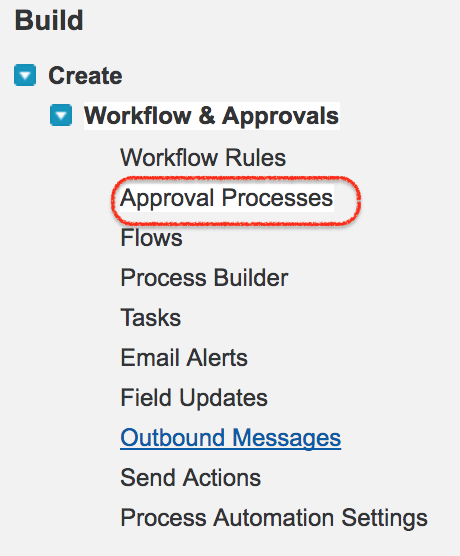
- Click on Approval Processes as shown above.
Enter approval process name and description in Salesforce
Step 1 : Enter Name and Description for new Approval Process.
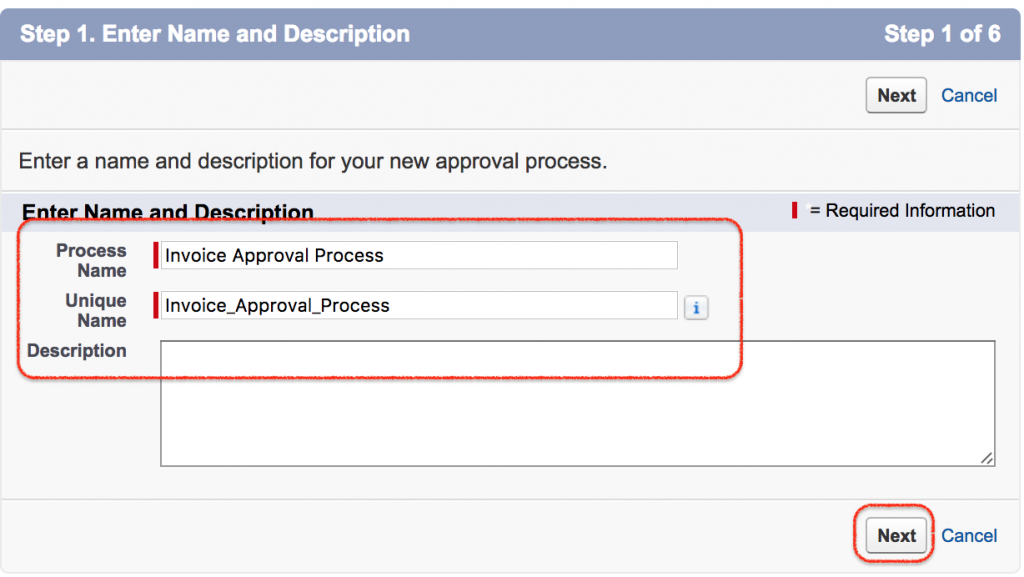
- Enter name and description.
- Click on Next Button.
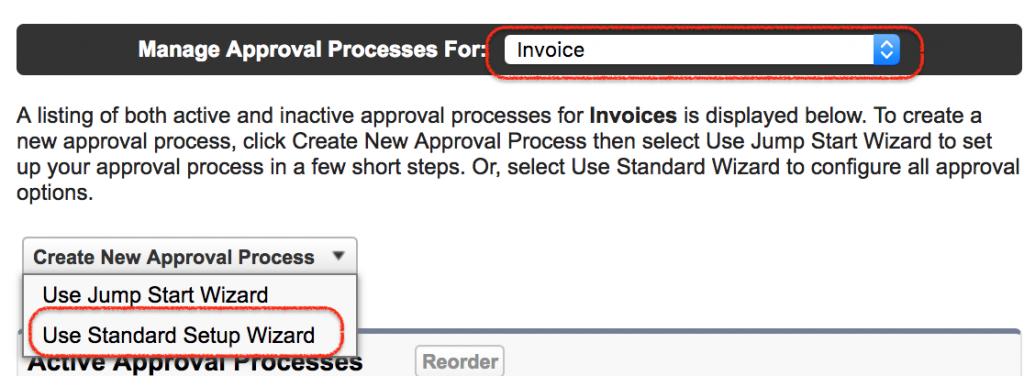
Step 1 :– we have to select the Object. Select Invoice As shown above. To create new approval process we have two process
- Jump Start : Involves few to create new Salesforce Approval Process.
- Standard Setup Wizard : It Involves all configuration options while creating new Salesforce Approval Process.
For a real production setup, the Standard Setup Wizard is usually easier to review because it asks for each configuration area step by step. Use Jump Start only when the process is very simple and you already know the required values.
Specify Salesforce approval process entry criteria for invoice amount
Step 2 :- Specifying Rule Criteria.
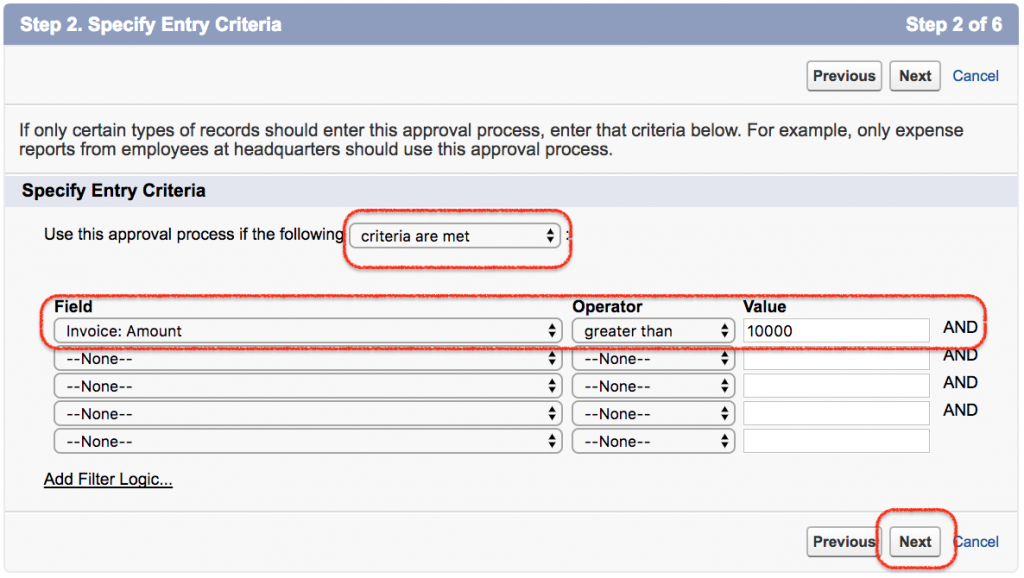
In this Step we have to specify the rule criteria which are the record that are eligible for approval process. As per our requirement we have defined where invoice amount in greater that 10000 the record must be sent to approval process. We can also group multiple entry criteria.
Keep the entry criteria narrow and testable. For the invoice example, the condition should clearly mean: submit the record only when Invoice Amount > 10000. If other conditions are required, such as invoice status equals Submitted or payment type equals Credit, add them here and confirm whether the criteria should use AND or OR filter logic.
Select approver field and record editability for Salesforce approval
Step 3:- Specifying Approver Field and Record Edibility Properties.
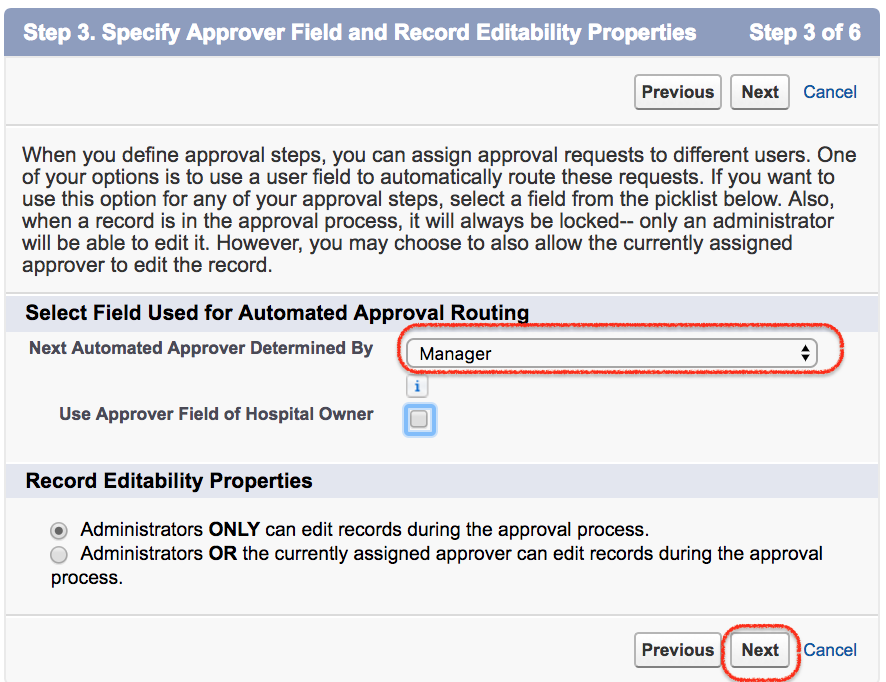
- It is about the approver. Select Manager as the approver and click on Next Button.
The approver can be selected by manager hierarchy, a user field on the record, a queue, or another supported assignment option. For simple supervisor approval, the manager of the submitter is commonly used. If a delegate approver is configured for a user, Salesforce can route approval work to the delegate when applicable.
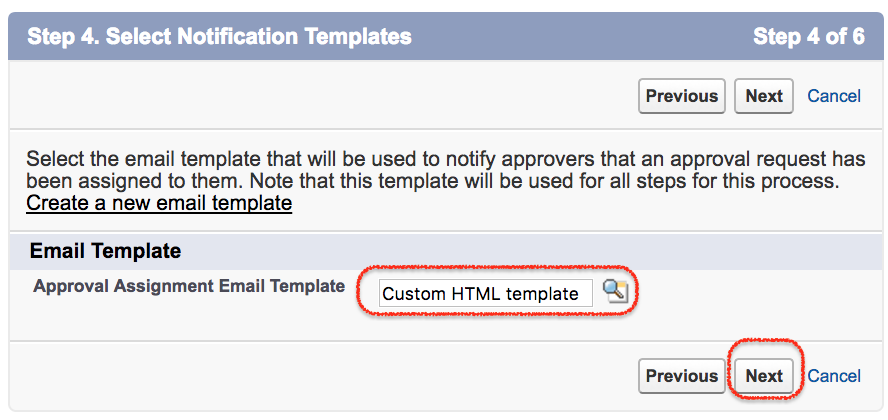
Before creating approval process we have to create Email template. An email will be sent to the approver. Select the email template and click on Next button.
Choose fields displayed to the Salesforce approver
Step 5 : Selecting Fields that be displayed on Approver page layout.
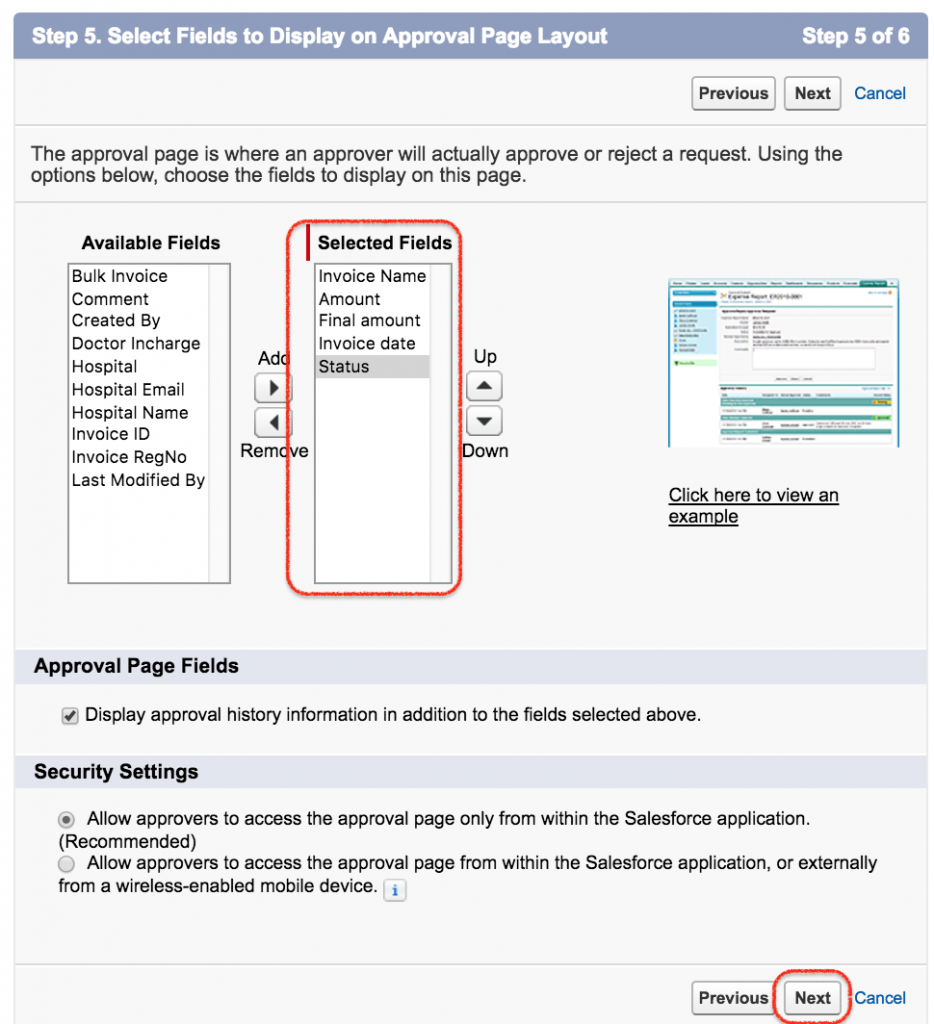
In this step we have to select the fields from available fields to selected fields. Selected fields will be displayed on the approver page layouts. Click on Next button.
For an invoice approval process, show the fields that help the approver make a decision. Good fields include invoice number, account, invoice amount, due date, submitter comments, current status, and any exception reason. Avoid showing too many unrelated fields because the approval page should be quick to read.
Specify initial submitters for the Salesforce invoice approval process
Step 6 : Specify Initial Submitter.
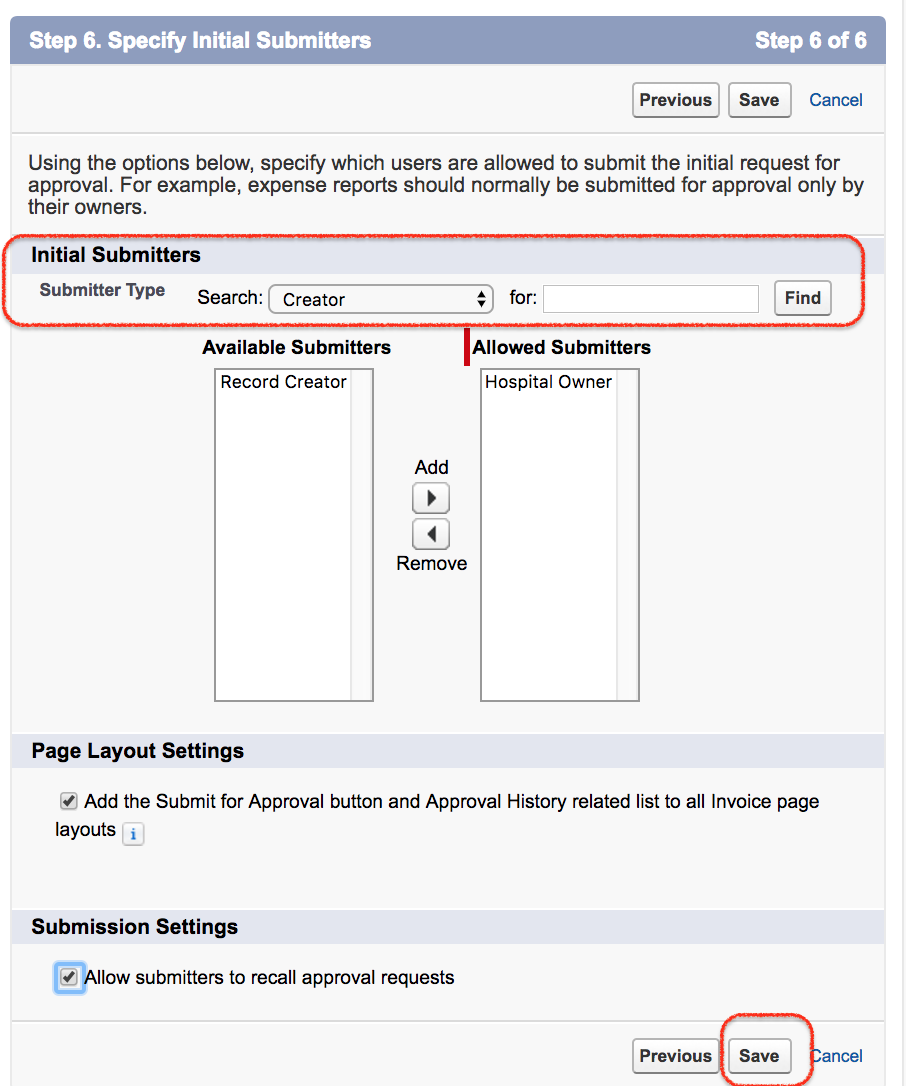
In this step we have to define who are eligible to submit the record for approver like Owner, group, Creator or User. Select the submitter type, select page layout, Submission setting and click on Save button.
Initial submitter settings are important because they control who can start the approval request. If only invoice owners should submit invoices, choose the record owner. If a finance team should submit on behalf of users, include the required users, roles, or public groups.
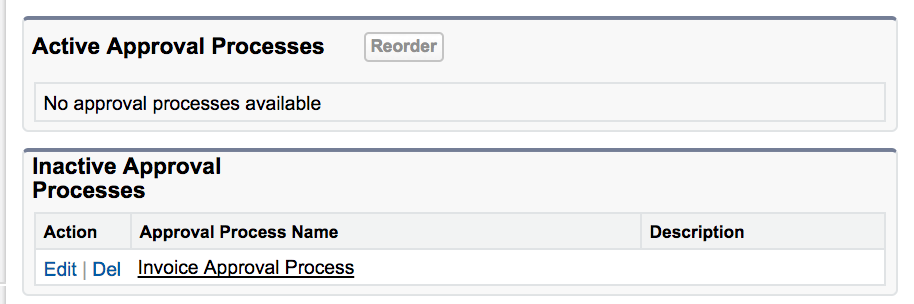
As shown above we have two sections Active Approval Processes and Inactive Approval Processes. The approval Process which we created is not activate so it is available in inactive approval processes. Click on Approval Process name.
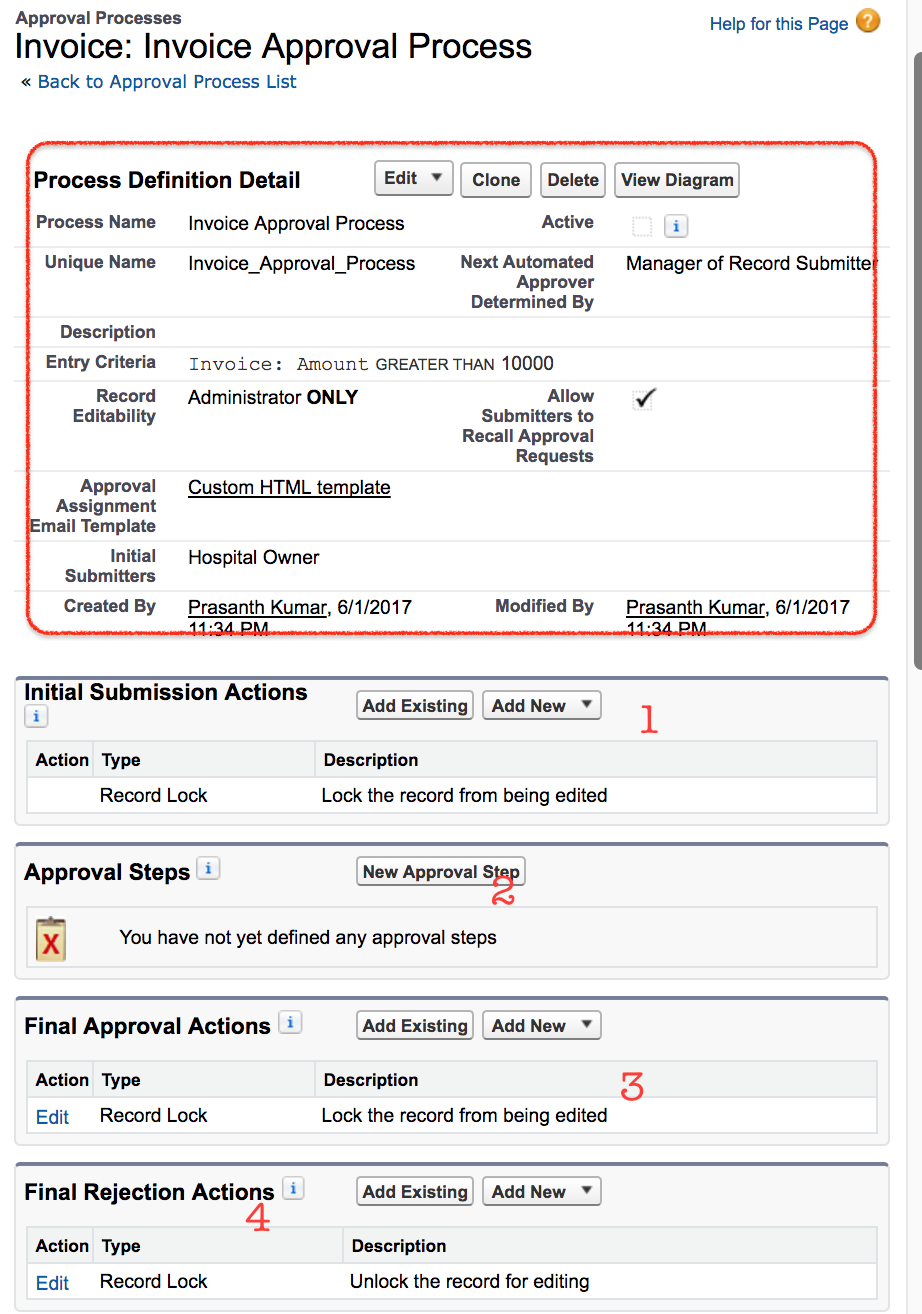
This give the whole details about the approval process. What is the name, Entry criteria, Status, Email Template, Initial Submission actions and So on. Once the Initial Submission action is done the records gets locked by default.
Add approval steps in Salesforce approval process
An approval step defines who reviews the record at a particular stage and what happens when that stage is approved or rejected. A one-step approval process may have only supervisor approval. A two-step approval process may first send the invoice to the supervisor and then to the finance manager when the first approval is completed.
To add approval steps, open the approval process detail page, find the approval steps section, and choose the option to add a new step. Salesforce Help provides a reference page for adding approval steps at https://help.salesforce.com/s/articleView?id=platform.ls_add_approval_step.htm&language=en_US&type=5.
| Approval step design | When to use it | Example |
|---|---|---|
| Single approval step | Only one person or queue must approve the record. | Supervisor approves invoice above ₹10,000. |
| Two-step approval process | Two review levels are required in sequence. | Supervisor approves first, Finance Manager approves next. |
| Conditional approval step | A step should run only for records that meet a more specific condition. | Second approval only when amount is above ₹50,000. |
| Unanimous approval | All selected approvers must approve. | Both department head and finance reviewer must approve. |
| First response approval | Any one approver from a group can approve. | Any user in a finance queue can approve the invoice. |
Define Salesforce approval actions for submission, approval, rejection and recall
Approval actions make the process useful after the routing logic is complete. For the invoice process, create actions that update the approval status field and notify the right users.
- Initial submission actions: update the invoice status to In Progress, send an email alert to the approver, and lock the record if users should not edit it during review.
- Final approval actions: update the status to Approved, notify the submitter, and perform any required field updates.
- Final rejection actions: update the status to Rejected, notify the submitter, and optionally unlock the record for correction.
- Recall actions: define what should happen when the submitter recalls the request before the approver completes it.
If approvals are started or controlled from code, Salesforce also provides Apex support for approval processing at https://developer.salesforce.com/docs/atlas.en-us.apexcode.meta/apexcode/apex_process.htm. For most admin-led examples, start with the setup wizard before using Apex.
Difference between Salesforce workflow rule and approval process
A workflow rule and an approval process are both forms of automation, but they solve different problems. A workflow rule runs actions automatically when a record meets criteria. An approval process routes a record to people or queues for a decision and then runs actions based on approval, rejection, or recall.
| Comparison point | Workflow rule | Salesforce approval process |
|---|---|---|
| Main purpose | Run automated actions when criteria are met. | Route records for human approval or rejection. |
| Human decision | Not required. | Required by one or more approvers. |
| Record locking | Not the main feature. | Can lock records while approval is pending. |
| Common example | Send an email when a case priority is high. | Approve an invoice above ₹10,000 before payment processing. |
QA checklist for Salesforce approval process configuration
- Confirm the approval process object is correct, such as Invoice, Opportunity, Quote, or custom object.
- Test entry criteria with records that should enter approval and records that should not enter approval.
- Verify the approver assignment path, including manager field, user lookup, queue, role, or delegated approver.
- Check that the approval email template contains enough record information for the approver.
- Confirm the approval page fields include the decision-making fields, such as amount, owner, reason, and status.
- Test initial submission actions, final approval actions, final rejection actions, and recall actions separately.
- Submit a sample record and verify record locking, approval history, email alerts, and final status updates.
- Activate the approval process only after the test record behaves as expected.
FAQs on Salesforce approval process setup
What is an approval process in Salesforce?
An approval process in Salesforce is an automated approval route for records. It decides which records can be submitted, who can submit them, who must approve them, and what actions happen after submission, approval, rejection, or recall.
What is the difference between workflow and approval process in Salesforce?
A workflow rule performs automatic actions when record criteria are met. An approval process sends a record to one or more approvers for a decision and can lock the record while it is waiting for approval.
What is a two-step approval process in Salesforce?
A two-step approval process has two approval stages. For example, an invoice can first go to the supervisor and then to the finance manager. The second step usually starts only after the first step is approved.
How do I add approval steps in Salesforce approval process?
Open the approval process detail page, go to the approval steps section, and add a new approval step. Define the step name, criteria, approver assignment, and actions for approval or rejection.
Can Salesforce Flow be used with approval processes?
Yes, Salesforce automation can be designed so that Flow works with approval-related logic, depending on the org requirement. However, the core record approval route shown in this tutorial is configured from Salesforce Approval Processes in Setup.
Conclusion.
In this Salesforce tutorial, we have created Salesforce approval process successfully and also learned about what is Approval Process in Salesforce.com. In our upcoming Salesforce tutorial, we are going to learn about how to configure multiple steps and multiple approvers to the approval process.
For the invoice example, the process checks whether the invoice amount is greater than ₹10,000, routes the record to the supervisor, locks the record during review, and updates the status after approval or rejection. The same pattern can be adapted for opportunities, quotes, expenses, discounts, contracts, and other Salesforce records that need controlled review.