 TutorialKart.com
Salesforce1 was the earlier name used for Salesforce’s mobile experience. In current Salesforce documentation and app stores, users usually see it as the Salesforce mobile app. The purpose is the same: it lets users access Salesforce records, apps, dashboards, approvals, tasks, files, and collaboration features from a supported iPhone, iPad, Android phone, Android tablet, or mobile browser.
Before Salesforce1, mobile users often worked with separate mobile experiences such as Salesforce Classic mobile pages, Salesforce Touch, and Chatter Mobile. Salesforce1 combined many of those mobile capabilities into a single app experience connected to the Salesforce platform. This tutorial explains what Salesforce1 means today, what the Salesforce mobile app can do, how to install it, and how admins can enable and configure mobile access for users.
Salesforce1 and Salesforce Mobile App: What changed?
The name Salesforce1 is still used in many older tutorials, screenshots, package names, and admin settings. However, when users search the App Store or Google Play today, they normally look for the Salesforce mobile app. If your org or learning material says Salesforce1, read it as the Salesforce mobile app unless the context specifically refers to an older setting or older UI label.
| Term | Meaning in practice |
|---|---|
| Salesforce1 | Older name for the Salesforce mobile app experience and related mobile settings. |
| Salesforce mobile app | The current mobile app used to access Salesforce from iOS and Android devices. |
| Mobile browser app | Salesforce opened through a supported mobile browser instead of the installed app. |
| Mobile navigation menu | The menu that controls which Salesforce items users see first on mobile. |
Why Salesforce1 is used?
Salesforce mobile app is used to access Standard objects, custom object, can publish Visualforce pages and many more. Using Salesforce1 mobile app, we can create a record, read, update a record and delete records. Some of the actions that can be performed using Salesforce1 are
- Can used to send push notifications.
- Can submit a record for approval.
- Access a list view and related list.
- Can access all your custom object and apps through navigation menu.
- Can access Visualforce pages and components.
- Can access Salesforce files.
- Can access reports, Dashboards and Lightning charts.
In simple terms, Salesforce1 is useful when users need to work with Salesforce without opening the full desktop site. A sales user can update an Opportunity after a meeting, a service user can check Cases, a manager can review dashboards, and an approver can approve or reject submitted records from a mobile device.
Salesforce mobile app features.
- It is powered by Salesforce platform.
- We can use point and click tools to make our own application.
- Salesforce mobile App is included with every Salesforce license.
- Salesforce mobile app can be download from Google play store and App Store.
- Salesforce mobile app has offline capability.
- We can run business using mobile faster and smarter.
- Salesforce mobile app uses metadata to work instantly.
Availability of some mobile features depends on the Salesforce edition, license, profile, permission sets, enabled features, connected app settings, mobile security policies, and the pages or components used in the org. For example, a user may be able to view an Account on desktop, but still need mobile-ready page layouts, Lightning pages, permissions, and navigation settings to work smoothly in the mobile app.
Salesforce mobile app prerequisites before installation
Before installing Salesforce1 or the Salesforce mobile app, check these items with your Salesforce administrator.
- The user has an active Salesforce username and password.
- The org allows access from the Salesforce mobile app or mobile browser.
- The user profile or permission sets allow access to the required objects, tabs, apps, and records.
- Multi-factor authentication, SSO, IP restrictions, session settings, or connected app policies are understood before login.
- The device OS and browser are supported by the current Salesforce mobile app requirements.
- Any company mobile device management policy is followed before using customer data on mobile.
How to Install Salesforce1 mobile app.
Salesforce1 mobile app is available for both Android and IOS devices. It is also available for mobile browser app that runs on supported browsers. Check your organization security policies before installing Salesforce mobile app. Salesforce mobile application can be downloaded from iTunes and Google Play. Check the following links to download Salesforce1 application.
If the store page title now appears as Salesforce instead of Salesforce1, continue with that app. Older Salesforce1 links may redirect to the current Salesforce mobile app listing depending on device, region, and store behavior.
Installing Salesforce mobile App?
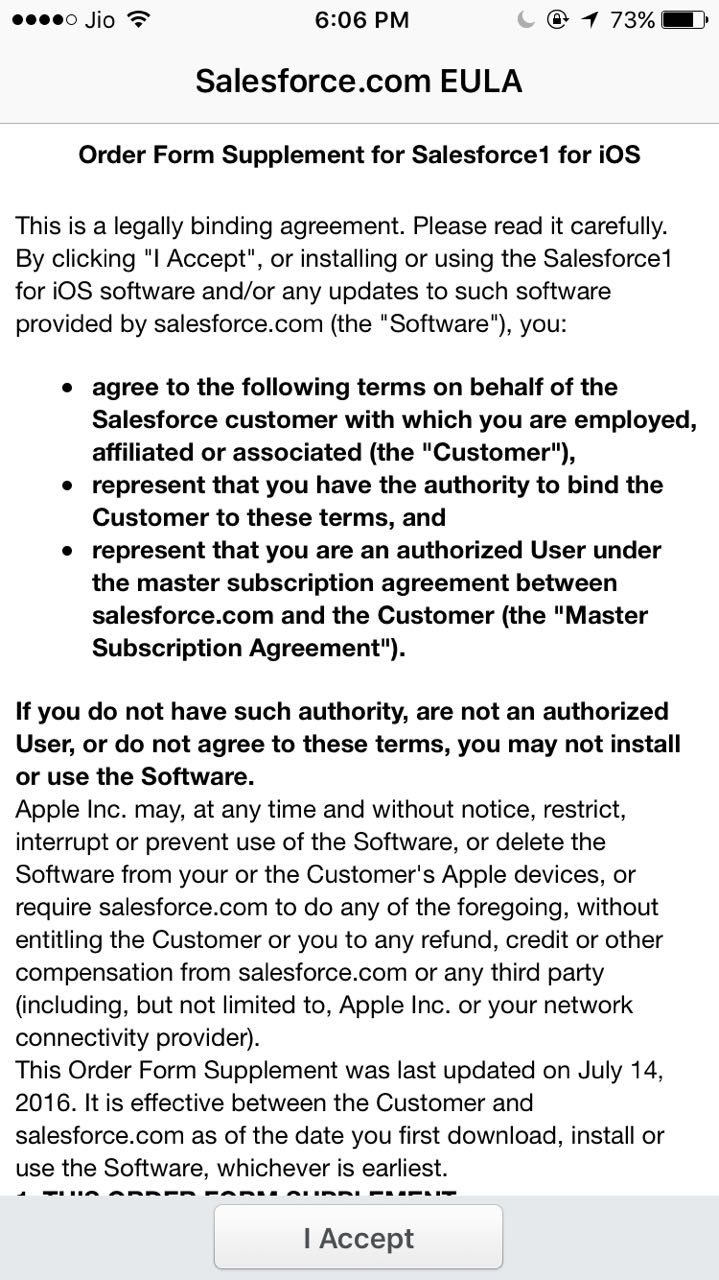
- Download Salesforce1 mobile app from the above link. Now click on I Accept button as shown below.
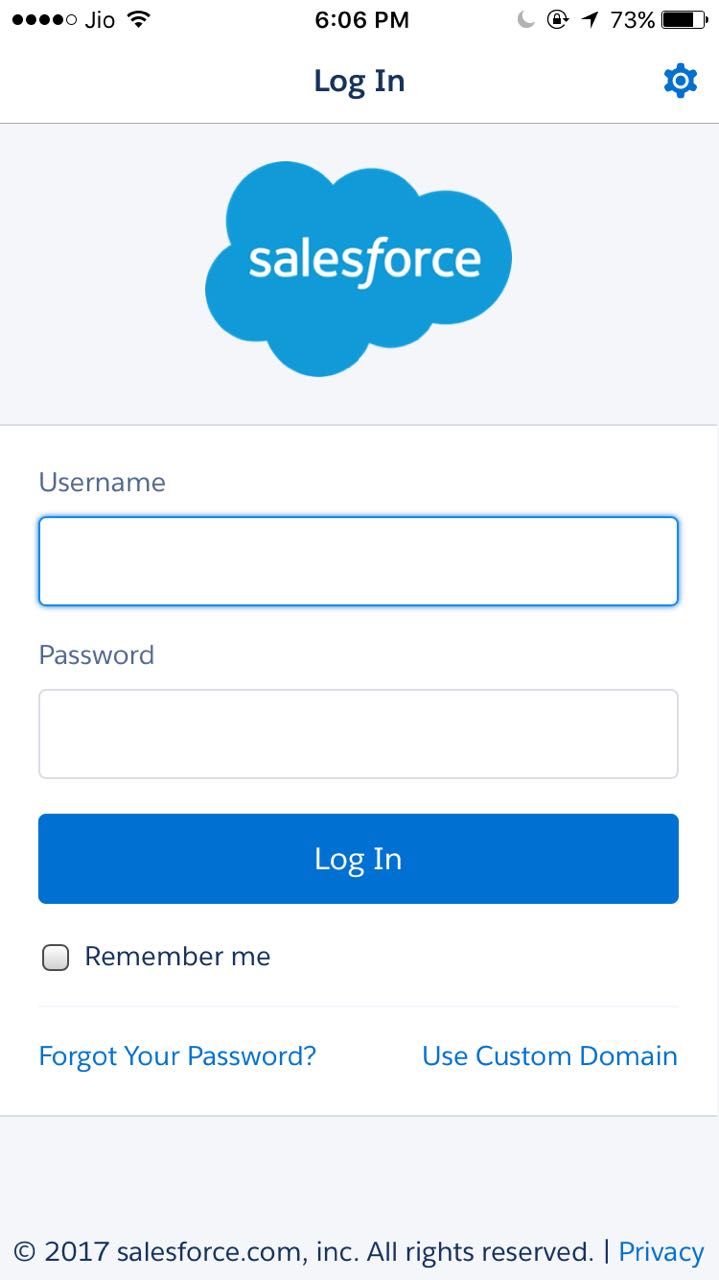
- Enter your Salesforce login Username and Password to login to your Salesforce account.
- Now verification code will be sent to your email.
- Enter your verification code.
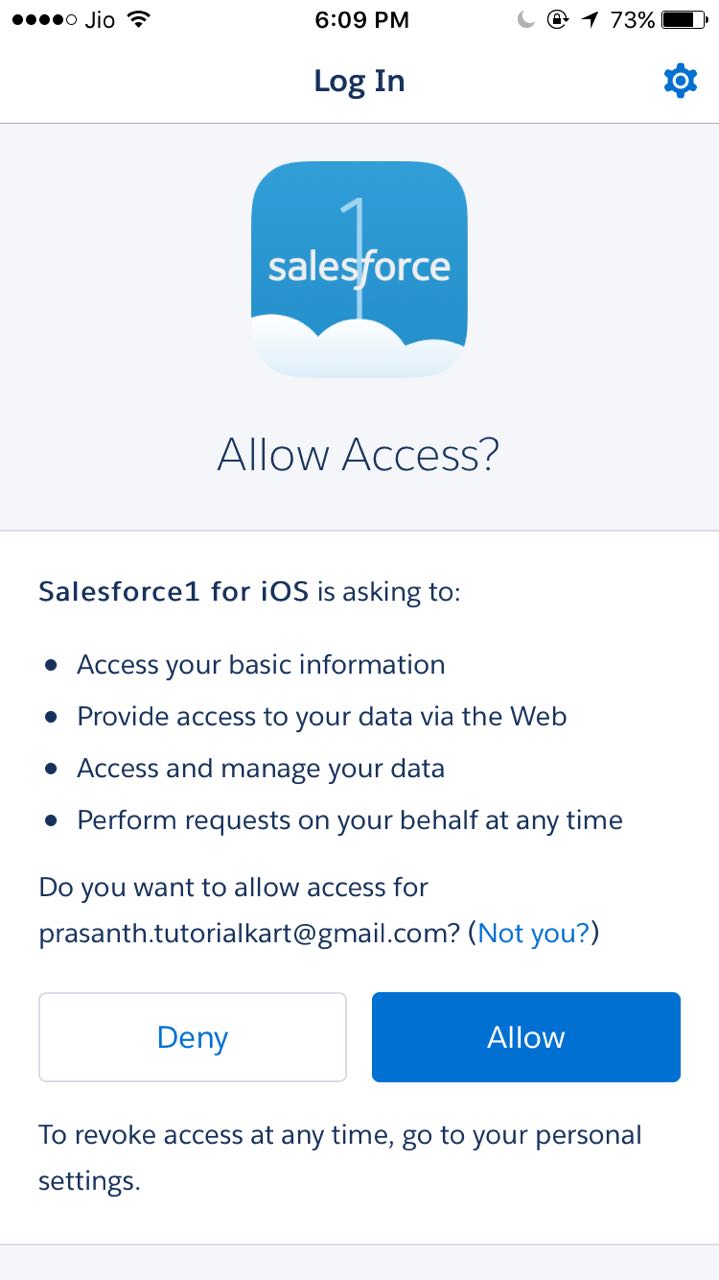
- Click on Allow button to enable access to your Salesforce mobile App.
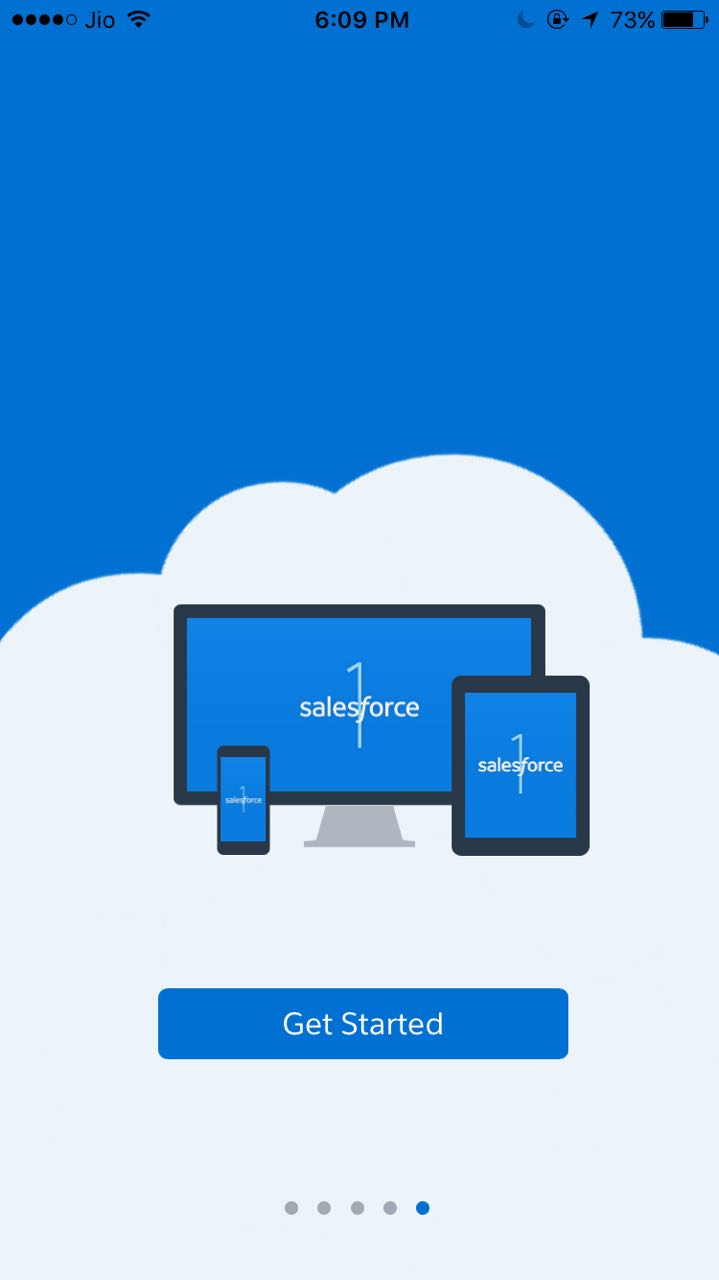
- Click on Get Started to access Salesforce mobile application.
- We can add multiple Salesforce account. On the sidebar we can observe many options like Recent, Apps, Settings.
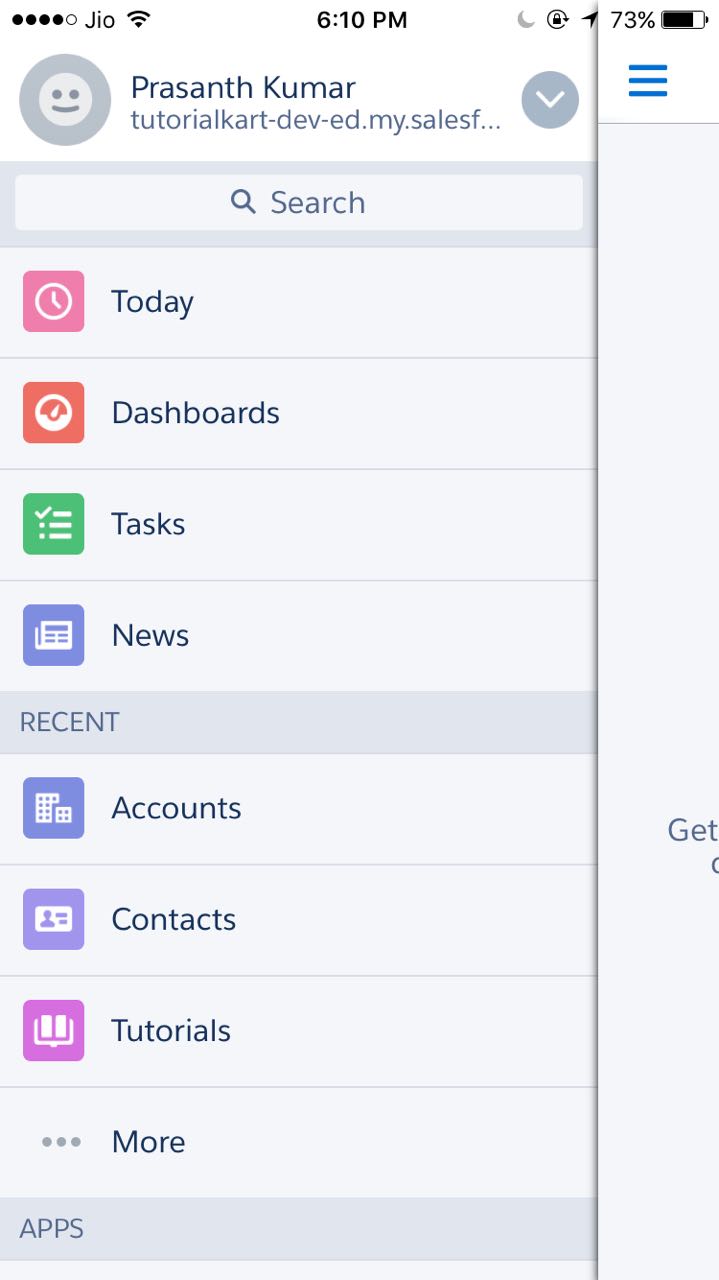
Default Salesforce1 navigation menu items
The mobile navigation menu decides what users can open quickly from the Salesforce mobile app. The exact menu can differ by app, user permissions, profile, and admin configuration.
The default navigation menu includes :
- Feed : If Chatter is enabled, then your feed is here. There are also separate items for People and Groups.
- Today : The Today app is your one-stop place to review account and contact information before meetings, instantly join conference calls, quickly log notes about events, and more.
- Productivity apps and your org’s pages : Notes, task lists, Salesforce events, dashboards and reports, and your company’s custom pages and apps.
- Recent : This section lists the objects that you’ve accessed recently. To see all the objects available to you in Salesforce1, tap More at the bottom of the Recent section.
- Help : Help specifically for Salesforce1.
Admins can customize mobile navigation so that important objects and apps appear in a practical order. For example, a sales team may need Leads, Accounts, Contacts, Opportunities, Tasks, Dashboards, and Reports near the top. A support team may need Cases, Knowledge, Service Console-related items, and custom service objects.
How Salesforce1 navigation works for users
- Items visible in the app depend on the user’s permissions and assigned apps.
- Objects must generally be available as tabs or app navigation items before users can open them easily from mobile.
- Custom objects may need page layouts, Lightning record pages, compact layouts, and actions designed for mobile use.
- Recently accessed records and objects can appear differently for each user because they are based on actual usage.
Enabling Salesforce1 for mobile browser.
After Installing Salesforce1 mobile in Android or iOS devices, we must enable Salesforce 1 for a mobile browser. Follow the steps given below.
- Navigate to Setup | Platform tools | Apps | Mobile Apps | Salesforce1 Settings.
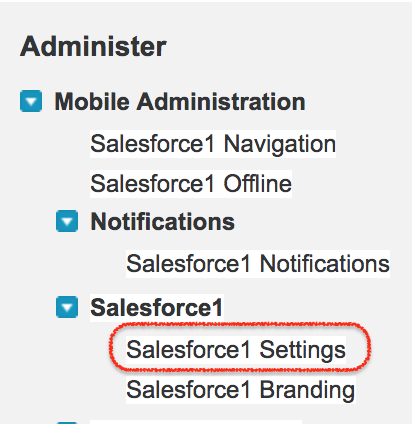
- Click on Salesforce 1 Settings.
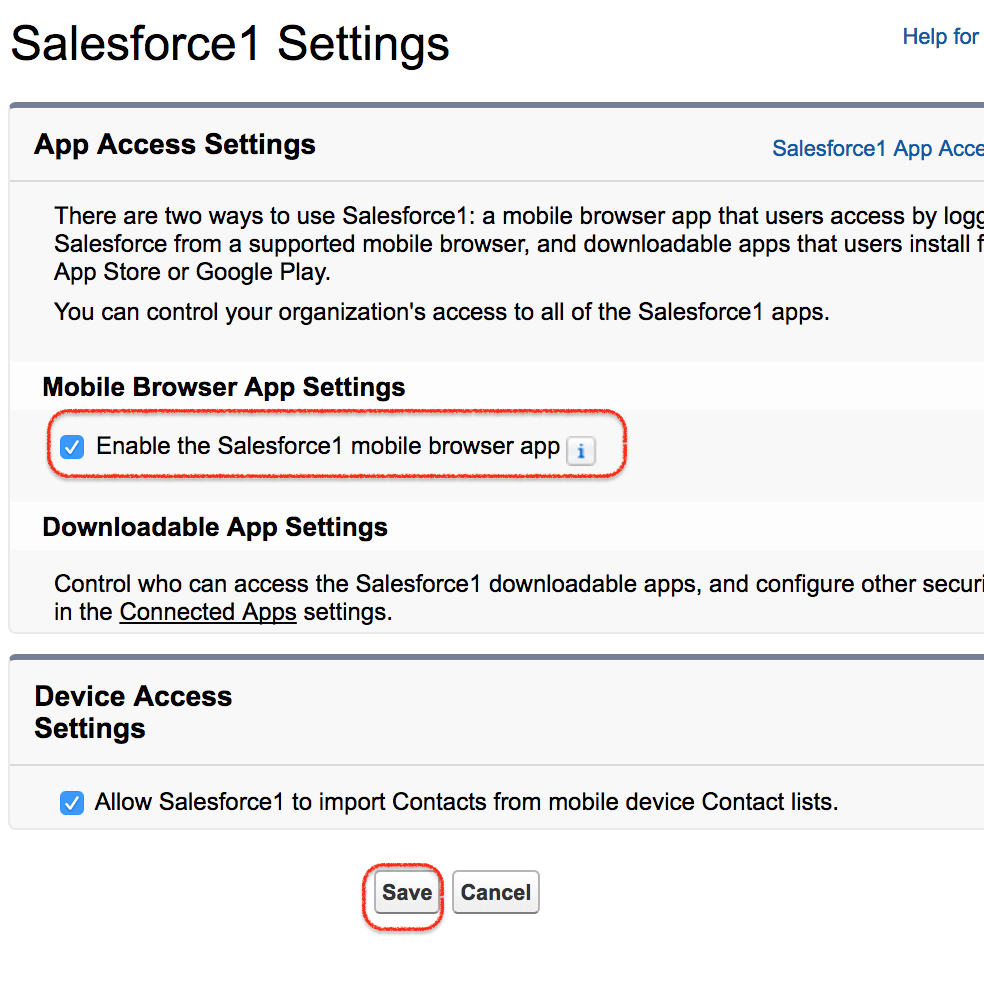
- Now select the Enable the Salesforce1 Mobile browser app checkbox.
- Once your are done click on Save button.
In newer Salesforce Setup pages, labels and navigation paths can vary slightly by release and org configuration. If you do not see the same path, search Setup for Salesforce Mobile App, Mobile Settings, or Salesforce Settings. Always test with a non-admin user after changing mobile access, because administrators often have wider permissions than normal users.
How to grant Salesforce1 Access to users.
By granting Salesforce1 Access to users we can automatically redirect your user to the Salesforce mobile browser app when they log in to Salesforce from a supported mobile browser, perform the following steps.
Navigate to Setup | Administration | users | Edit your user.
- Select the Salesforce1 user checkbox as shown below.
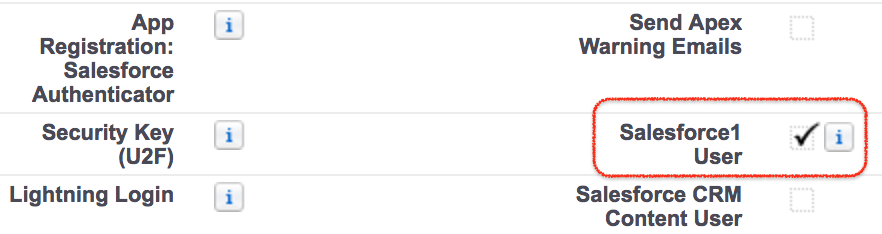
- By turning this option off, our mobile browser would be directed to the full Salesforce site instead. Finally click on Save.
Salesforce mobile app admin configuration checklist
Installing the app is only the first step. For a usable Salesforce1 mobile rollout, admins should also review the following configuration areas.
- Profiles and permission sets: confirm that users can access the objects, fields, record types, and apps they need.
- Compact layouts: choose the important fields that should appear first in mobile record highlights.
- Lightning record pages: make pages responsive and avoid desktop-only layouts that are difficult to use on a small screen.
- Mobile and Lightning actions: add common actions such as New Task, Log a Call, New Event, Submit for Approval, or custom quick actions.
- Navigation menu: place the most-used mobile items near the top instead of sending users through many taps.
- Security settings: review session timeout, connected app access, MFA, SSO, IP policies, and mobile device rules.
- Offline behavior: test whether the data and actions your users expect are available when the device has limited connectivity.
Salesforce1 troubleshooting during login and first use
| Problem | What to check |
|---|---|
| User cannot log in | Confirm username, password, MFA, SSO settings, login IP restrictions, and whether the user is active. |
| User sees very few menu items | Check assigned app, tab visibility, object permissions, profile, permission sets, and mobile navigation settings. |
| Record opens but fields are missing | Review field-level security, page layout assignment, compact layout, and Lightning record page configuration. |
| Approval action is missing | Confirm the approval process, available actions, object permissions, and whether the user is a valid approver. |
| Dashboards or reports are not visible | Check folder access, report type access, dashboard permissions, and whether the item is supported on mobile. |
| Visualforce page does not work well | Verify that the page is enabled for mobile use and designed responsively for small screens. |
Salesforce1 FAQ
What is Salesforce1?
Salesforce1 is the older name for Salesforce’s mobile app experience. It lets users access Salesforce records, apps, tasks, files, dashboards, reports, approvals, and collaboration features from mobile devices.
Is Salesforce1 the same as the Salesforce mobile app?
For most current users, yes. The app is now generally referred to as the Salesforce mobile app, but older tutorials and some settings may still use the Salesforce1 name.
What is the purpose of the Salesforce mobile app?
The purpose of the Salesforce mobile app is to let users work with Salesforce data and business processes away from the desktop site. Common uses include updating records, checking dashboards, approving records, logging activities, and viewing customer information.
Can Salesforce1 access custom objects?
Yes. Custom objects can be accessed from the mobile app when the user has the correct object permissions, tab visibility, app navigation, page layout, and record access.
Why does my Salesforce mobile app look different from this tutorial?
Salesforce releases, org settings, app configuration, user permissions, and mobile navigation settings can change what appears on screen. Older Salesforce1 screenshots may not match the current Salesforce mobile app exactly.
Editorial QA checklist for Salesforce1 mobile app tutorial
- Confirm that the tutorial explains the Salesforce1 name and the current Salesforce mobile app name clearly.
- Keep all existing screenshot images and download links unchanged unless a separate editorial update approves link replacement.
- Check that admin steps mention that Salesforce Setup paths can vary by org and release.
- Make sure mobile access is not explained as only an installation task; permissions, navigation, security, and page design also matter.
- Limit FAQs to Salesforce1 and Salesforce mobile app questions, not generic Salesforce questions.
Conclusion
In this Salesforce tutorial, we have learned what Salesforce1 means, how it relates to the Salesforce mobile app, how to install the app, how to enable Salesforce1 for mobile browser access, and how to grant mobile access to users. For a reliable mobile rollout, admins should also review navigation, object permissions, compact layouts, mobile actions, security settings, and the actual experience of non-admin users.