 TutorialKart.com
What is Asset Accounting in SAP FI-AA?
SAP Asset Accounting, also known as SAP FI-AA, is the fixed asset subledger in SAP FICO. It is used to create, manage, value, depreciate, transfer, and retire fixed assets such as buildings, machinery, vehicles, furniture, computers, and equipment. The main purpose of asset accounting in SAP is to show the correct book value of each fixed asset on a given date and to keep asset values reconciled with the general ledger.
In financial accounting, fixed assets are long-term resources used in business operations for more than one accounting period. SAP FI-AA stores asset master data, posts asset transactions, calculates depreciation, and sends the relevant accounting values to SAP financial accounting. This makes FI-AA an important part of period-end closing, statutory reporting, internal reporting, and audit preparation.
SAP FI-AA meaning in fixed asset accounting
SAP FI-AA means Financial Accounting – Asset Accounting. It works as a subledger for fixed assets. The asset subledger keeps detailed records for every asset, while the general ledger stores the summarized accounting impact through reconciliation accounts and related posting accounts.
For example, when a company buys a machine, SAP Asset Accounting can record the acquisition cost, assign the machine to an asset class, calculate depreciation based on the depreciation key, and post asset values to the relevant G/L accounts. When the machine is sold, scrapped, transferred, or fully depreciated, FI-AA records the change throughout the asset life cycle.
Important fundamentals of Asset Accounting in SAP
| SAP FI-AA term | Meaning in asset accounting |
|---|---|
| Fixed asset | A long-term business asset used for operations, usually for more than one year. |
| Asset master record | The main SAP record that stores details such as asset description, asset class, cost center, depreciation terms, and useful life. |
| Asset class | A grouping of similar fixed assets, such as buildings, plant and machinery, vehicles, or furniture. |
| Chart of depreciation | A structure that contains depreciation areas used for country-specific and accounting-principle-specific asset valuation. |
| Depreciation area | A valuation area used to calculate asset values for book depreciation, tax depreciation, group reporting, or other reporting needs. |
| Depreciation key | The rule that controls how SAP calculates depreciation for an asset. |
| Account determination | The link between asset classes and the G/L accounts used for acquisition, depreciation, retirement, and other postings. |
The cost of using an asset and the reduction in its value over time is called depreciation. In SAP FI-AA, depreciation is calculated based on configuration such as depreciation areas, depreciation keys, useful life, and posting rules. The total value of an asset is charged to the profit and loss account over the useful life of the asset through periodic depreciation postings.
Initially you need to configure company code in financial accounting, then you need to assign chart of depreciation to company code. After that, asset classes, number ranges, account determination, screen layout rules, and depreciation-related settings are maintained before asset master data is created.
SAP FI-AA components used for managing fixed assets
SAP FI-AA components support the complete fixed asset accounting process, from acquisition to retirement. The important components of asset accounting in SAP financial accounting are:
- Traditional Asset Accounting: Used to manage asset master records, acquisitions, retirements, transfers, and depreciation.
- Preparation for consolidation: Helps prepare asset values for group reporting and consolidation requirements.
- Information system: Provides asset reports such as asset balances, asset history, depreciation, acquisitions, and retirements.
- Processing leased assets: Supports accounting and reporting for leased assets where relevant configuration is used.
Asset accounting process flow in SAP FI-AA
The SAP FI-AA process normally starts with configuration and then continues through the operational life of the fixed asset. A simple asset accounting process flow is shown below.
- Configure organizational settings: Define or copy chart of depreciation and assign it to the company code.
- Maintain valuation settings: Define depreciation areas, depreciation keys, useful lives, and posting rules.
- Define asset classes: Group assets by type and connect them to account determination and number ranges.
- Create asset master data: Enter the asset description, asset class, cost center, depreciation terms, and other required details.
- Post asset acquisition: Capitalize the asset through purchase, direct FI posting, settlement, or other business process.
- Calculate and post depreciation: Run depreciation periodically so that asset values are reflected correctly in accounting.
- Post transfer, sale, scrapping, or retirement: Update the asset subledger when the asset is moved, sold, written off, or removed from the books.
- Review asset reports: Check asset balances, depreciation posted, asset history sheet, and reconciliation with G/L accounts.
Important configuration of Asset Accounting in SAP
The first step of configuration of asset accounting in SAP is checking whether a country-specific template is available. If the organization is small and has a simple fixed asset structure, a lean implementation approach may be enough. For companies with multiple company codes, depreciation areas, tax rules, parallel reporting, or large asset volumes, a regular implementation method is normally used.
Before configuration begins, the project team should confirm the legal reporting requirements, chart of accounts, depreciation rules, asset classes, cost center structure, tax requirements, and reporting requirements for each company code.
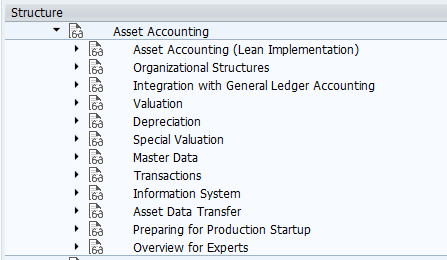
SAP FI-AA configuration sequence before creating asset master data
The important configurations of SAP FI-AA are as follows.
- How to define charts of depreciation
- Define tax code on sales and purchases
- How to Assign chart of depreciation to company code
- How to specify account determination
- How to create screen layout rules
- How to Maintain asset number range intervals
- How to define asset classes
- How to Determine depreciation areas in asset classes
- How to Specify intervals and posting rules
- How to define screen layout for asset master data
- Procedure to maintain screen layout for depreciation areas
- how to create base methods
- How to create declining balance method
- How to create multilevel method
- How to create depreciation key in SAP
- Create asset master data in SAP
- Create sub asset master data in SAP
How SAP FI-AA integrates with General Ledger, procurement, and controlling
Asset Accounting does not work as an isolated module. The asset subledger is closely connected with other SAP finance and logistics processes.
| Integration area | How it is used in SAP Asset Accounting |
|---|---|
| General Ledger Accounting | Asset acquisition, depreciation, retirement, and gain or loss postings update the relevant G/L accounts based on account determination. |
| Materials Management | Asset purchases can be linked with procurement processes when assets are purchased through purchase orders and invoices. |
| Controlling | Depreciation and asset-related costs can be assigned to cost centers, internal orders, or other controlling objects. |
| Plant Maintenance | Capital expenditure or major maintenance costs may be settled to assets when the process is configured for capitalization. |
| Reporting | Asset reports show acquisition values, accumulated depreciation, net book value, asset history, and retirement details. |
SAP S/4HANA notes for Asset Accounting
In SAP S/4HANA, Asset Accounting is integrated with the Universal Journal. This means asset-related financial postings are stored together with other finance postings, which improves consistency between asset accounting and general ledger reporting. Consultants working on SAP S/4HANA should pay close attention to depreciation areas, accounting principles, ledgers, and account determination because these settings control how asset values are posted and reported.
For official reference, see the SAP Help Portal page for Asset Accounting and the SAP Learning topic on assigning charts of accounts and depreciation. These references are useful when checking SAP S/4HANA behavior against system configuration.
Common SAP FI-AA mistakes to avoid
- Using the wrong asset class: This can lead to incorrect account determination, number range, useful life, or depreciation behavior.
- Assigning an incorrect chart of depreciation: The company code may calculate depreciation using the wrong country-specific or reporting rules.
- Ignoring depreciation areas: Book, tax, group, and reporting valuations may produce different values and must be configured carefully.
- Posting acquisitions before master data review: Incorrect asset master fields can affect depreciation and reporting from the first posting.
- Not reconciling FI-AA with G/L: Asset subledger balances should be checked against general ledger balances during period-end closing.
SAP FI-AA editorial QA checklist
- Does the tutorial clearly explain that SAP FI-AA is the fixed asset subledger in SAP FICO?
- Does it define asset master, asset class, chart of depreciation, depreciation area, depreciation key, and account determination?
- Does the configuration sequence start with chart of depreciation and company code assignment before asset class and master data setup?
- Does the content distinguish between fixed asset accounting concepts and SAP configuration steps?
- Does the page mention SAP S/4HANA only where it is relevant to Asset Accounting and Universal Journal integration?
FAQs on Asset Accounting in SAP FI-AA
What is Asset Accounting in SAP FI-AA?
Asset Accounting in SAP FI-AA is the fixed asset subledger used to manage asset master records, acquisitions, depreciation, transfers, retirements, and fixed asset reporting. It helps companies track asset values throughout the asset life cycle.
What are the main types of assets handled in SAP Asset Accounting?
SAP Asset Accounting is mainly used for fixed assets such as land, buildings, machinery, vehicles, furniture, computers, equipment, and assets under construction. The exact grouping is controlled through asset classes.
Why is chart of depreciation important in SAP FI-AA?
The chart of depreciation controls the depreciation areas and valuation rules used for asset accounting. It is assigned to a company code and supports legal, tax, group, and reporting requirements for fixed assets.
What is the difference between asset class and asset master in SAP?
An asset class is a grouping category for similar assets, while an asset master is the individual record for a specific asset. The asset class controls many default settings used when creating the asset master.
How does depreciation work in SAP Asset Accounting?
Depreciation in SAP Asset Accounting is calculated based on settings such as depreciation key, useful life, depreciation area, and capitalization date. Depreciation is then posted periodically to reflect the expense and reduce the net book value of the asset.
Continue to read SAP FICO tutorial with real time issues and scenarios.