 TutorialKart.com
In this SAP tutorials, you will learn how to define tax procedure in SAP systems. In our previous training tutorial we have discussed about what is sales tax and purchase tax in SAP.
A tax procedure in SAP controls how input tax, output tax and other tax condition values are calculated during purchasing, sales and financial postings. The procedure contains condition types, calculation steps, base amount references, account keys and other controls that help SAP determine tax amounts and post them to the correct general ledger accounts.
Tax Procedure in SAP: Meaning, Use, and Configuration Scope
Before you define tax procedure in SAP, it is useful to understand where it fits in the tax configuration flow. A tax procedure is not the same as a tax code. The procedure defines the calculation structure, while a tax code normally carries the rate and tax classification used in business transactions.
| SAP tax configuration element | Purpose |
| Tax procedure | Defines the sequence of tax condition types and how each tax value is calculated. |
| Condition type | Represents a tax component such as base amount, input tax, output tax or other tax condition. |
| Tax code | Stores tax rate and transaction-level tax determination details used during posting. |
| Account key | Connects the tax condition to the relevant tax G/L account during account determination. |
| Country assignment | Links a country to the relevant calculation procedure so SAP knows which procedure to use. |
In most projects, consultants review the standard tax procedure delivered by SAP and copy or adapt it only when business, localization or statutory reporting requirements demand a separate calculation structure. Always check your project design before changing an existing procedure in a live system.
Transaction Code and IMG Path to Define Tax Procedure in SAP
You can maintain tax calculation procedures in SAP by following one of the navigation method.
- Transaction code: – OBYZ
- Menu Path: – SPRO –> IMG –> Financial Accounting (New) –> Financial Accounting Global Settings (New) –> Tax on sales/purchases –> Basic settings –> Check calculation procedure.
The transaction code most commonly used for this activity is OBYZ. In the IMG, this activity is available under the basic settings for taxes on sales and purchases. Depending on your SAP release and localization, screen names may vary slightly, but the configuration concept remains the same.
Prerequisites Before Creating a Tax Calculation Procedure in SAP
Before you create or change a tax calculation procedure, confirm the following points with the functional design team.
- The country and tax requirement for which the procedure is being created.
- The tax condition types required for input tax, output tax and base amount calculation.
- The account keys to be used for tax postings.
- The tax codes and tax rates that will be maintained later.
- The transport request in which the configuration has to be saved.
- Whether a standard procedure can be copied instead of building a new procedure from the beginning.
How to Define Tax Procedure in SAP Using OBYZ
Step 1) Enter transaction code “OBYZ” in the SAP command field and enter.

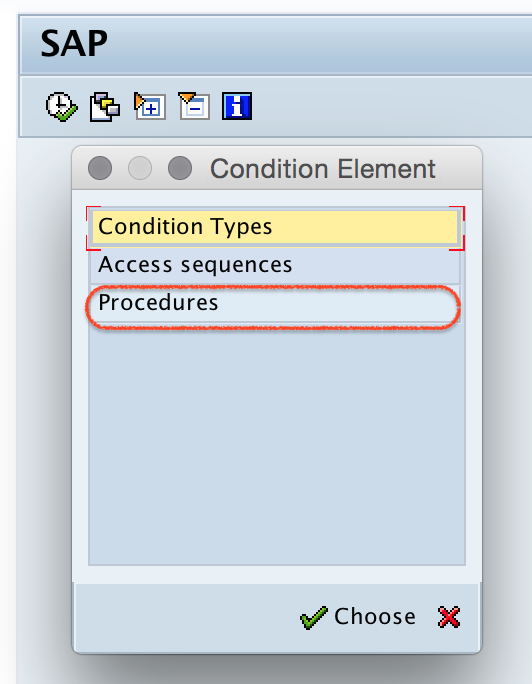
Step 2) A pop up window condition element screen displays with options, you need to choose procedures so double click on it.
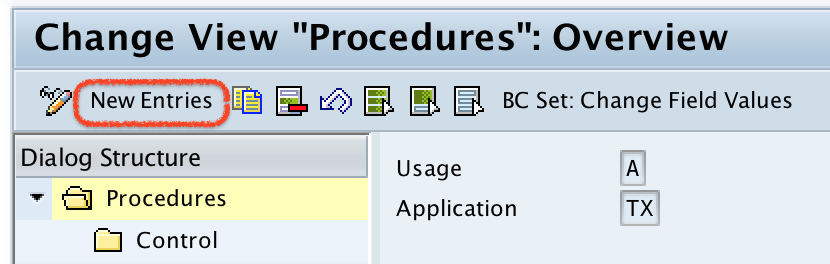
Step 3) On change view procedure screen, click on new entries button for definition of new tax procedure in SAP.
Step 4) On new entries calculation procedures screen, update the following details.
- Procedures: – Enter the four digits key that identifies the tax procedure in SAP.
- Description: – Update the descriptive text of tax calculation procedure – Sales tax India.
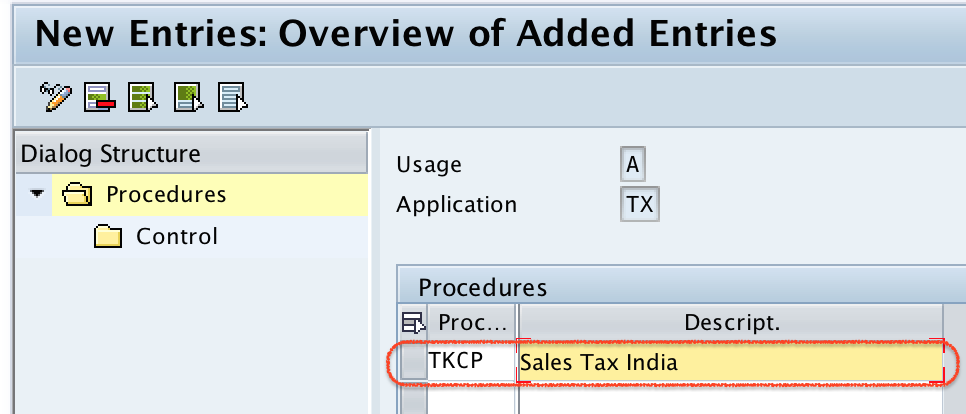
After maintaining the details, click on save button and save in your request number.
Step 5) Now select TKCP procedures row and double click on control data folder.
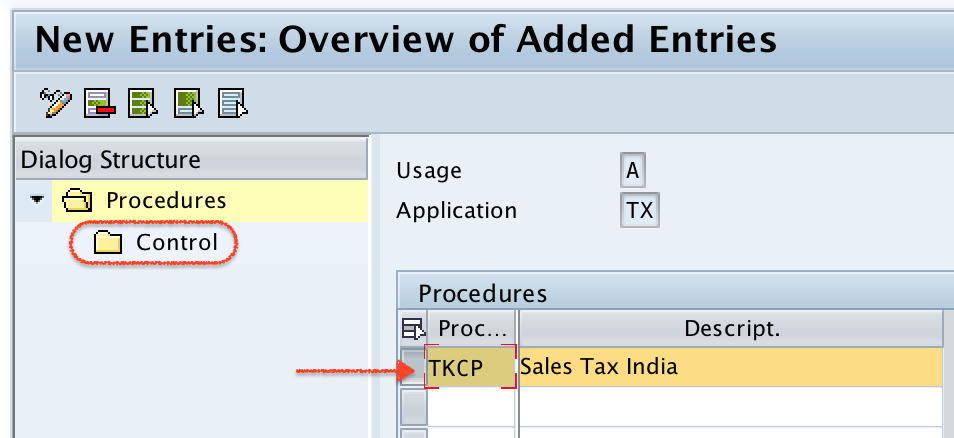
Step 6) Select new entries button.
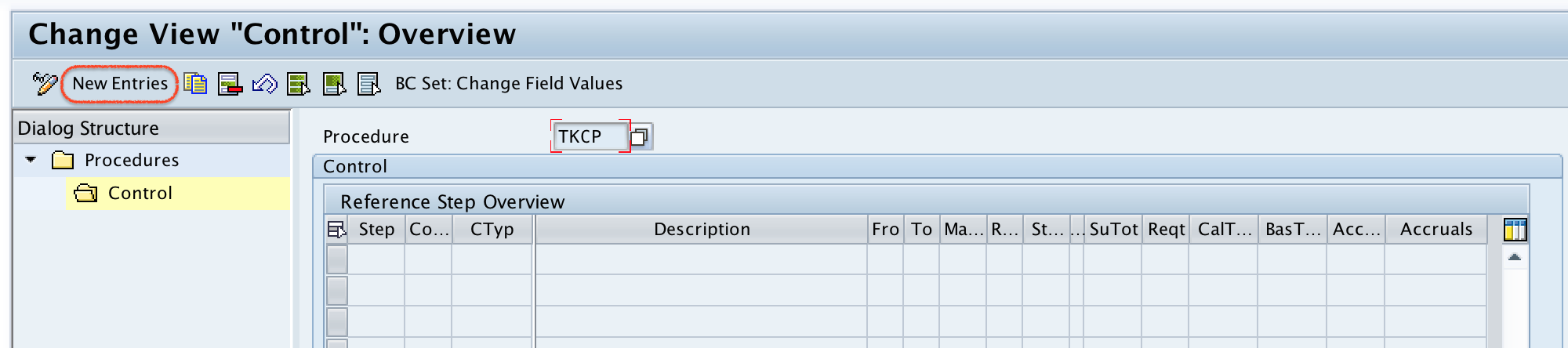
Step 7) On new entries screen, update the following details.
- Step: – Enter the number (10, 20, 30…) which specifies the sequence of the conditions within a procedure
- Condition type: – Update the condition type key that indicates the each activity or tax.
- Description: – Description text will be automatically updated based on condition type text.
- From, To: – This indicate which tax should be calculated on which base amount.
- Account key: – Assign the account that respective to condition types.
Tax Procedure Control Data Fields in SAP
The control data screen is the main part of tax procedure configuration. Each row represents a calculation step. The order of steps, the condition type and the account key decide how SAP calculates and posts tax values.
| Field | Use in tax procedure | Example |
| Step | Controls the sequence in which condition types are processed. | 10, 20, 30 |
| Counter | Allows more than one condition at the same step when required. | 1, 2 |
| Condition type | Identifies the tax condition or base condition used in the procedure. | BASB, MWVS, MWAS |
| From and To | Defines the base step or range of steps used for calculation. | 10 to 10 |
| Account key | Determines the tax account assignment for posting. | VST, MWS |
For a simple sales and purchase tax procedure, the base amount is normally maintained first. Input tax and output tax condition types can then refer to the base amount step through the From and To columns.
| Step | CType | Description | Fro | To | AccKey |
| 10 | BASB | Base Amount | |||
| 20 | MWVS | Input Tax | 10 | 10 | VST – Input Tax |
| 30 | MWAS | Output Tax | 10 | 10 | MWS – Output Tax |
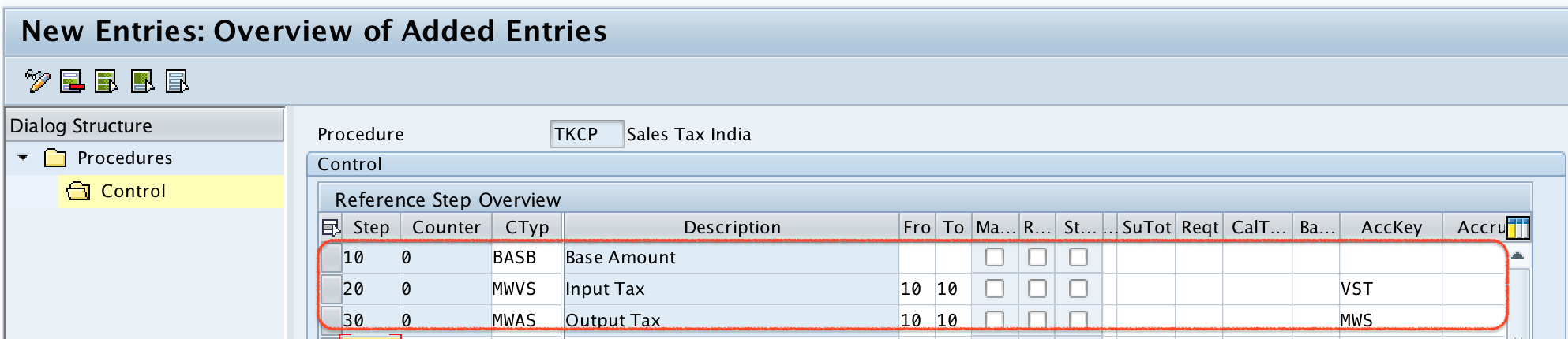
After maintaining all the required details, click on save button and save the configured details.
Assign Tax Procedure to Country After Maintaining OBYZ
Creating the tax procedure is only one part of the configuration. In a complete SAP tax setup, the calculation procedure must also be assigned to the relevant country. This assignment tells SAP which procedure to use when tax is calculated for that country.
The country assignment is normally maintained in the IMG under tax on sales and purchases basic settings. In many SAP systems, consultants use transaction OBBG for assigning a country to a calculation procedure. Check your project configuration guide before changing this setting because it can affect tax determination across company codes assigned to that country.
How to Change an Existing Tax Procedure in SAP Safely
You can change a tax procedure from the same OBYZ configuration path, but existing procedures should be handled carefully. If the tax procedure is already used in posted documents, direct changes may affect future postings, reporting comparisons and testing results.
- Review whether the change is required for a new tax requirement or for correcting an existing setup.
- Check which countries, company codes, tax codes and pricing or purchasing processes use the procedure.
- Prefer copying and creating a new procedure when the change is structurally different.
- Test purchase invoices, sales invoices, FI postings and tax reports after the change.
- Transport the change only after functional approval.
Common Mistakes While Defining Tax Procedure in SAP
The following issues are commonly found during SAP tax procedure testing.
- Using incorrect From and To values, which makes tax calculate on the wrong base amount.
- Missing account keys for condition types that need accounting postings.
- Creating a tax procedure but not assigning it to the relevant country.
- Using condition types that are not aligned with the tax code or business process.
- Changing a live tax procedure without checking dependent tax codes and reporting requirements.
- Saving the procedure without testing both input tax and output tax postings.
QA Checklist for SAP Tax Procedure Configuration
Use this checklist to review the configuration before moving it to the next SAP system.
- Procedure key and description are meaningful and match the project naming convention.
- Base amount condition is placed before tax condition types.
- Input tax and output tax conditions refer to the correct base step.
- Account keys are maintained only where tax posting is required.
- Country assignment is checked after the procedure is created.
- Test postings are completed for purchase, sales and direct FI tax postings.
- Transport request contains only the intended tax procedure changes.
FAQs on Tax Procedure in SAP
What is the T code to define tax procedure in SAP?
The commonly used transaction code to define or maintain a tax procedure in SAP is OBYZ. You can also access the same activity from SPRO under Financial Accounting Global Settings and Tax on Sales/Purchases basic settings.
What is a tax procedure in SAP?
A tax procedure in SAP is a calculation structure that contains tax condition types, calculation steps, base references and account keys. SAP uses it to calculate input tax, output tax and related tax amounts during business postings.
What is the table for tax procedure in SAP?
SAP tax procedure configuration is stored across condition technique and tax configuration tables. The calculation procedure header and steps are commonly reviewed through configuration views, while technical table analysis should be done carefully based on the SAP release and client setup.
How do you change a tax procedure in SAP?
To change a tax procedure, open OBYZ, choose Procedures, select the required procedure and maintain the control data. Before changing a procedure used in production, check dependent countries, company codes, tax codes and test scenarios.
Is tax procedure the same as tax code in SAP?
No. A tax procedure defines how tax is calculated, while a tax code is used in business transactions to apply a specific tax rate and tax treatment. Both work together during tax determination and posting.
Successfully we have maintained tax calculation procedures in SAP.