 TutorialKart.com
How to Define Ledgers for General Ledger Accounting in SAP
This tutorial explains how to define a ledger for General Ledger Accounting in SAP. A ledger represents a set of accounting records maintained for a particular accounting principle or reporting requirement. Depending on the SAP release and system design, an organization may use a leading ledger together with one or more non-leading ledgers.
The screens shown in this procedure apply to SAP New General Ledger configuration. Menu labels and available fields can differ between SAP ERP and SAP S/4HANA releases. Before creating a ledger, confirm the required accounting principles, fiscal-year settings, currencies, company-code assignments, and reporting requirements with the finance configuration team.
Ledger Configuration Path in SAP IMG
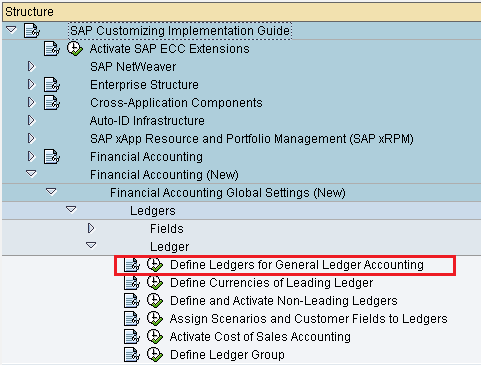
IMG path: SPRO > SAP Reference IMG > Financial Accounting (New) > Financial Accounting Global Settings (New) > Ledgers > Ledger > Define Ledgers for General Ledger Accounting
In some SAP releases, the node may appear as Financial Accounting Global Settings without the “New” label. You can also access the underlying customizing view through the appropriate view-maintenance transaction when permitted by your organization’s configuration standards.
Information Required Before Creating an SAP Ledger
- Ledger key: A unique identifier for the ledger.
- Ledger name: A clear description of the accounting purpose.
- Accounting principle: The valuation or reporting framework that the ledger supports.
- Company-code scope: The company codes that will use the ledger.
- Fiscal year and posting periods: The calendar and period structure required for reporting.
- Ledger currencies: The currencies required for legal, group, or management reporting.
- Transport request: A customizing request for moving the configuration through the SAP landscape.
Do not create an additional ledger only to separate ordinary business transactions. Ledgers are normally designed around parallel accounting, reporting principles, valuation requirements, or other defined accounting purposes.
Steps to Define a Ledger in SAP General Ledger Accounting
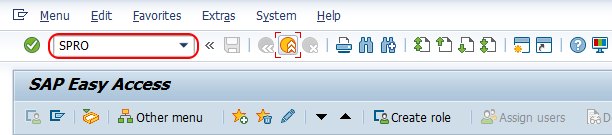
Step 1: Enter transaction code “SPRO” in the SAP command field and press Enter.
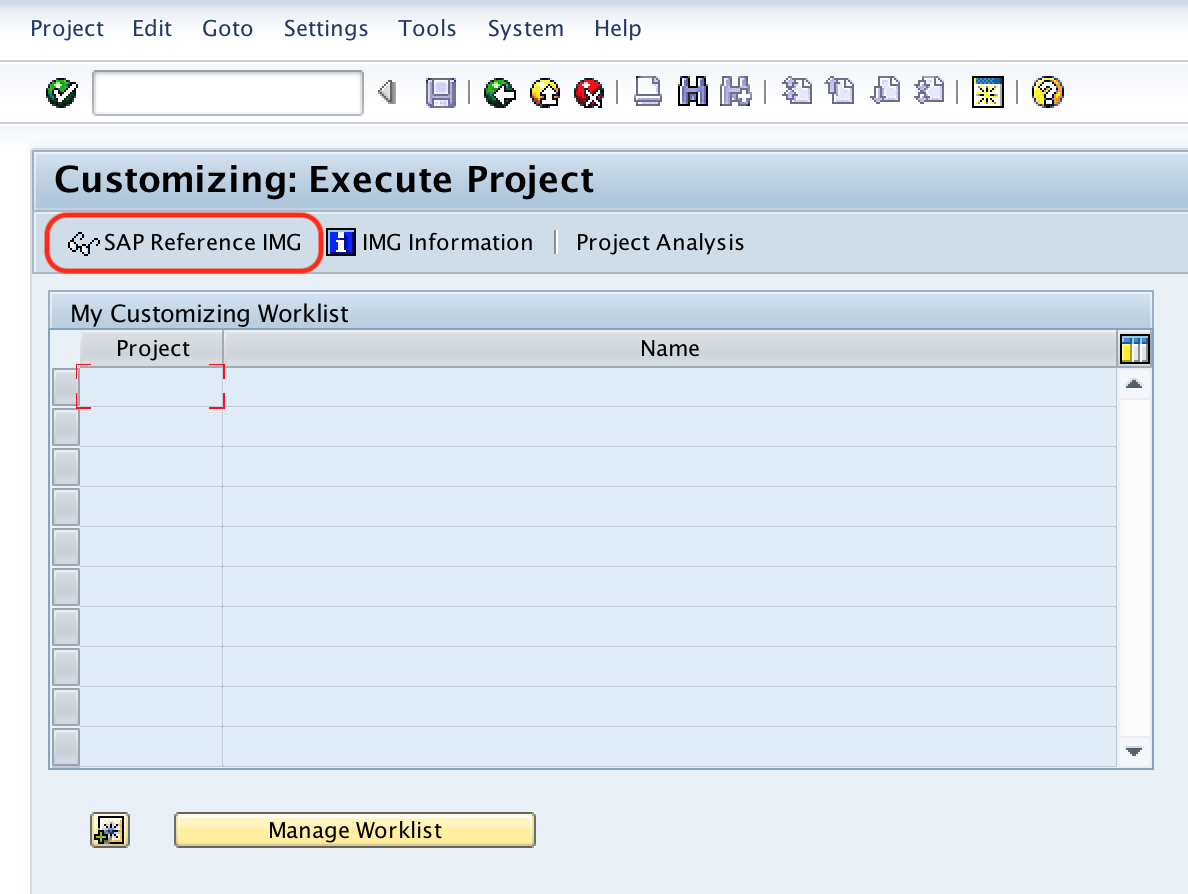
Step 2: On the Customizing: Execute Project screen, choose SAP Reference IMG.
Step 3: Follow the IMG navigation path to Financial Accounting Global Settings > Ledgers > Ledger, and execute the activity Define Ledgers for General Ledger Accounting.
Step 4: On the Change View “Define Ledgers in General Ledger Accounting”: Overview screen, review the ledgers already configured in the client. Choose New Entries to create another ledger.

Step 5: On the New Entries screen, enter the ledger details required by your SAP release and configuration design.
- Ld: Enter the unique key that identifies the ledger in General Ledger Accounting.
- Ledger Name: Enter a descriptive name that explains the ledger’s accounting or reporting purpose.
- Totals Table: In the SAP ERP New General Ledger screen shown here, select the applicable General Ledger totals table, such as FAGLFLEXT, where required by the system.
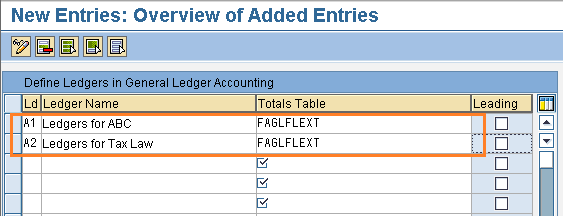
Step 6: Verify the ledger key and description, and then choose the Save icon. Assign the change to a customizing transport request when prompted.
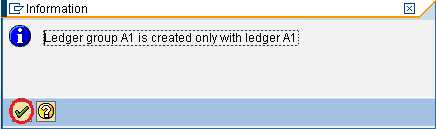
After saving, the system may display the information message “Ledger group A1 is created only with ledger A1”. This indicates that SAP has automatically created a ledger group containing the newly defined ledger. Press Enter to continue.
Leading, Non-Leading, and Extension Ledgers in SAP
The exact ledger options available depend on the SAP product and release:
- Leading ledger: The primary ledger used for the principal accounting view. It is generally assigned across the relevant company codes and forms the default basis for many integrated postings.
- Non-leading ledger: An additional standard ledger used for parallel accounting requirements, such as a local accounting principle alongside a group accounting principle.
- Extension ledger: An SAP S/4HANA ledger that stores delta postings while referencing an underlying standard ledger. It can support adjustment, management, or simulation scenarios without duplicating all base postings.
Defining a ledger is only one part of parallel-accounting configuration. The complete design can also require assignments for company codes, accounting principles, ledger groups, currencies, fiscal-year variants, posting-period variants, document types, and valuation processes.
SAP S/4HANA Considerations for Ledger Configuration
SAP S/4HANA uses the Universal Journal as the central line-item model. Therefore, older SAP ERP fields and totals-table references may not appear in the same form in an S/4HANA system. Use the IMG activities and documentation delivered for the installed S/4HANA release rather than copying an SAP ERP configuration without review.
In an S/4HANA implementation, ledger design should be agreed before productive postings begin. Changes to productive ledger structures can affect accounting data, asset accounting, controlling integration, reporting, migration, and period-end processing.
Checks After Defining the General Ledger
- Confirm that the new ledger appears in the ledger overview with the intended key and description.
- Verify whether SAP created the expected ledger group automatically.
- Check the company-code assignment and applicable accounting-principle assignment.
- Review fiscal-year, currency, and posting-period settings for the ledger.
- Confirm that dependent Financial Accounting and Asset Accounting configuration is complete.
- Test representative postings in a non-production system and verify ledger-specific reporting.
- Confirm that the customizing changes are recorded in the correct transport request.
Common Errors When Defining SAP Ledgers
- Duplicate ledger key: Each ledger must have a unique identifier.
- Incomplete organizational assignment: Creating the ledger does not automatically complete every required company-code or accounting-principle assignment.
- Incorrect parallel-accounting design: A ledger should be connected to a documented accounting or reporting requirement.
- Missing dependent settings: Currency types, fiscal-year settings, posting periods, and integrated accounting components must be aligned.
- Using SAP ERP instructions in S/4HANA without validation: Data structures and configuration activities differ between releases.
- Testing only the configuration screen: The setup should also be tested with postings, reversals, allocations, closing activities, and financial reports.
Frequently Asked Questions About SAP General Ledger Configuration
What is a ledger in SAP General Ledger Accounting?
A ledger is an accounting view in which SAP records and reports financial postings according to defined organizational, currency, fiscal-year, and accounting-principle settings. Multiple ledgers can be used when an organization must maintain parallel accounting views.
What is the difference between a leading and a non-leading ledger?
The leading ledger is the primary accounting ledger and is generally the default ledger for integrated financial postings. A non-leading ledger provides an additional accounting view, commonly for another accounting principle or reporting requirement.
Why does SAP create a ledger group when a ledger is saved?
A ledger group allows postings and reporting selections to target one or more ledgers. When a new ledger is created, SAP may automatically create a ledger group containing only that ledger so it can be addressed independently.
Is FAGLFLEXT used in SAP S/4HANA ledger configuration?
FAGLFLEXT is associated with the SAP ERP New General Ledger totals model shown in this tutorial. SAP S/4HANA uses the Universal Journal architecture, so the configuration screen and data model may differ. Follow the documentation for the installed S/4HANA release.
Can a ledger be changed after financial postings exist?
Some settings become difficult or restricted to change after productive postings exist. Ledger-structure changes can affect integrated accounting and historical reporting. Evaluate such changes in a test system and follow SAP-supported migration or conversion procedures.
Editorial QA Checklist for SAP Ledger Configuration
- Confirm that the IMG path matches the SAP release used for the screenshots.
- Verify that the procedure distinguishes SAP ERP New General Ledger from SAP S/4HANA ledger configuration.
- Check that the ledger key, ledger name, and totals-table explanation match the displayed screen.
- Confirm that leading, non-leading, and extension ledgers are not treated as interchangeable.
- Verify that company-code, accounting-principle, currency, and fiscal-year dependencies are mentioned.
- Ensure the tutorial advises testing postings and reports before transporting the setup to production.
- Confirm that all existing screenshots and links remain unchanged.
The ledger is now defined in SAP General Ledger Accounting. Complete the related assignments and test the resulting postings and reports before using the configuration in a production system.